PODCAST
CHI WING LO: THE ARTIST WHO TEACHES US HOW TO LIVE AND ALLOWS US TO SELF REFLECT
LISTEN NOW


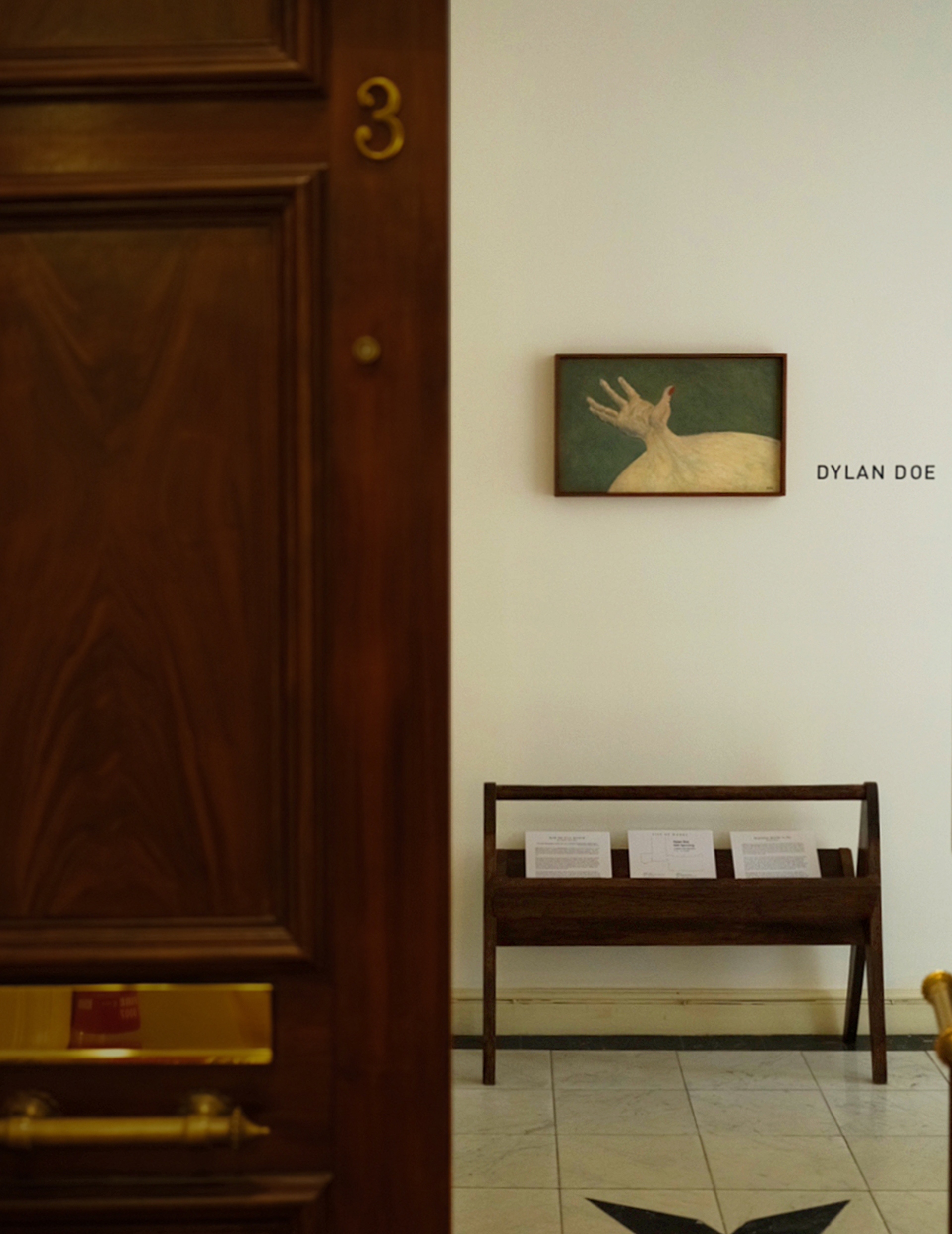
Known for his captivating, ambiguous paintings that feature hybrid figures and recurring motifs of surveillance, Dylan Doe's work confronts our relationship with the digital age and the blurring of the organic and the inorganic. We step into a conversation with the artist to discuss the home as a sanctuary turned stage, his fascinating two-part process of controlled research and intuitive risk, and the unexpected moment that launched his career from a private living room to the global art scene.
Your work explores themes of anonymity and human relations in the digital age. What initially drew you to these subjects, and how have they evolved in your practice?
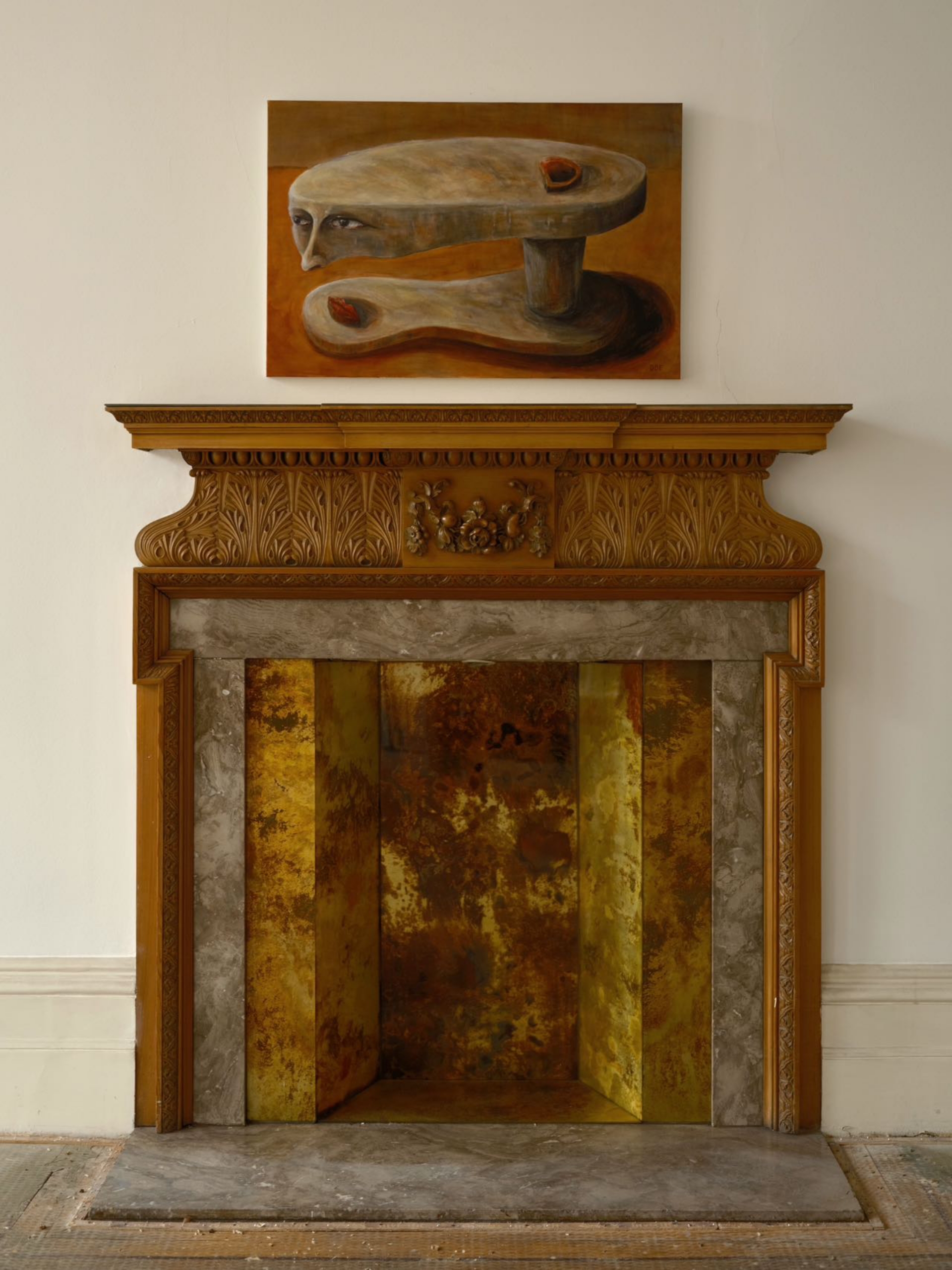
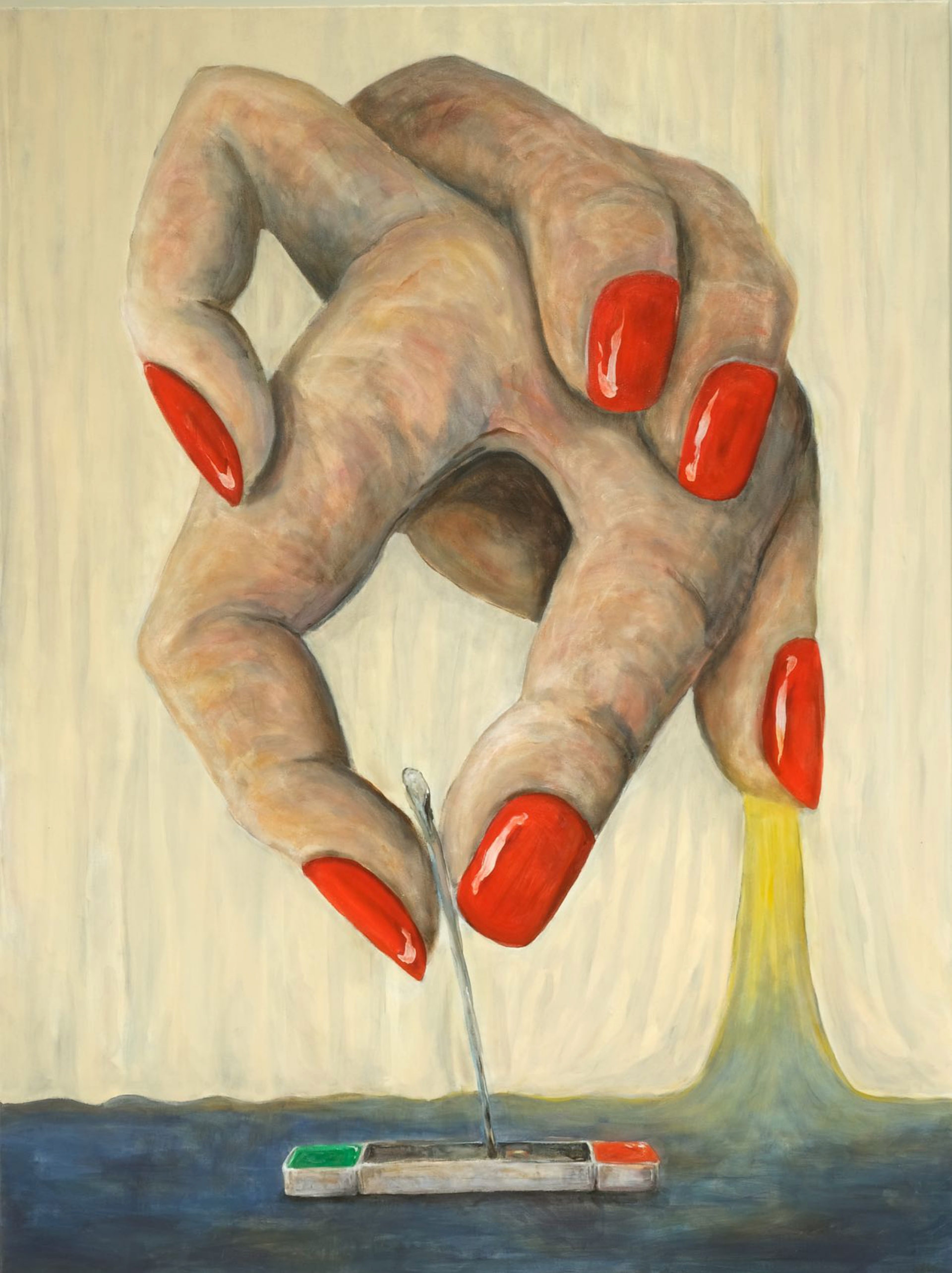
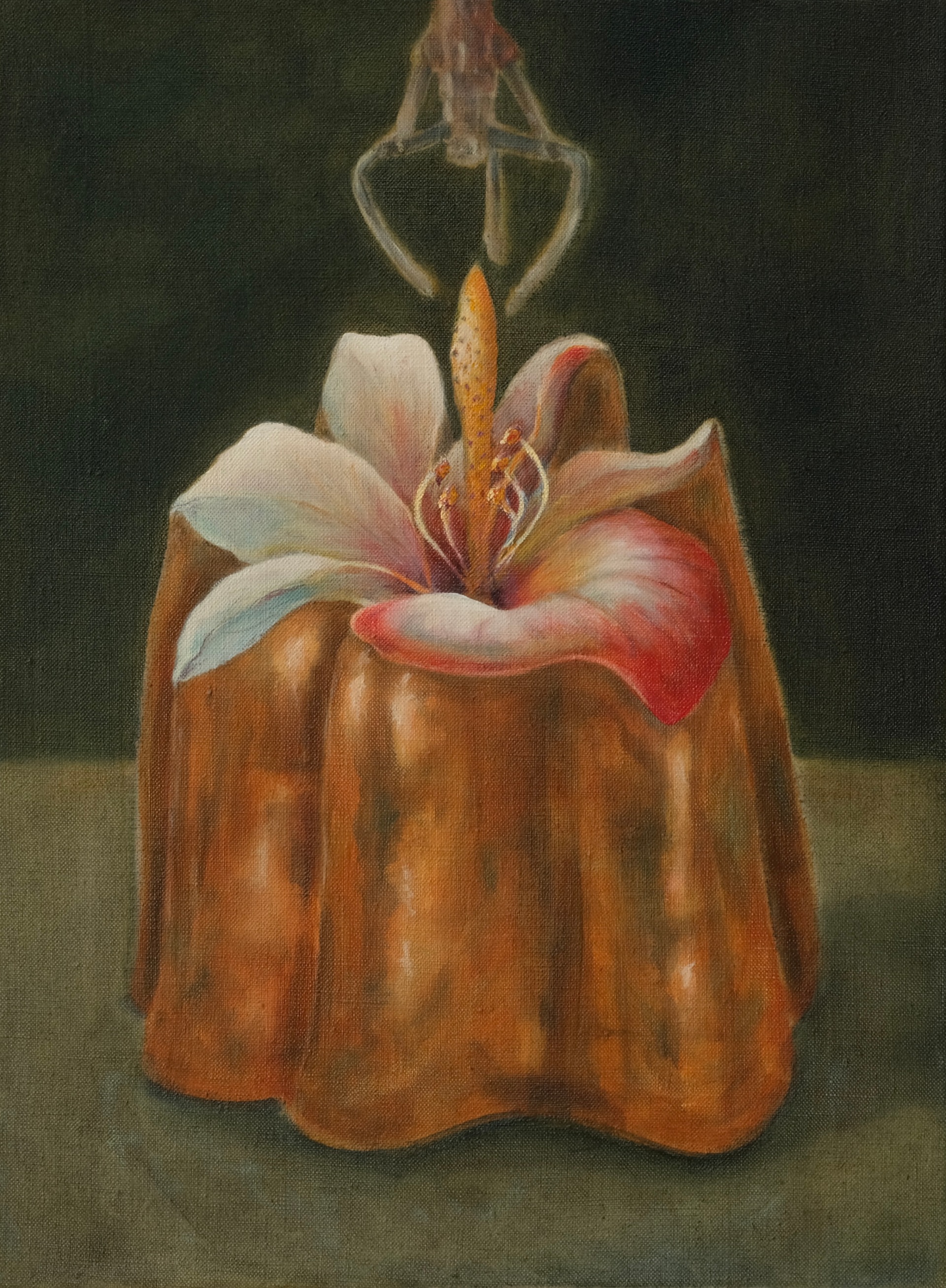
I was initially drawn to themes of anonymity and human relations in the digital age because I’m by nature quite a private person, and curious about the blurring of public and private life. Tying in with the Latent Relics show I guess traditionally the home was a sanctuary and retreat from public view, but that has changed, to the point where the home is now often a staged environment. A backdrop for self-promotion or a curated domestic space behind someone working remotely on a video call. In these scenarios there is a conscious framing of private life; the choice of objects, books or decision to use a digital mountain scene backdrop as a kind of privacy curtain. These themes are apparent in the work through recurring motifs; the staged scene, posed objects, diorama style backgrounds and the repetition of eye-like devices that point towards the idea of surveillance - of constantly being ‘on’ - watched or watching.
You embrace ambiguity in your paintings, often collaging disparate elements. Can you walk us through your creative process, and how do you decide which elements to bring together?
I split my process into two stages: a pre-painting and painting phase and in both I switch between two contrasting roles; one that is free and one that is controlled.
Pre:Painting: The controlled element here is where I engage in research; reading about the contemporary themes and topics that resonate with me and making notes and collecting quotes so that they sink in. Then I deliberately enter a free, unconscious stage where I make scores of quick thumbnail size sketches, intuitively creating forms. It's a dream-logic state where I have my own personal history, recent preoccupations and emotions all in the mix, and aim to see what images come out. Finally I go back to a controlled, editorial mindset where I’ll sift through the sketchbooks and select the images that seem to feel charged and that have subconsciously connected back to the themes in my research.
Painting: The canvas is gridded up in a controlled way, anticipating the areas I want my painting to hit, but the painting itself is done straight from the off with a brush, which has an element of risk and gives a certain energy. I leave the canvas raw for this first stage, which gives it a kind of friction but also lends a fuzzy burred texture to the line, which I often like to leave as traces in the final work. The final painting is layered up with primer, acrylic and oils.
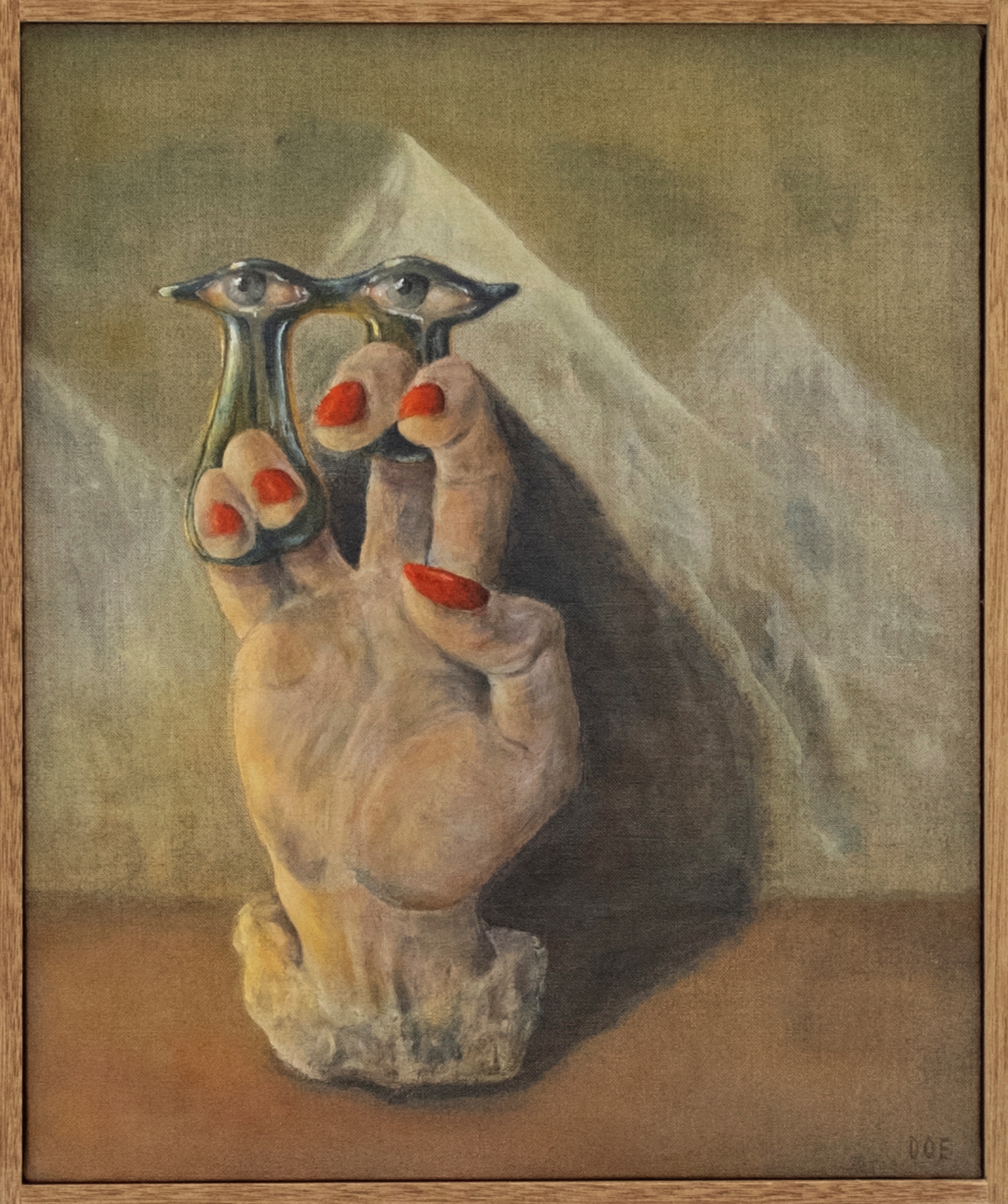
Many of your works feature hybrid forms and figures that seem to exist in an in-between state. What emotions or ideas do you hope to evoke in viewers?
These hybrid figures are linked to my interest in post-humanist themes, the blurring of organic and inorganic forms and how tools and objects re-shape us, physically and also in our behaviours. My process leads to me approaching this in a way that feels removed; the world seems slightly off - as it does in dream or altered states. If I succeed, I hope a viewer feels at once a familiarity but also a slight sense of unease - something recognisable but different. An object that looks familiar but doesn’t actually exist opposed to something immediately recognised and digested might encourage some viewers to spend time looking and speculating - imagining what it means.
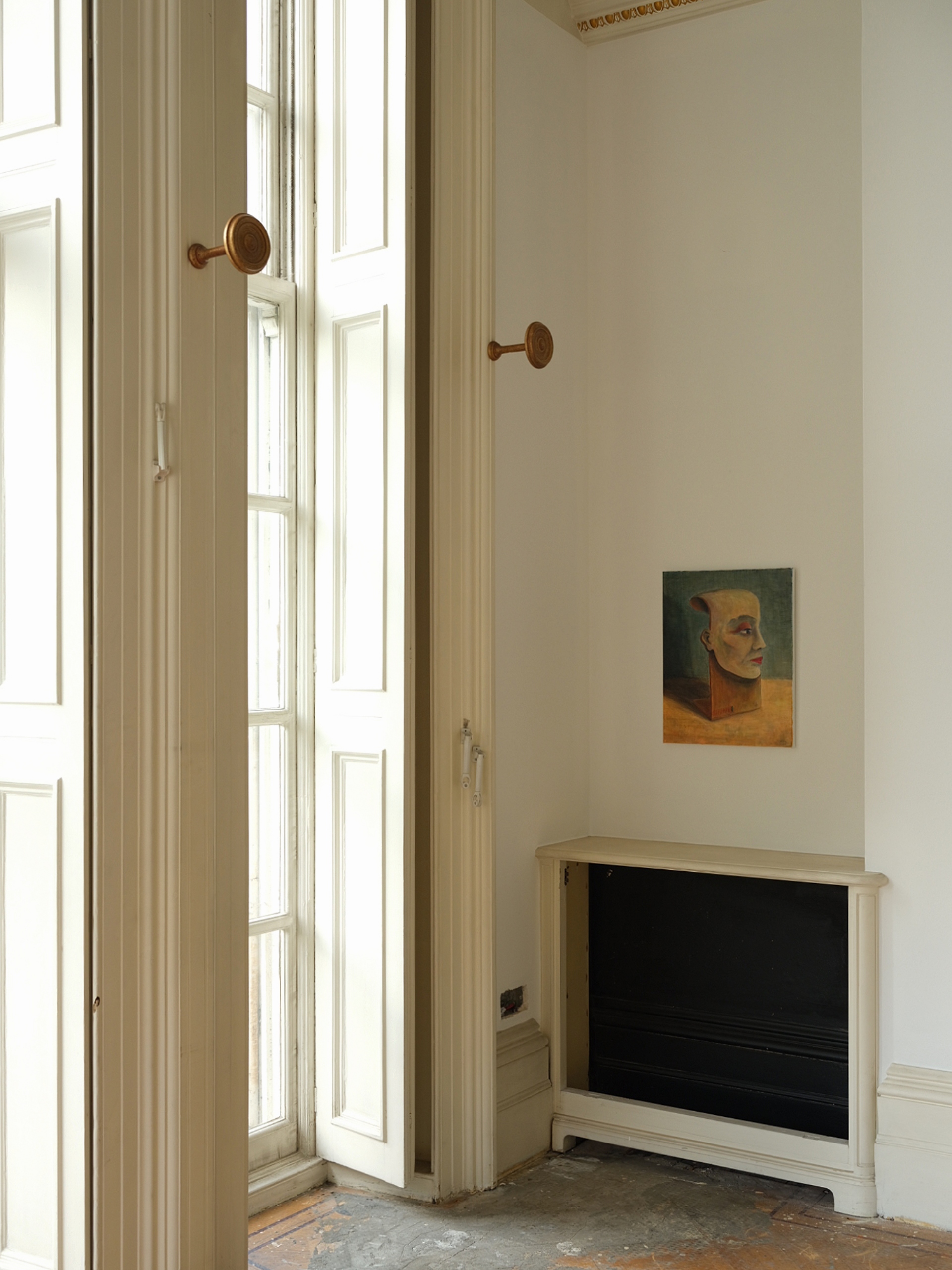
What has been the most defining moment in your artistic career so far (whether a breakthrough, a challenge, or an unexpected turning point)?
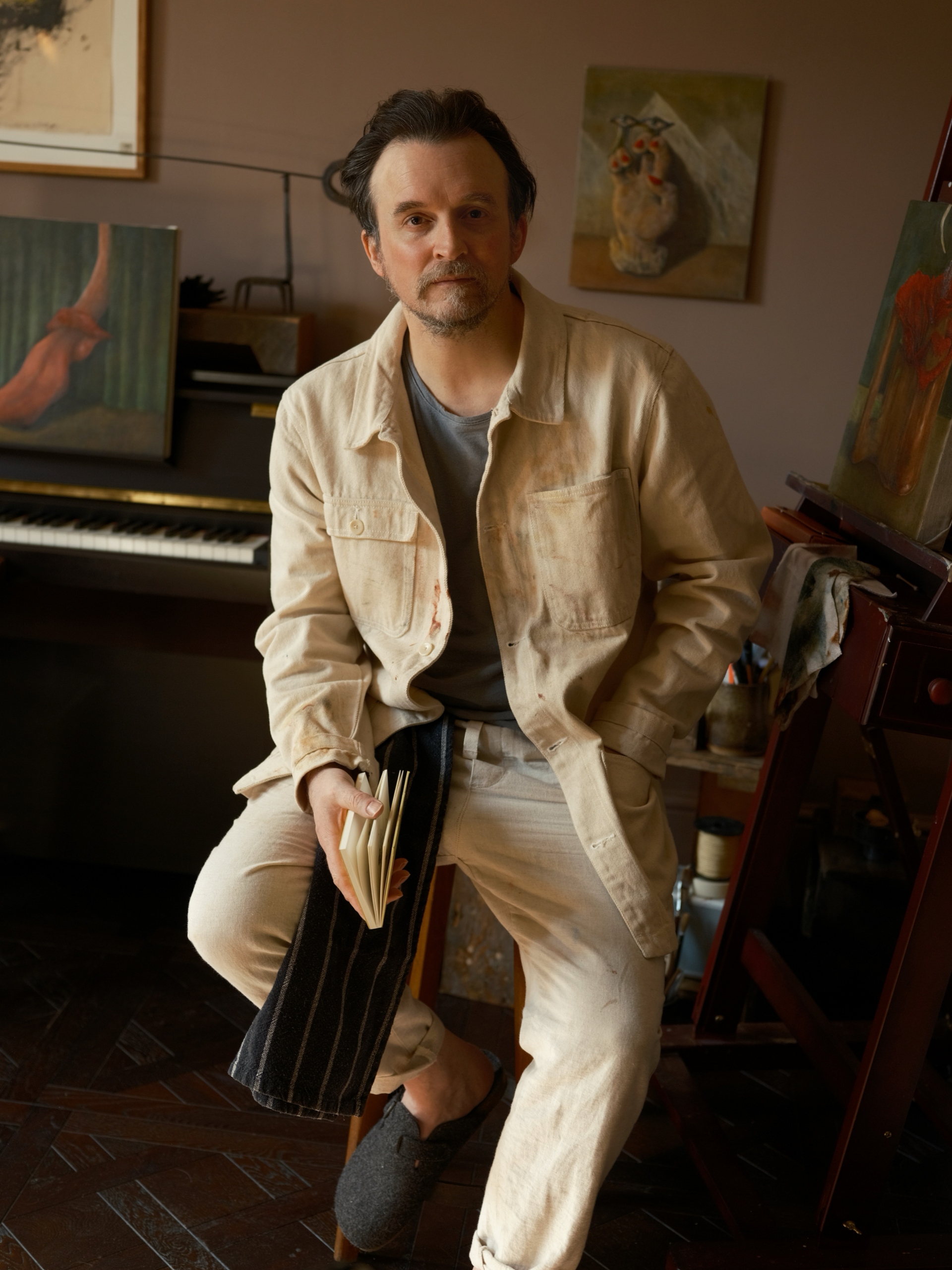
An unexpected turning point and defining moment was a chance encounter that set everything in motion. In late 2023 I had one painting, which was hanging in my house, and an art enthusiast saw it, requested to buy it and strongly recommended I dedicate more time to painting. This gesture of belief changed everything. They later helped me stage my debut solo show in their apartment. Within a year of this meeting I had met a curator, built up a body of work and exhibited my paintings for the first time.
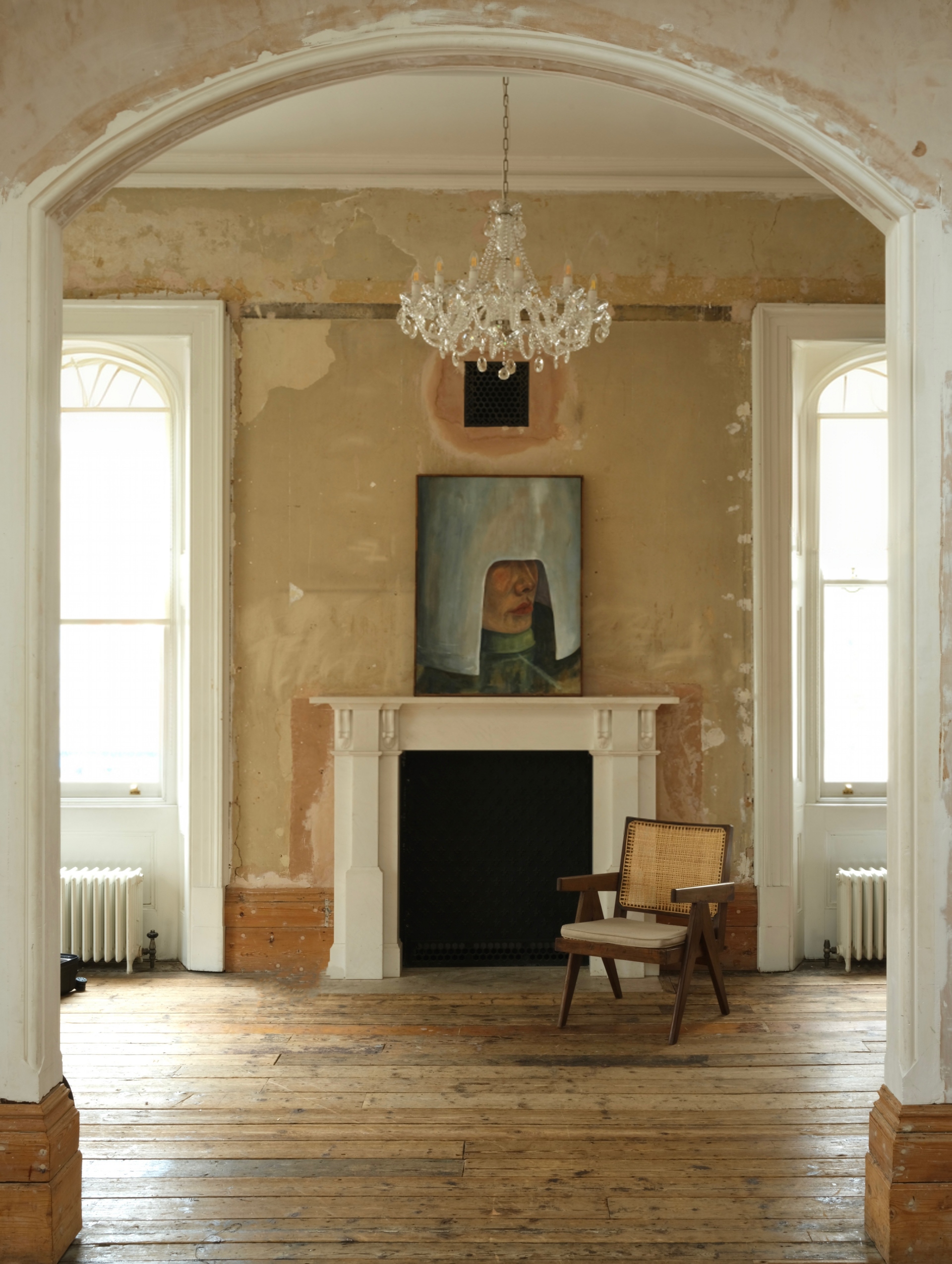
What are some of the biggest challenges you’ve faced as an artist, and how have you overcome them?
One of the biggest challenges for me was overcoming the isolation of making work in a kind of vacuum. I didn’t come through the traditional fine art route - I came to painting later, after working first as a musician then a designer. I’m largely self taught, and for a long time that meant working alone, without much discussion or feedback. Over the past year and half that has really shifted. Meeting other artists and curators has helped me develop my work, inspiring me to experiment and continue evolving.
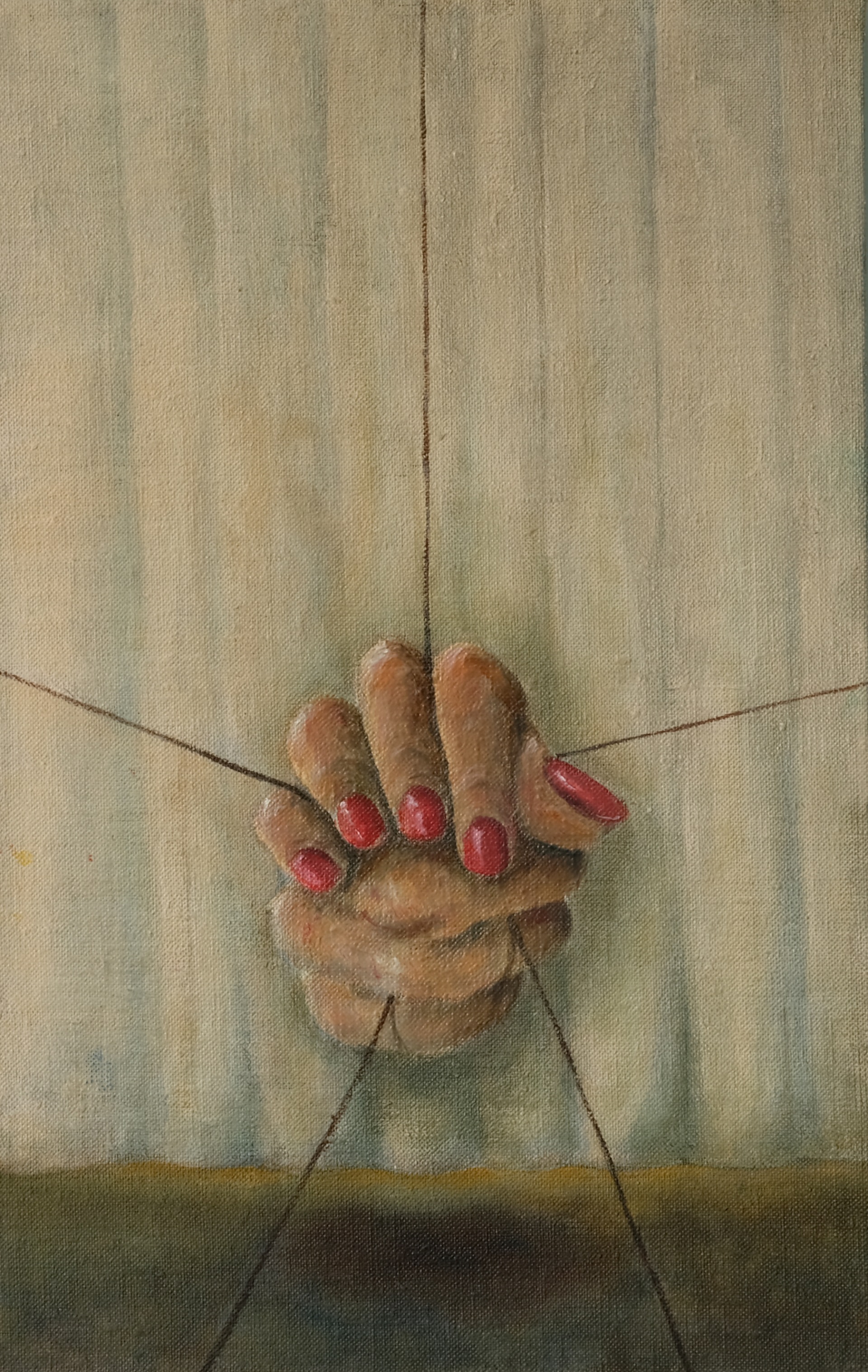
When you’re not painting, how do you unwind and recharge creatively?
I have a five year old daughter, so unwinding will be spending time with her - making random things (following her orders) and playing games: tennis in the park, getting beaten at Mario Kart etc. To recharge creatively I’ll spend a day in galleries, looking at both old and new paintings. I know I’ll come away with some new ways of seeing a brush mark, texture or surface effect. On the way home I’ll be excited about trying things out the next day.
Have there been any recent exhibitions that left a lasting impression on you or influenced your perspective?
I caught Francis Bacon - Human Presence just before it closed. It was the first show dedicated to him that I have visited and it had so many great works from different stages in his career - different ways of handling paint. It led to a deep dive - not just into his work but also into the way he spoke about it. I was drawn to his unpretentious way of describing his process, and how he leaned into mystery and chance rather than trying to overly explain or rationalise what he did. It gave me confidence to not feel the pressure to dissect my own work.