PODCAST
CHI WING LO: THE ARTIST WHO TEACHES US HOW TO LIVE AND ALLOWS US TO SELF REFLECT
LISTEN NOW


Shanghai blended the commercial energy of a global port, the vibrant nightlife of Paris or Berlin, and the skyscraping ambition of New York, all woven into a landscape of ancient temples and shikumen - the city’s distinctive stone-gated lane houses that harmonized Chinese courtyard living with Western terrace architecture. Its openness drew entrepreneurs, magnates, filmmakers, and artists, creating an atmosphere of intense creative momentum. In the French Concession, handsome villas and cafés lined tree-shaded avenues; elsewhere, jazz echoed from grand ballrooms and neon illuminated cinema facades. Beneath the surface ran a city of high-stakes drama and intrigue, giving Shanghai its unmistakable, lingering edge.
Cinema reinforced this mythology. Classics like Shanghai Express, starring Marlene Dietrich and Anna May Wong, captured the western imagination with scenes of silk, shadow, and mystery. During this era, Shanghai anchored China’s first great cinematic golden age.
A Tale of Two Skylines
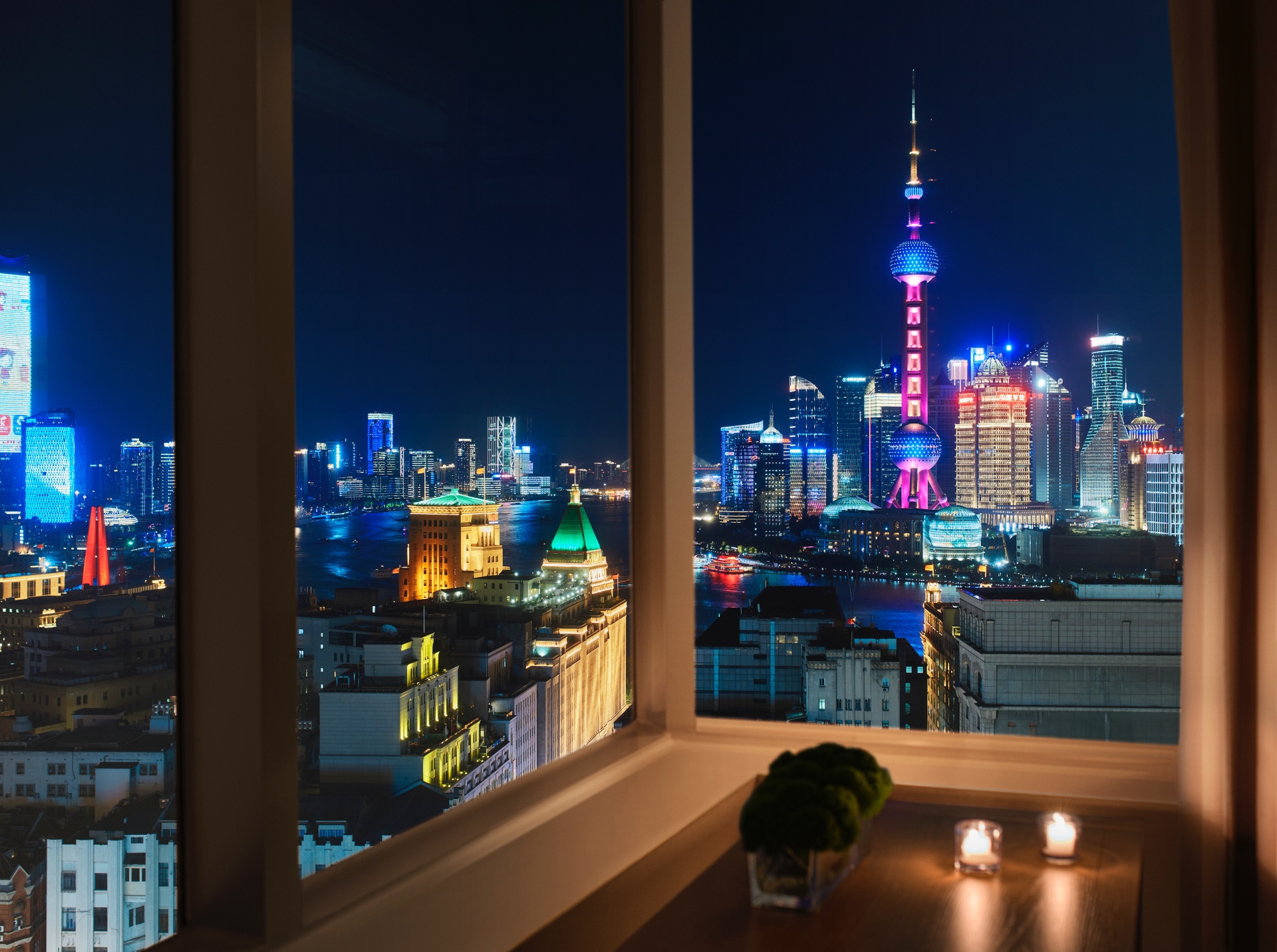
Strolling along the Bund today, that golden age feels remarkably immediate. Monumental trading houses, banks, and historic hotels line the west bank of the Huangpu River in an impressive parade of Neoclassical, Beaux-Arts, and Art Deco grandeur. At nightfall, their stone facades glow in warm gold, detailing delicate columns and grand domes against the dark sky.
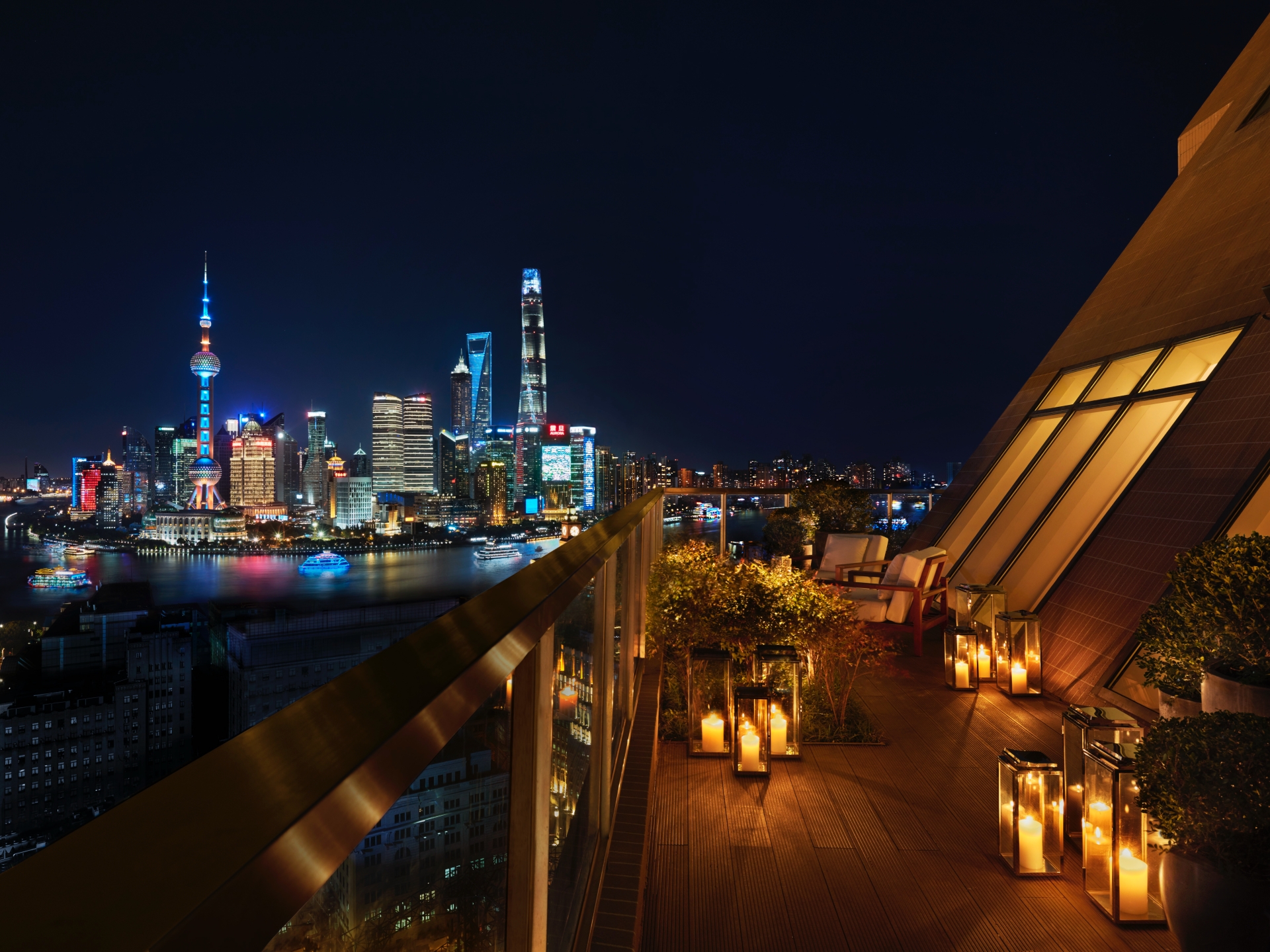
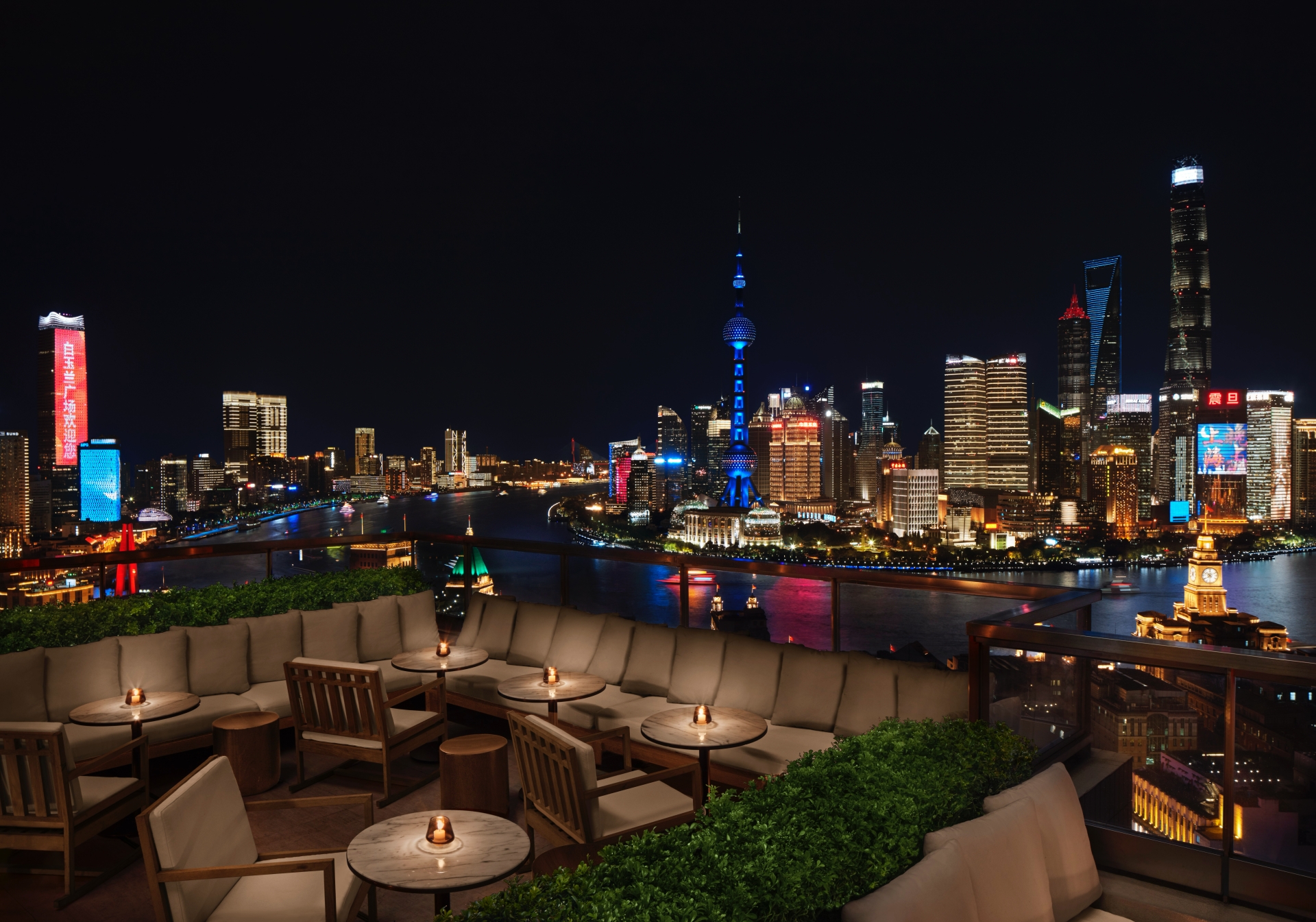
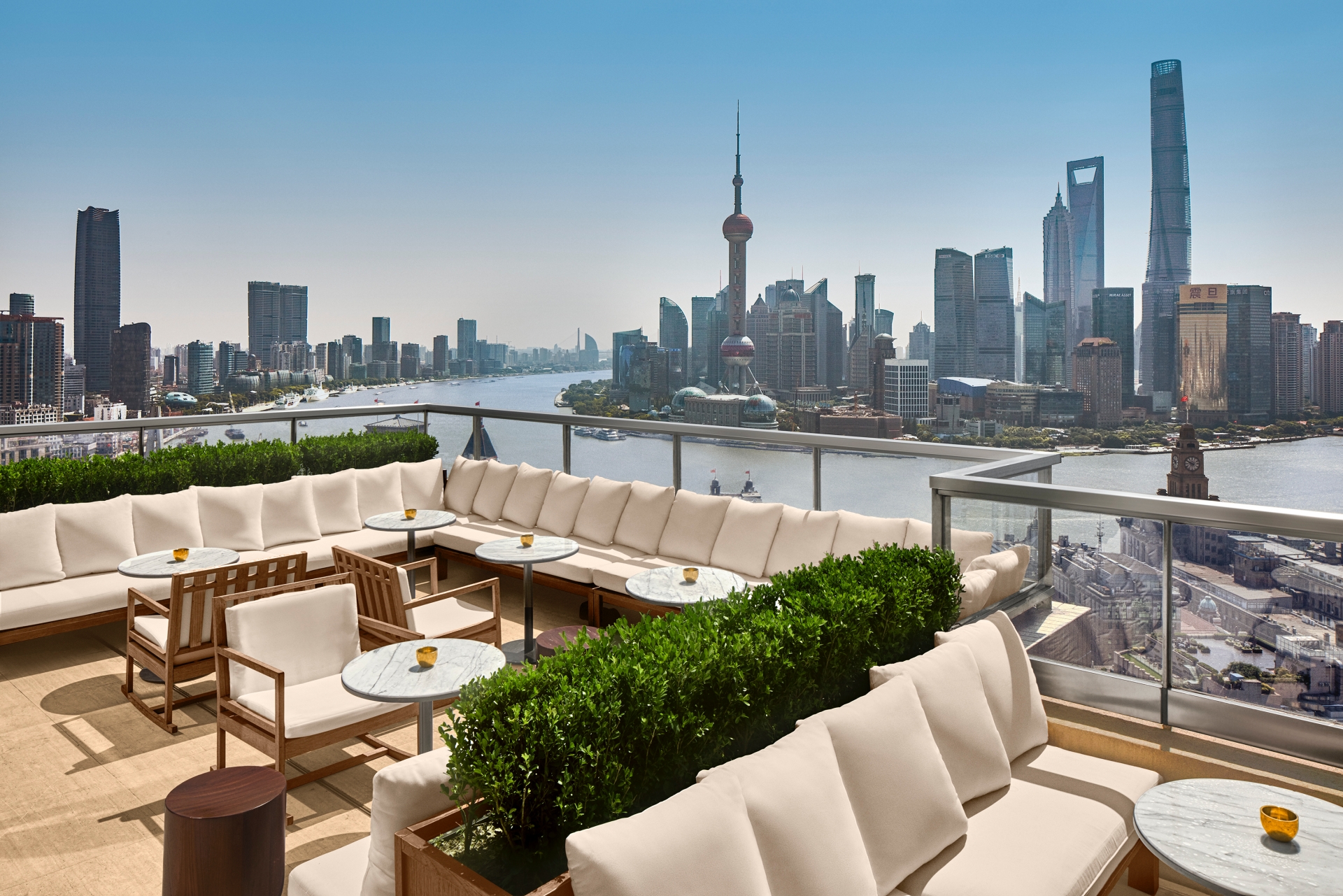
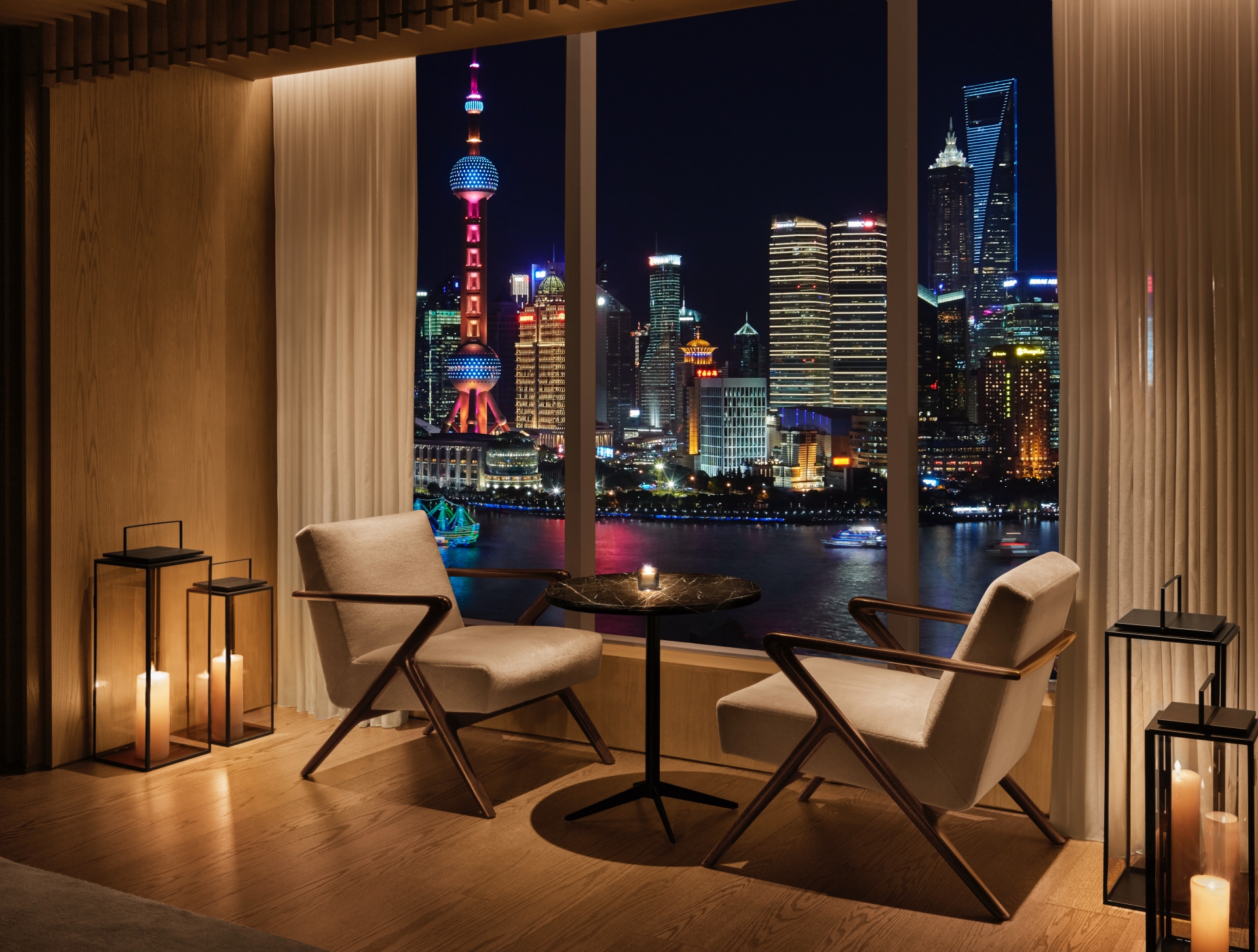
Directly across the river lies Pudong, a futuristic contrast. By day, its dramatic skyline features the pink spheres of the Oriental Pearl Tower, the stepped silhouette of Jin Mao, and the twisting glass spire of the Shanghai Tower. By night, the view turns electric as ferries crisscross the Huangpu, illuminated craft trace the water, and Pudong pulses in saturated violet, red, and blue reflections.
Architectural Harmony by Neri&Hu
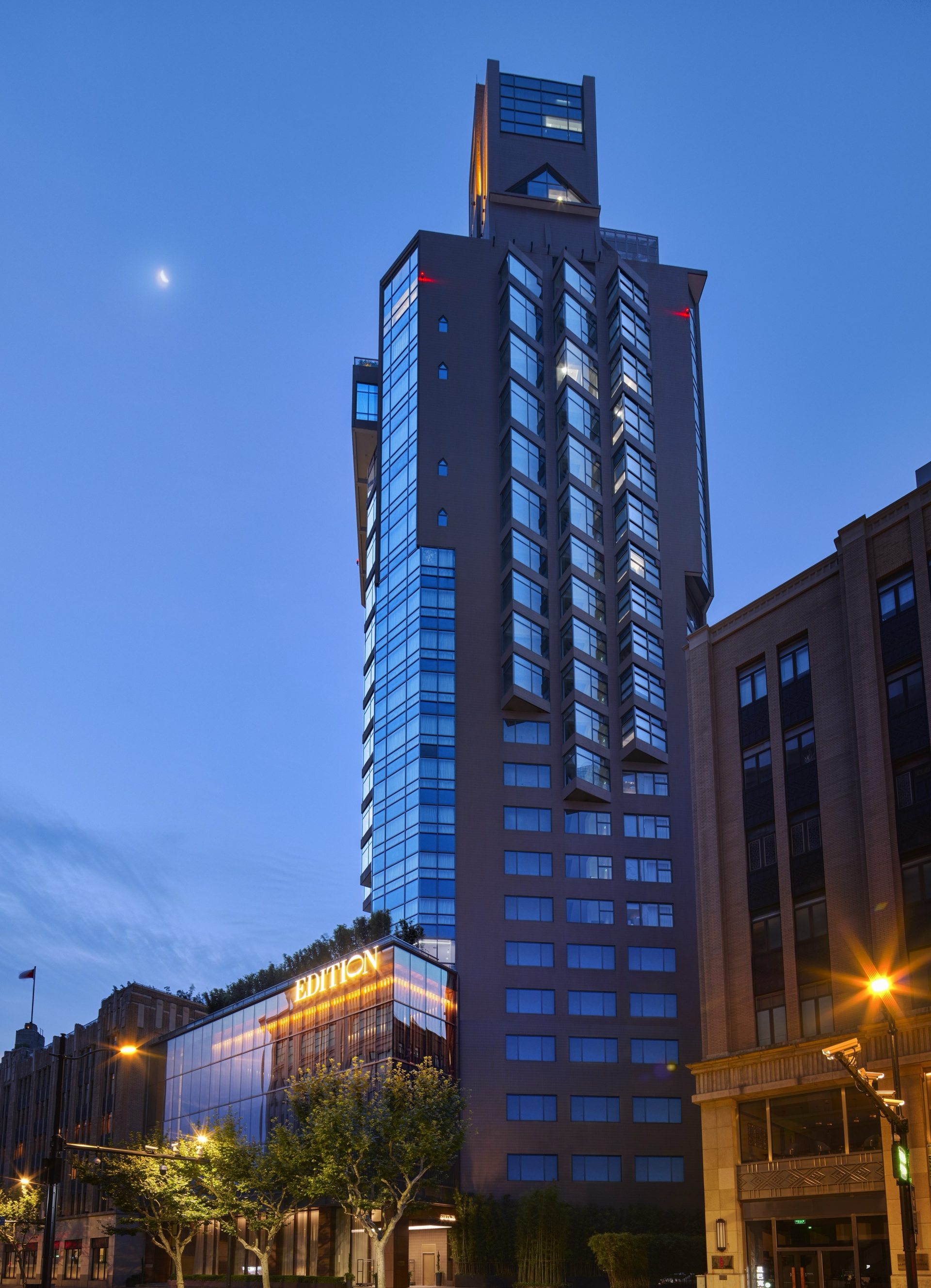
The Shanghai EDITION sits precisely at the intersection of these two cityscapes. Occupying a 1929 Art Deco heritage structure and an adjacent postmodern tower united by a sleek podium, the property was thoughtfully designed by Neri&Hu in collaboration with Ian Schrager Company to seamlessly bridge historic character with contemporary luxury.
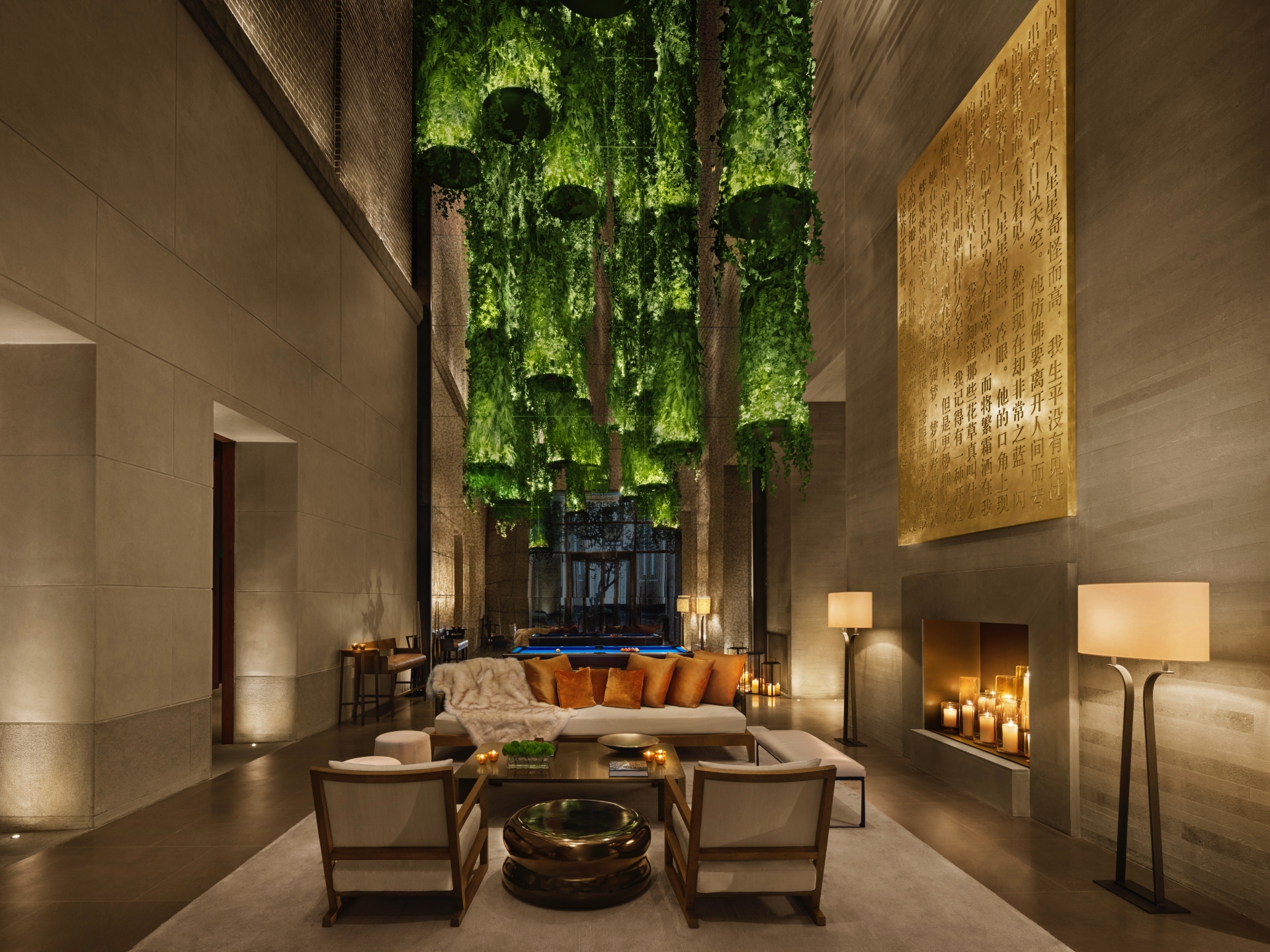
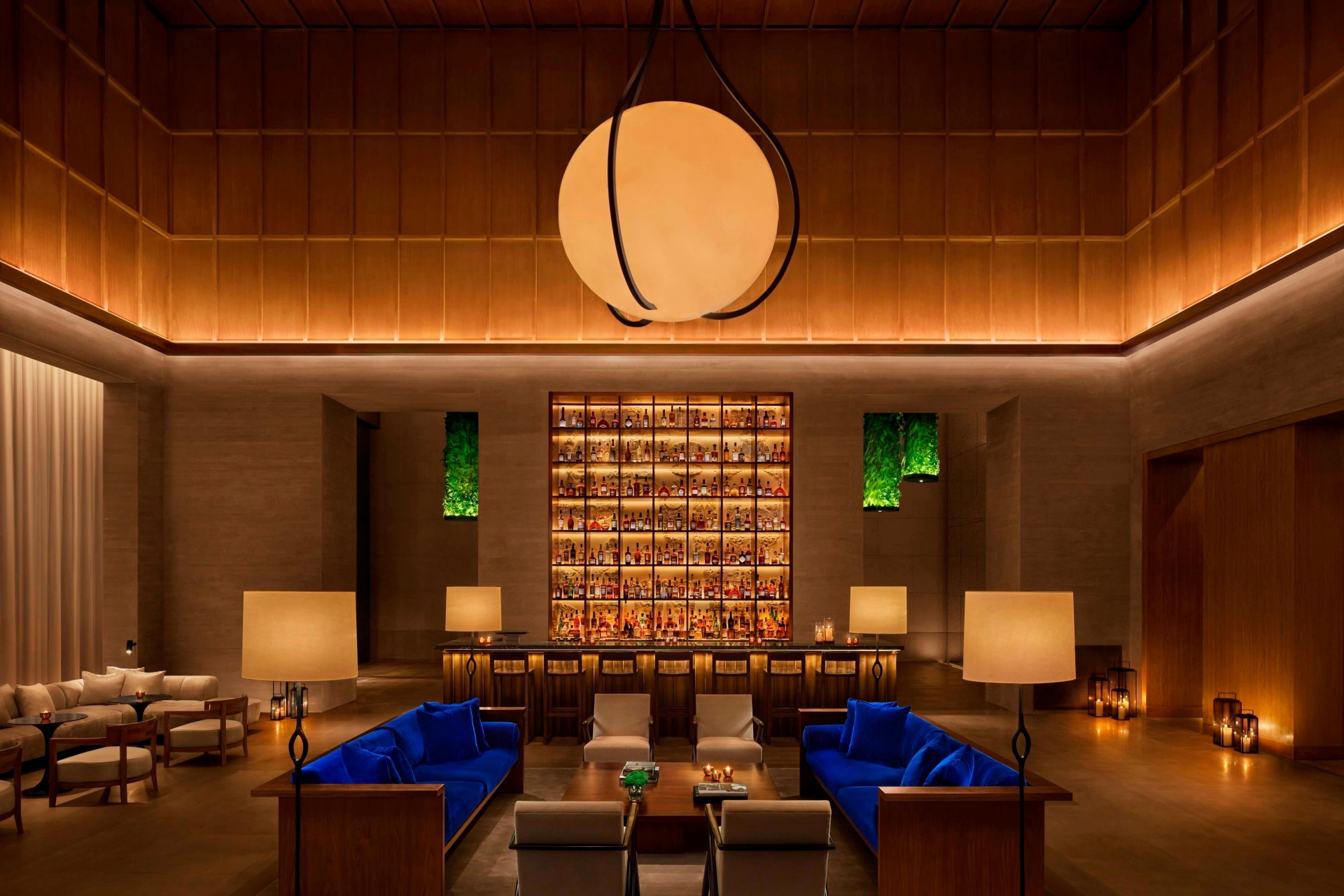
The arrival experience balances grandeur with intimacy. A dramatic, suspended walnut volume hangs over the lobby bar and lounge, where dark timber, lush electric-blue velvet seating, and a statement globe pendant set an inviting mood. Beyond, a soaring pale-stone atrium with cascading greenery and full-height mirrors reflects natural light throughout the interior.
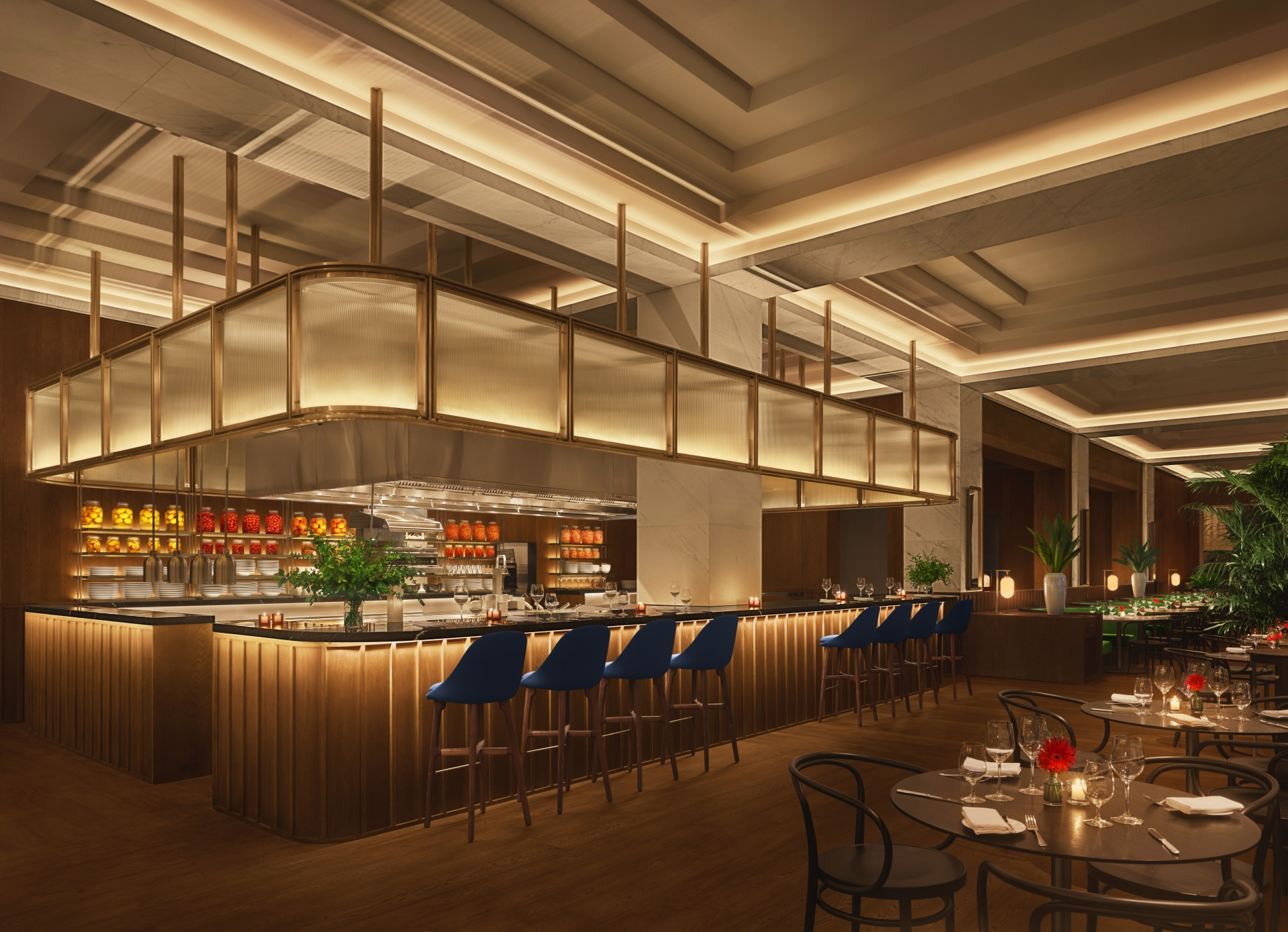
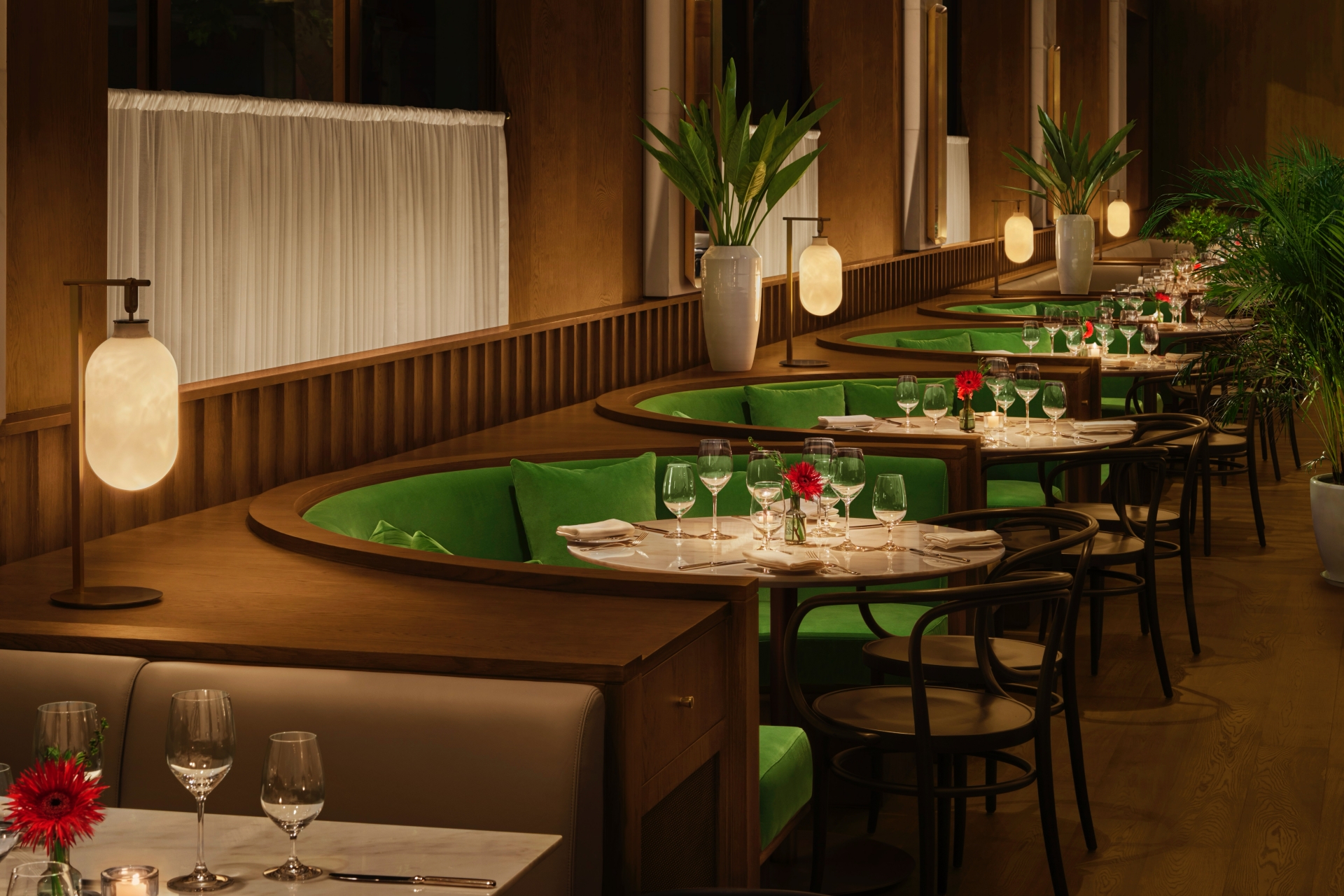
Grounding the property in local heritage, Shanghai Tavern - an all-day European brasserie - occupies the 1929 Heritage Building, preserving classic Art Deco architecture alongside a modern brass-and-striped-glass open kitchen.
Elevated Sanctuary
Then the building begins to pull you upwards.
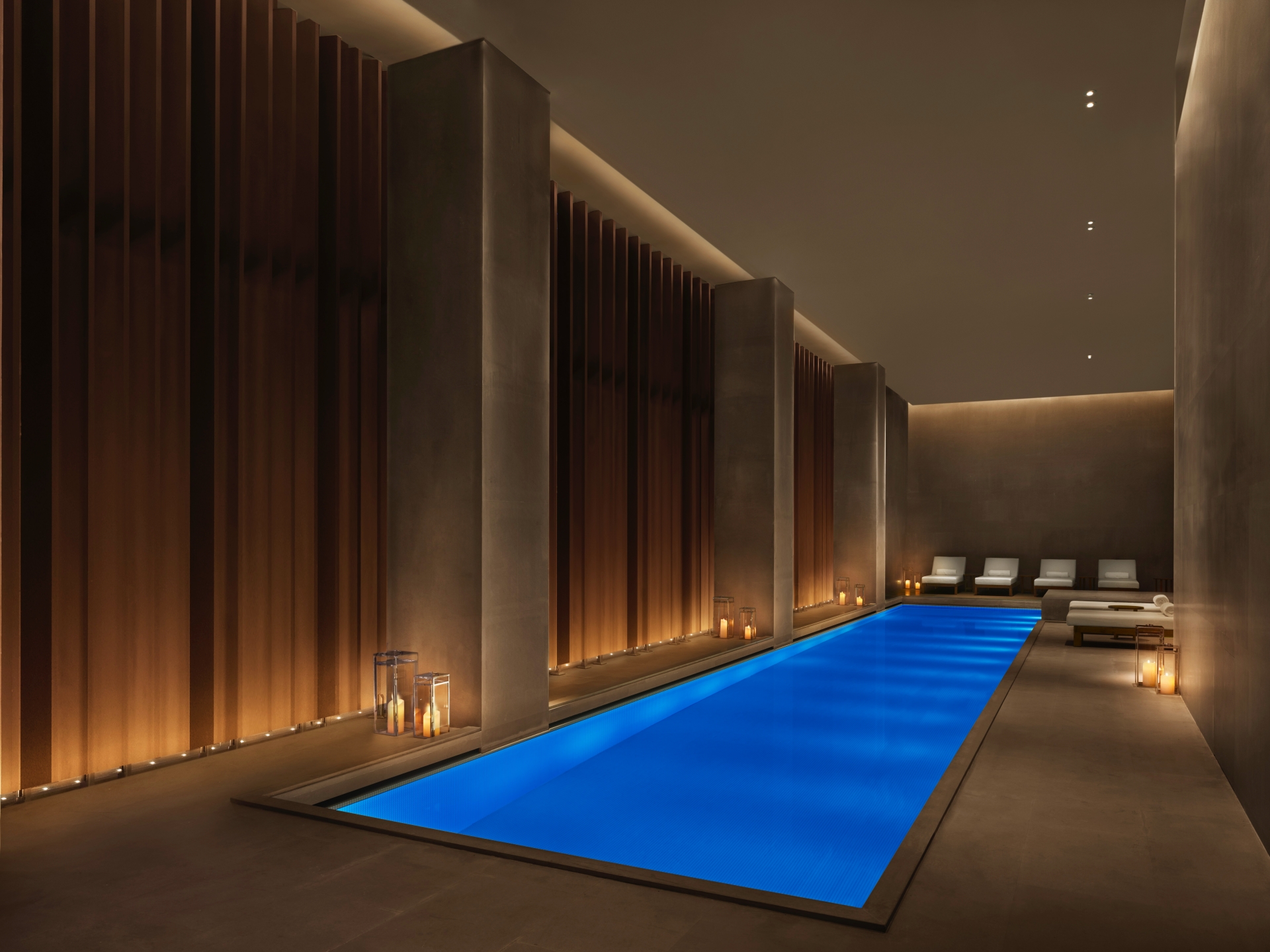
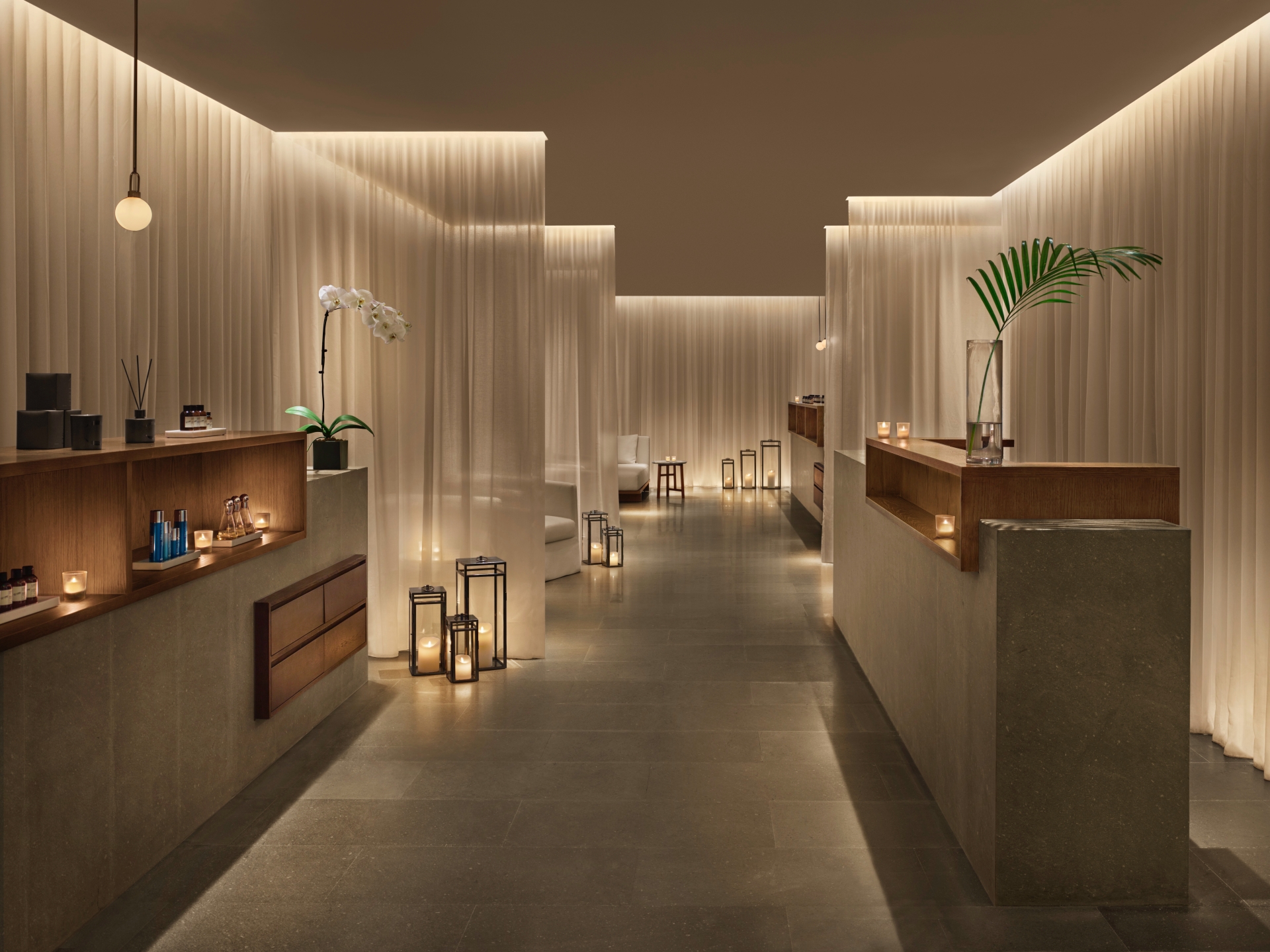
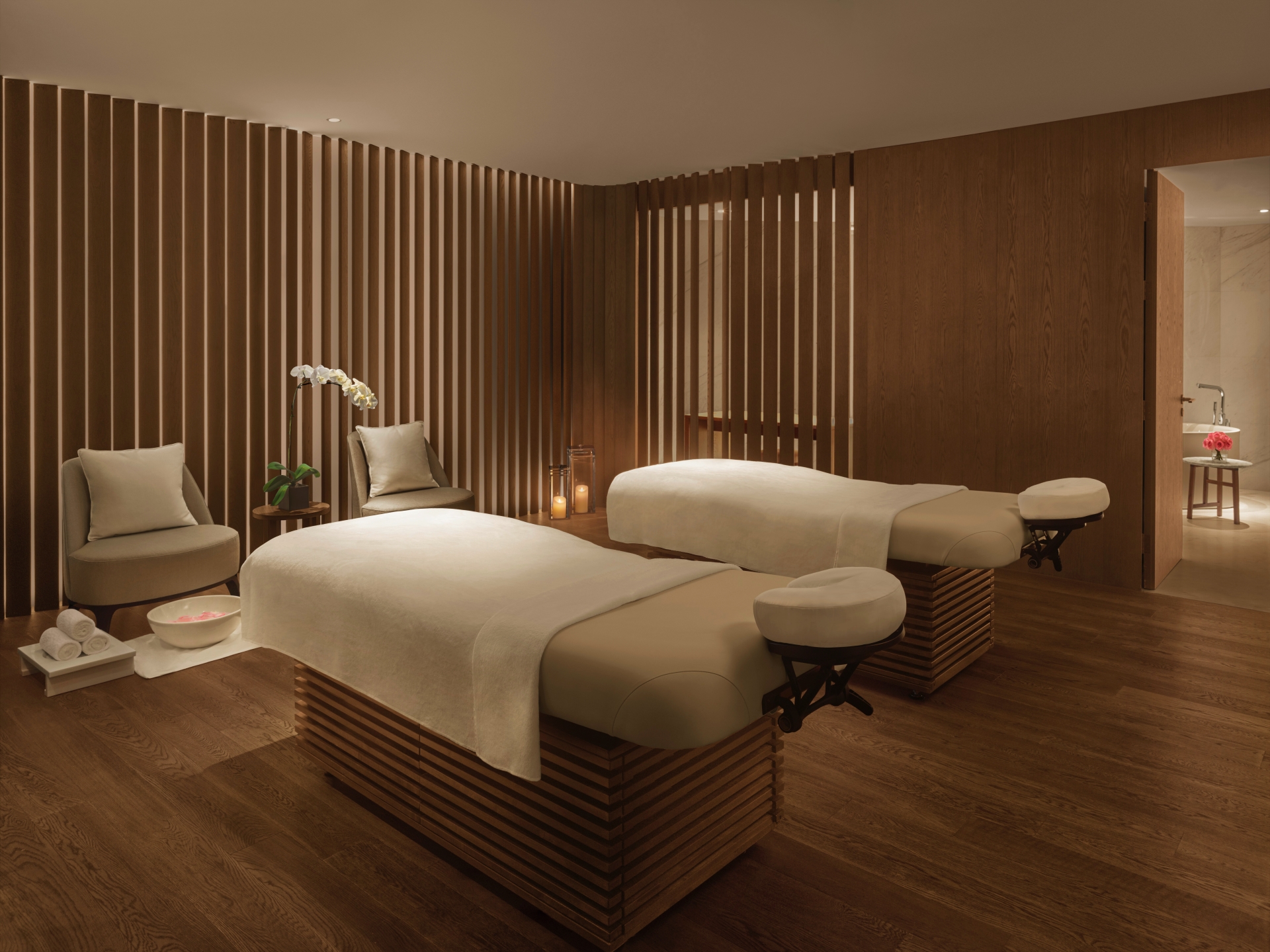
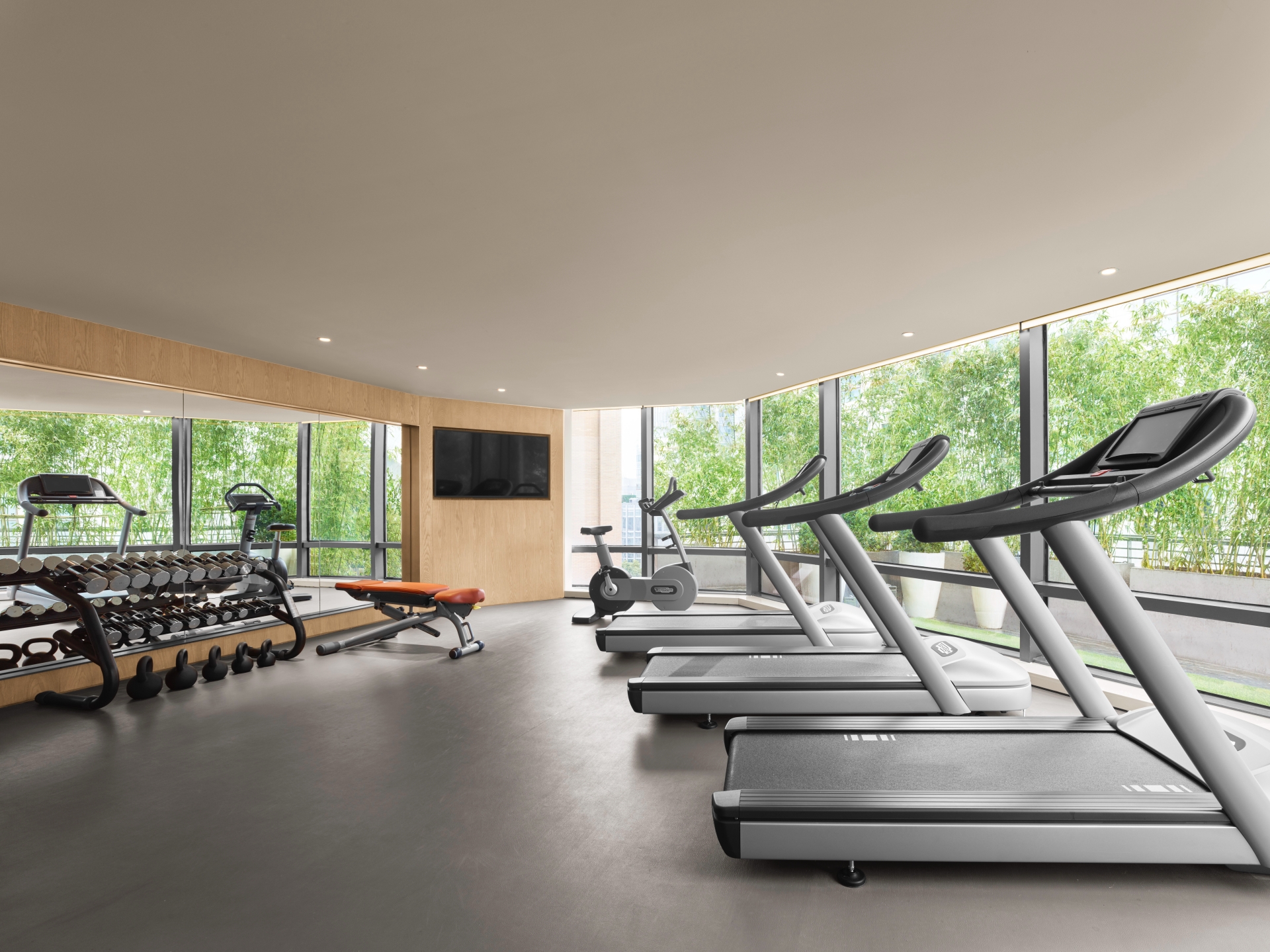
Ascending to Level 5 reveals an indoor pool crafted from clean stone planes, glowing in rich blue tones after dark. Above, the serene spa features backlit oak, sheer drapes, and smooth grey stone, while the 24-hour gym on Level 7 opens onto a spacious outdoor terrace ideal for morning tai chi or yoga.
These spaces feel deliberately removed from the visual noise below. But the real change comes higher up, when the hotel stops turning inward and Shanghai begins to flood back in.
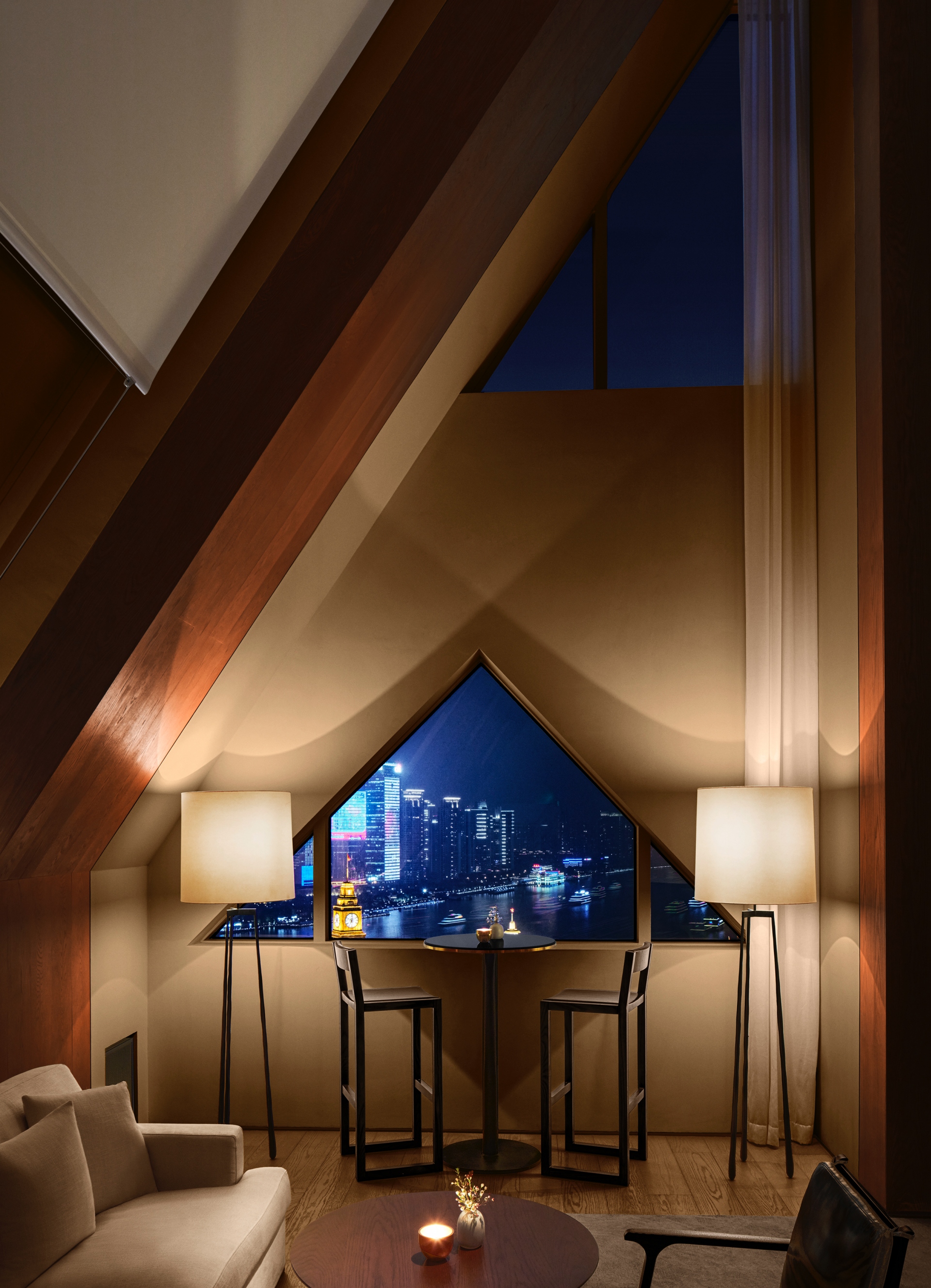
On the 27th floor, YONE offers dramatic panoramic vistas of the river and urban sprawl. Conceptualized with chef Fumio Yonezawa and mixologist Shingo Gokan, the restaurant highlights culinary interpretations of rice within a sophisticated setting of crisp white seating, dark timber accents, and angular windows framing the Bund and Pudong.
Culinary and Skyline Perspectives
The thoughtful Skyline Journey menu features refined dishes such as sweet shrimp, tender Wagyu, and Saikyo-miso black cod, concluding with matcha terrine and light coconut sorbet.
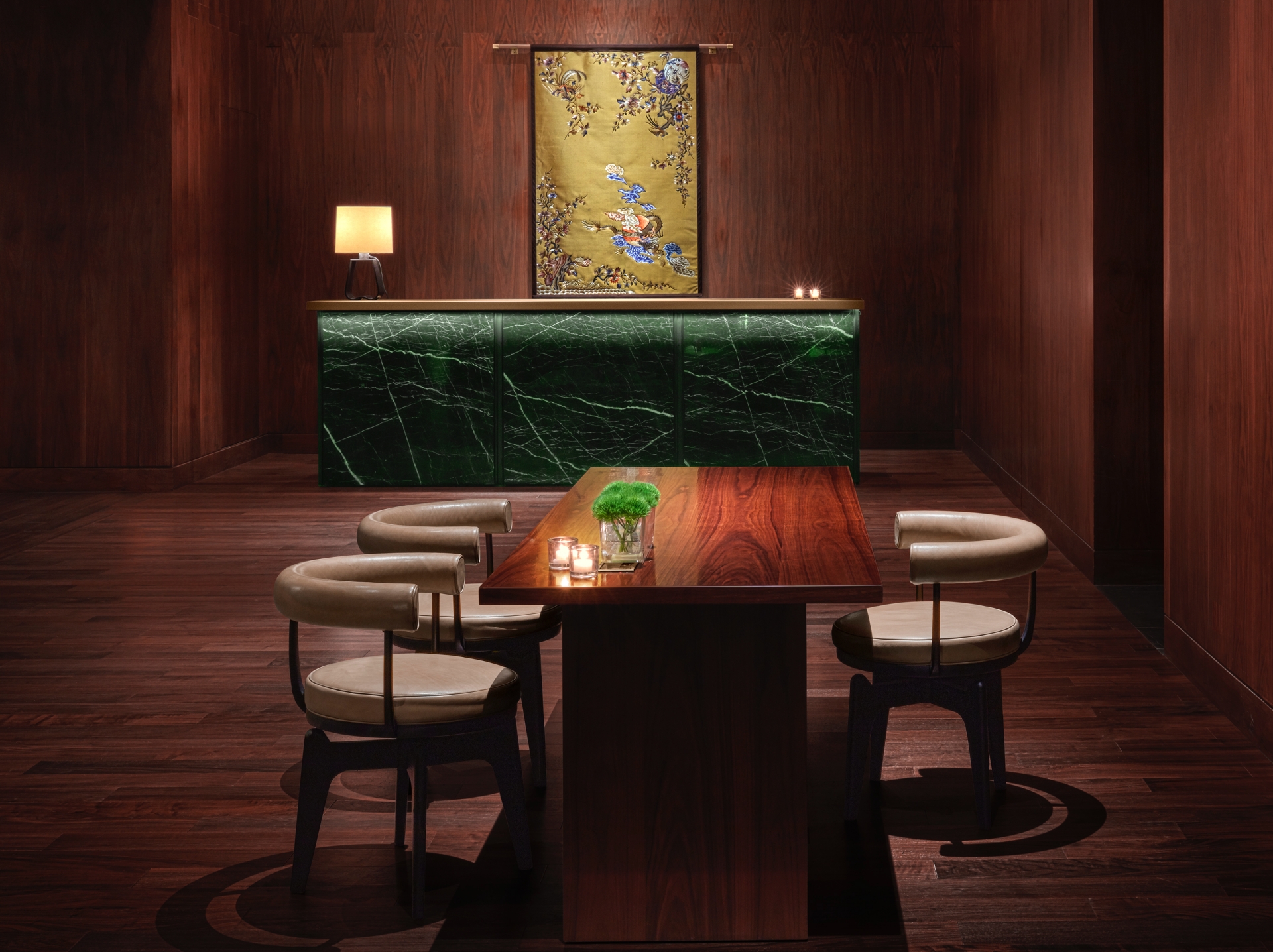
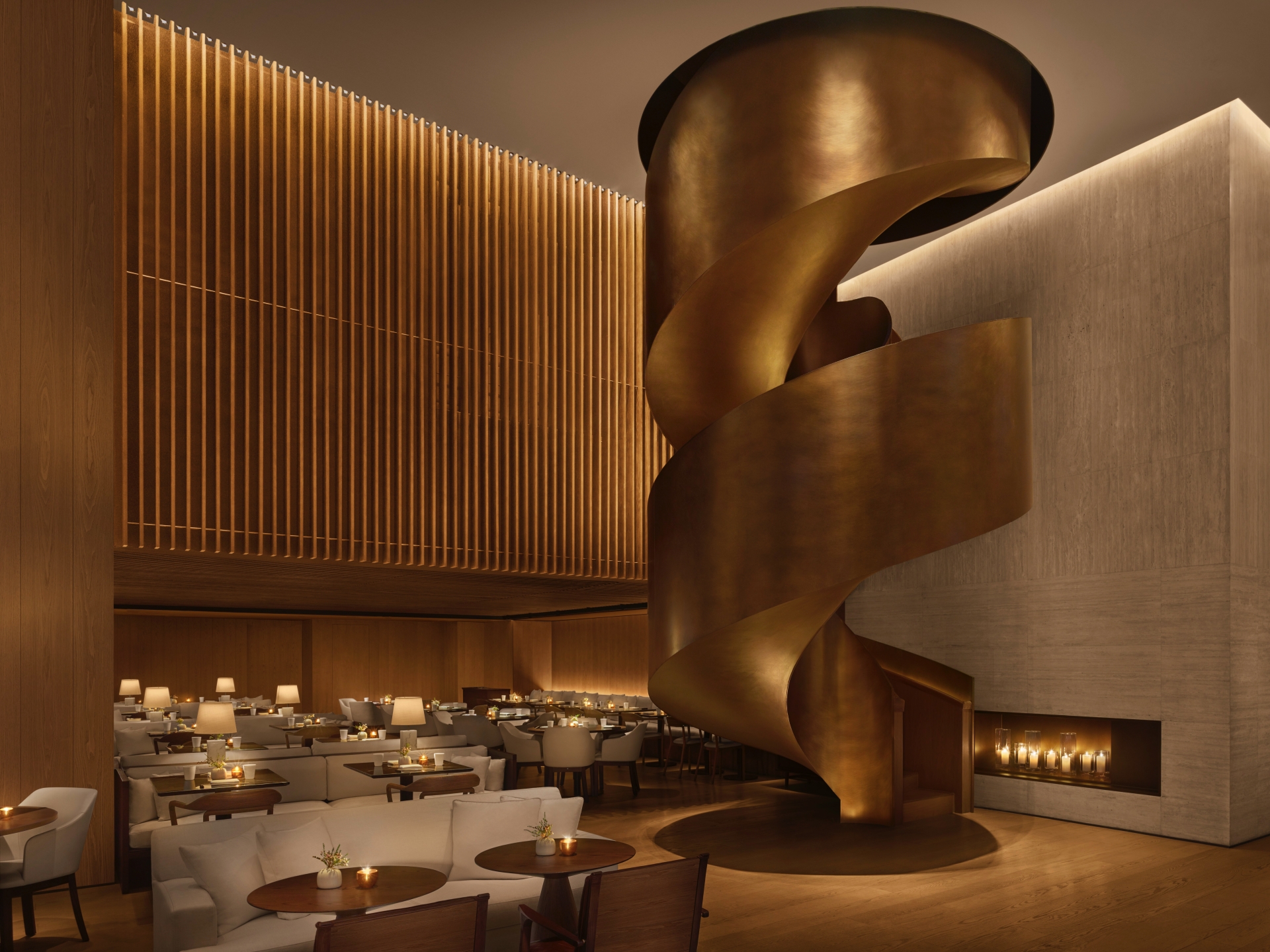
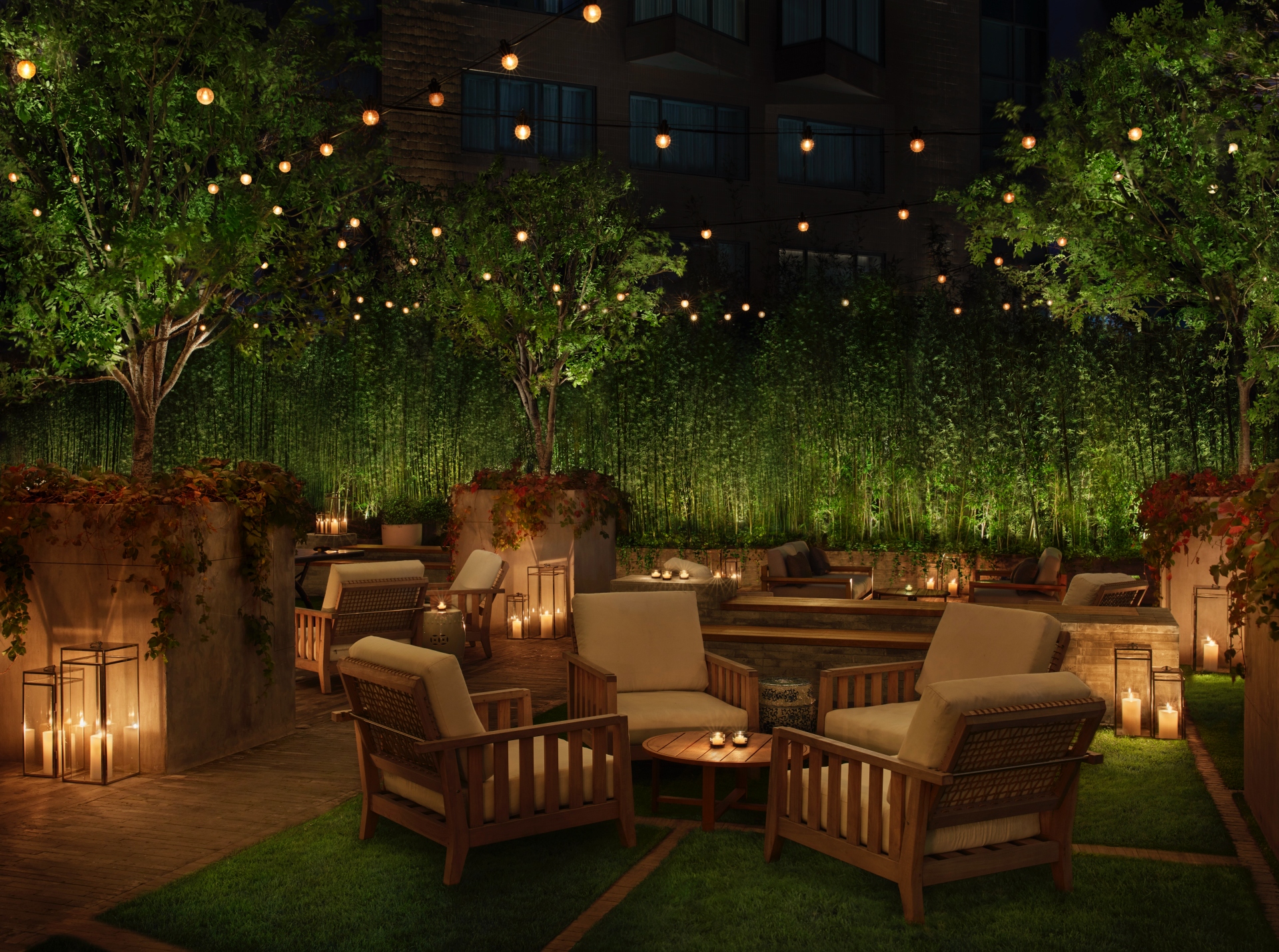
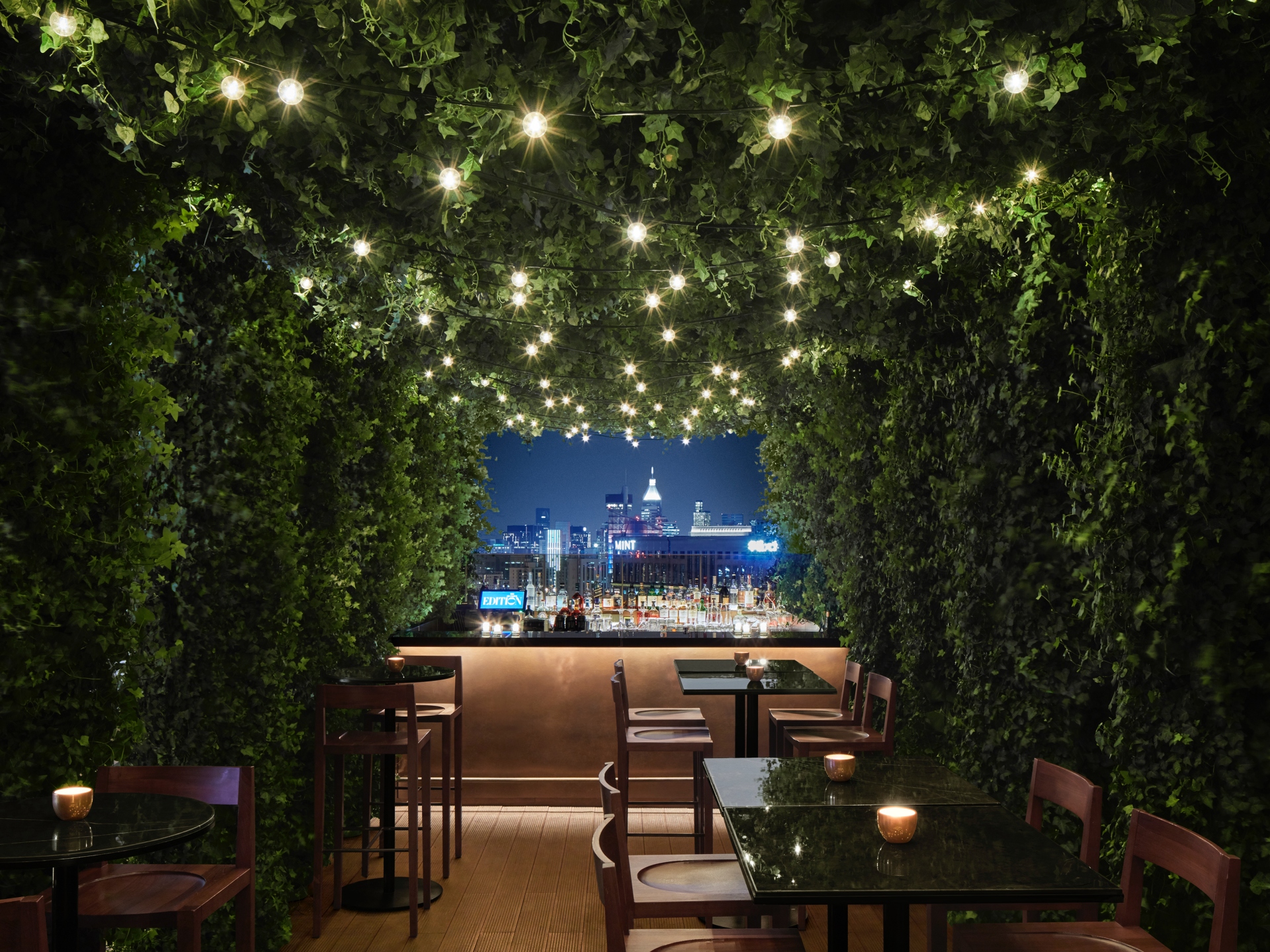
A custom sculptural aged-bronze staircase spirals upward to the intimate Punch Room, cocooned in warm wood paneling overlooking the vibrant lights of Pudong. Higher still, ROOF celebrates the skyline in full view. By day, pristine white lounges set beneath an ivy-covered trellis offer an ideal setting for afternoon tea. By night, the greenery recedes as the glittering city lights across the river take center stage.
Refined Residential Living
The hotel begins at street level among the remnants of old Shanghai, then rises until the future city is directly in front of you.
And yet the street is never far away.
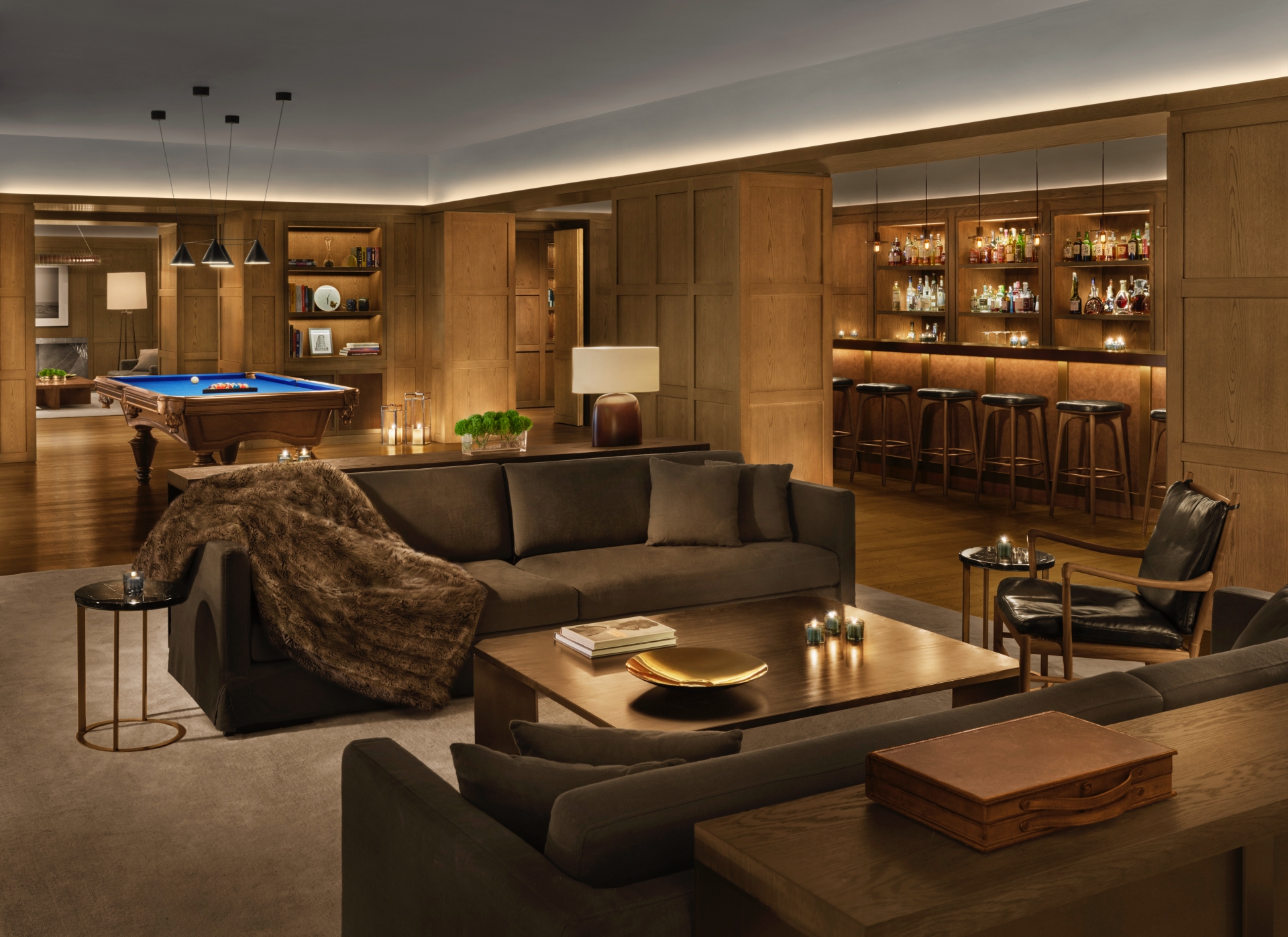
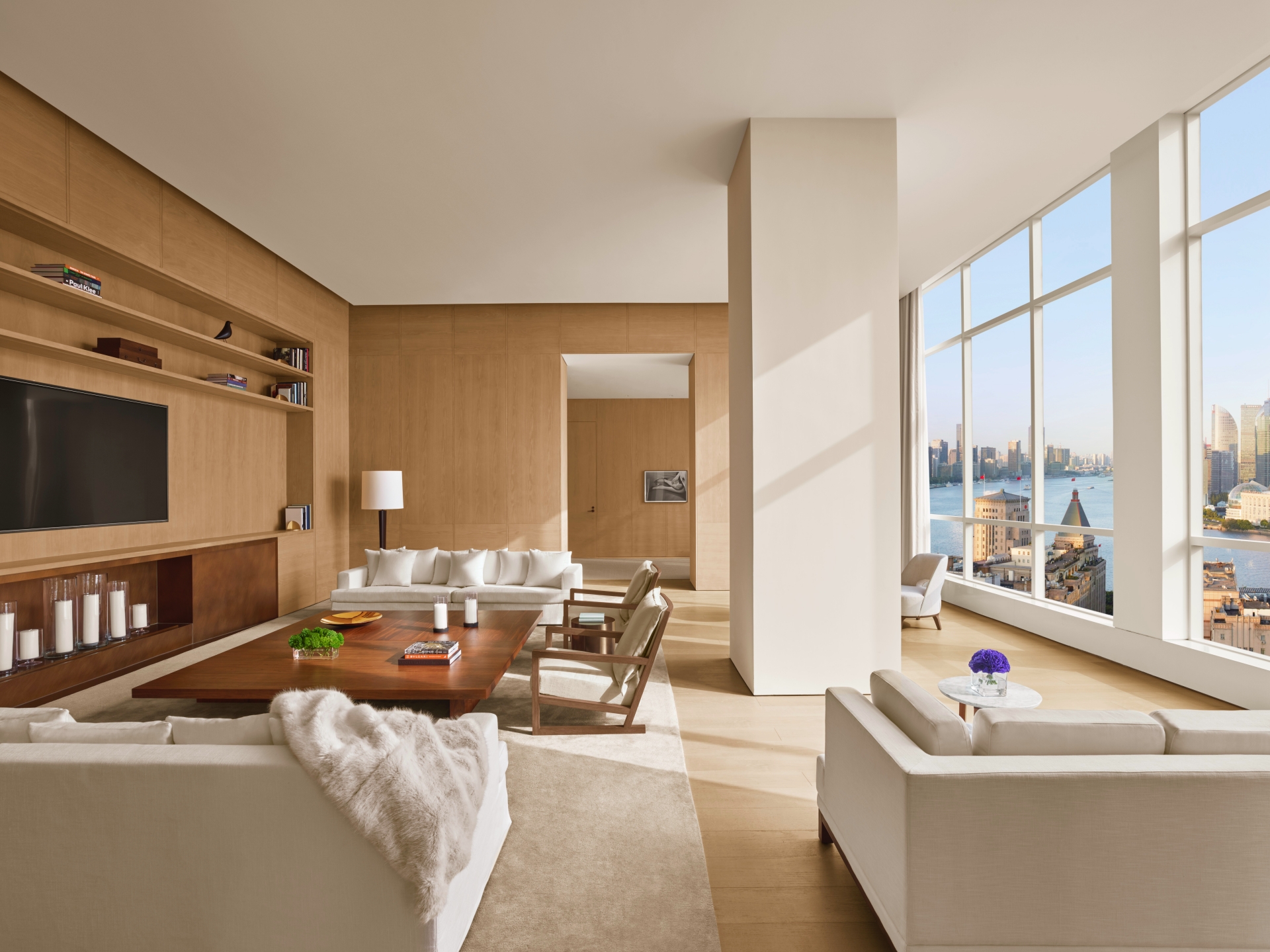
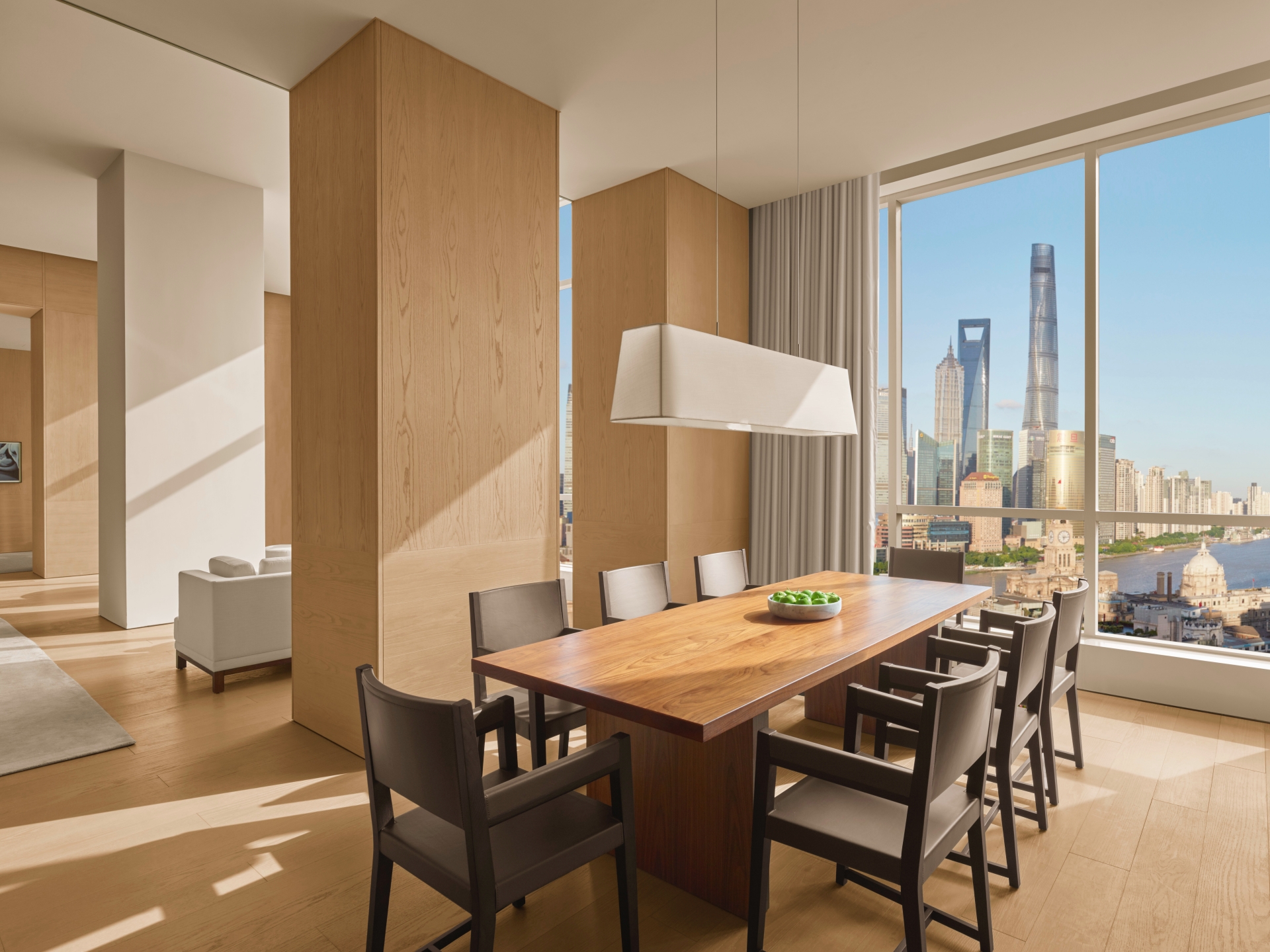
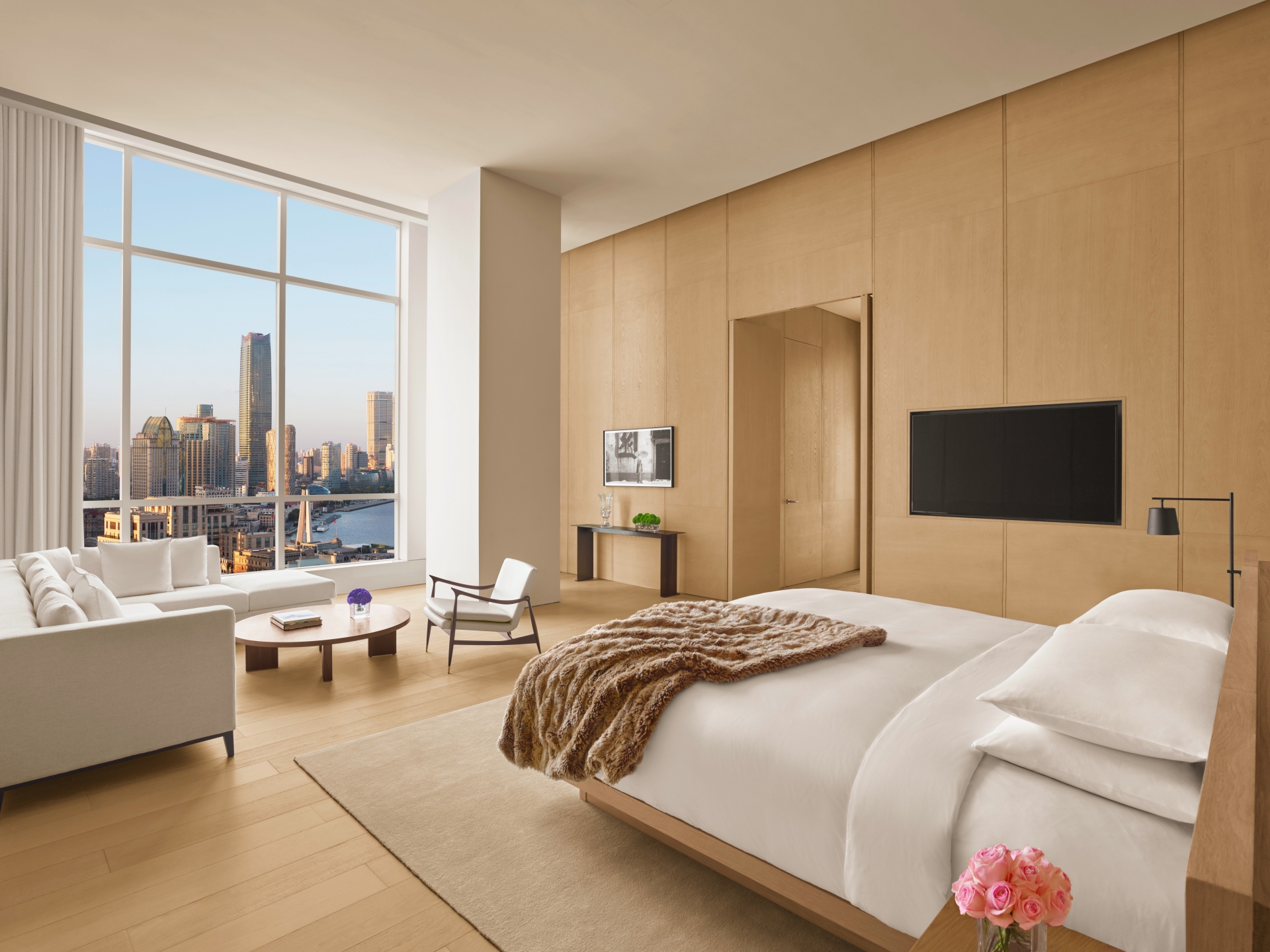
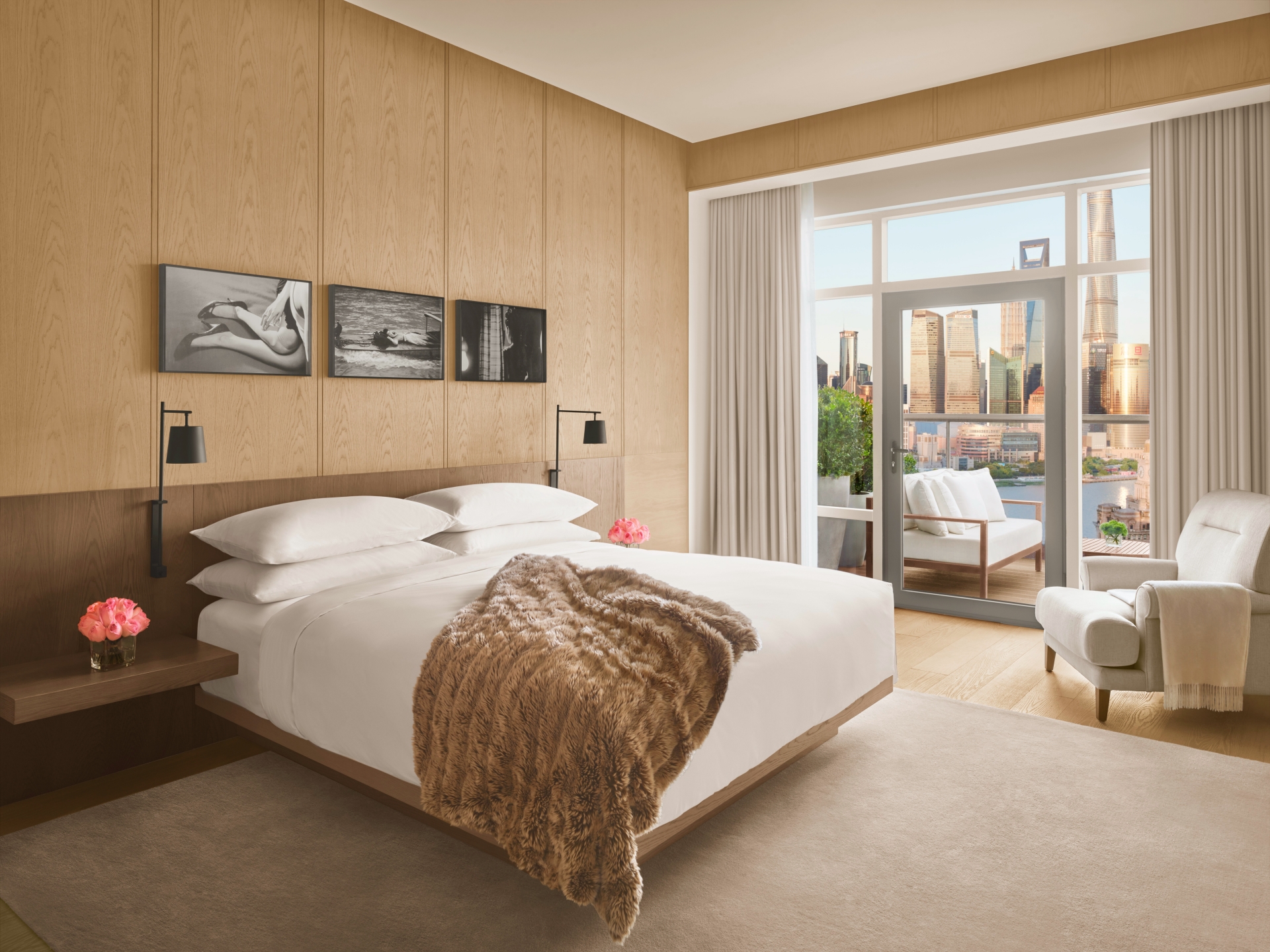
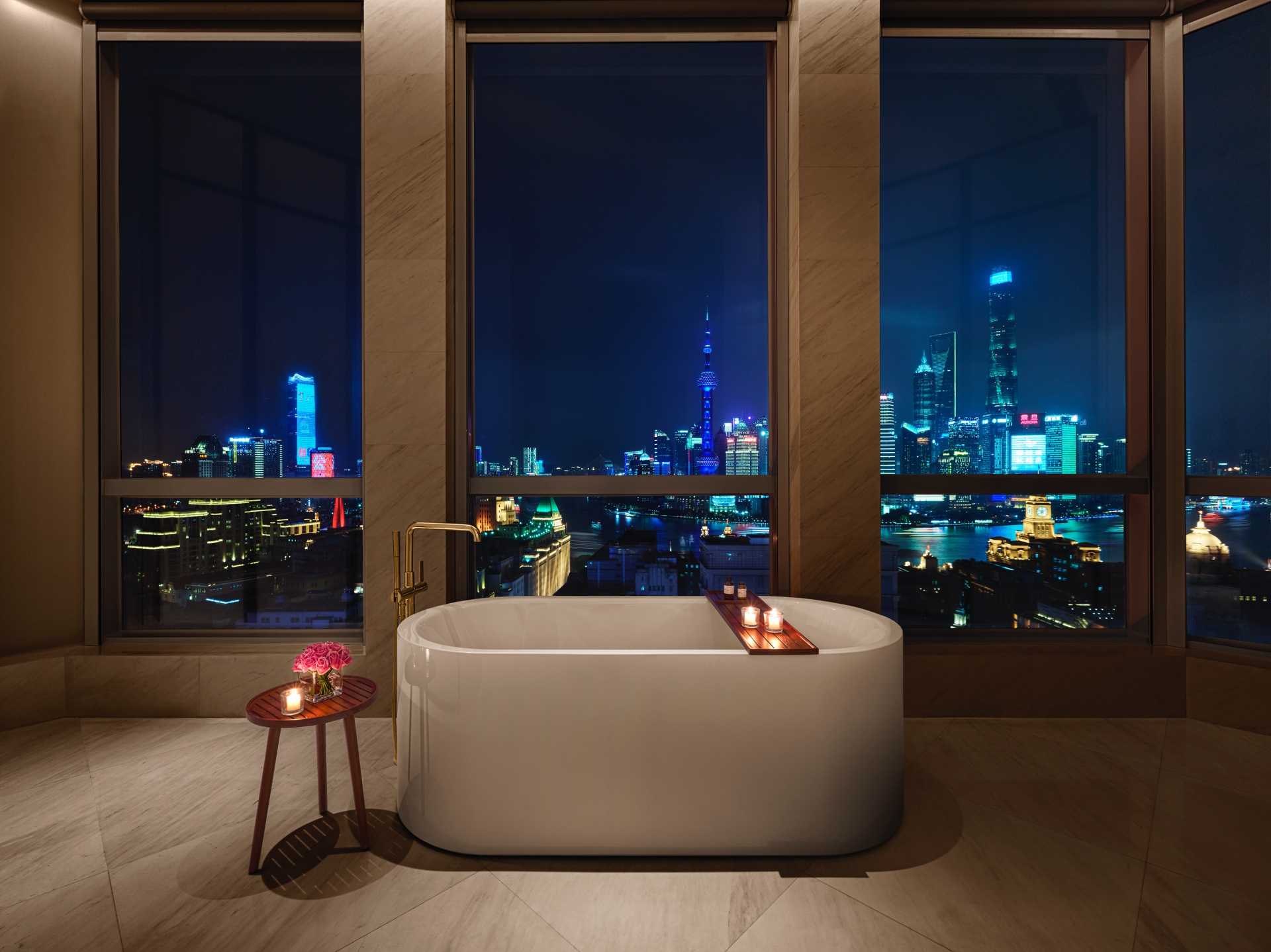
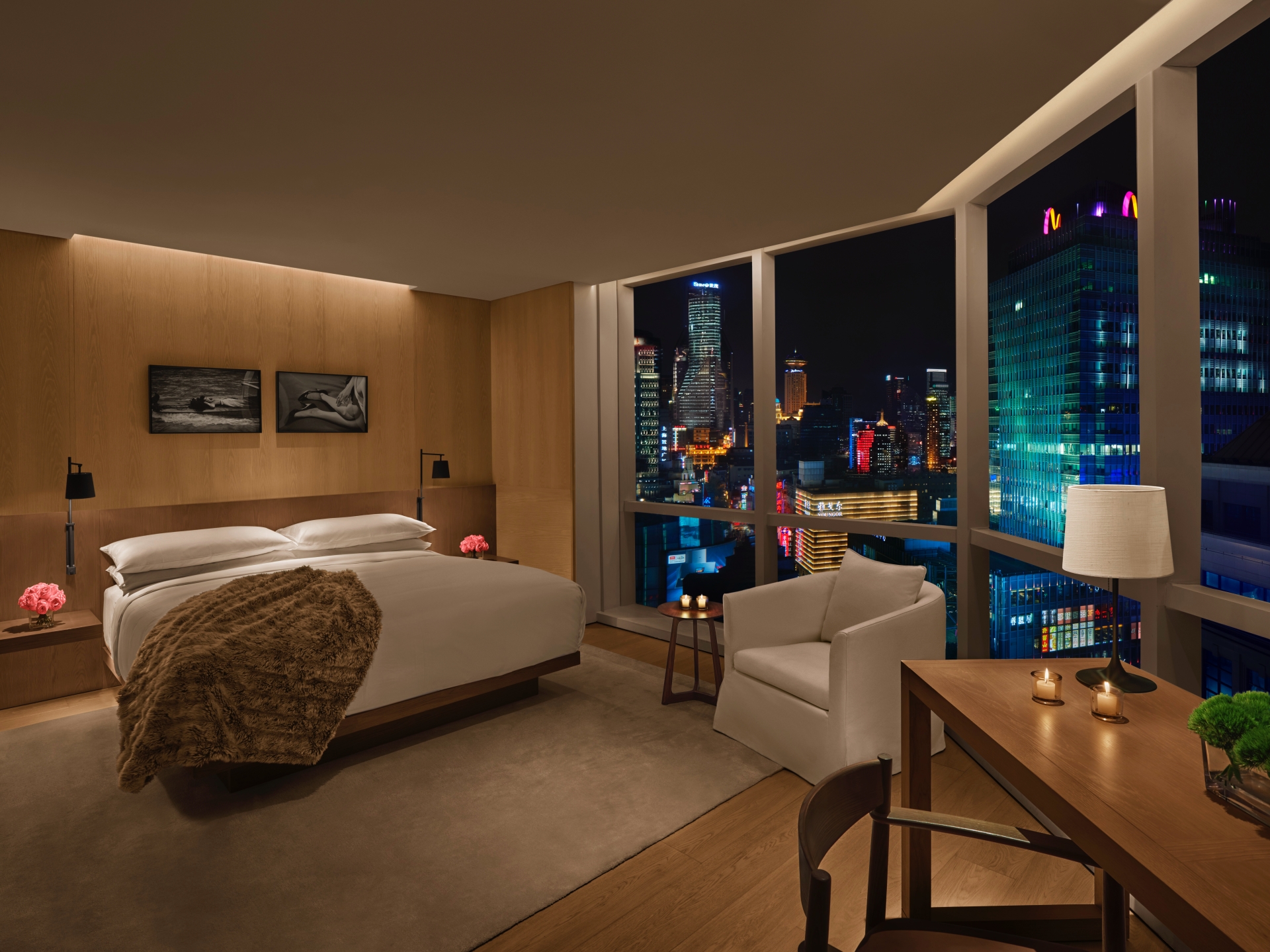
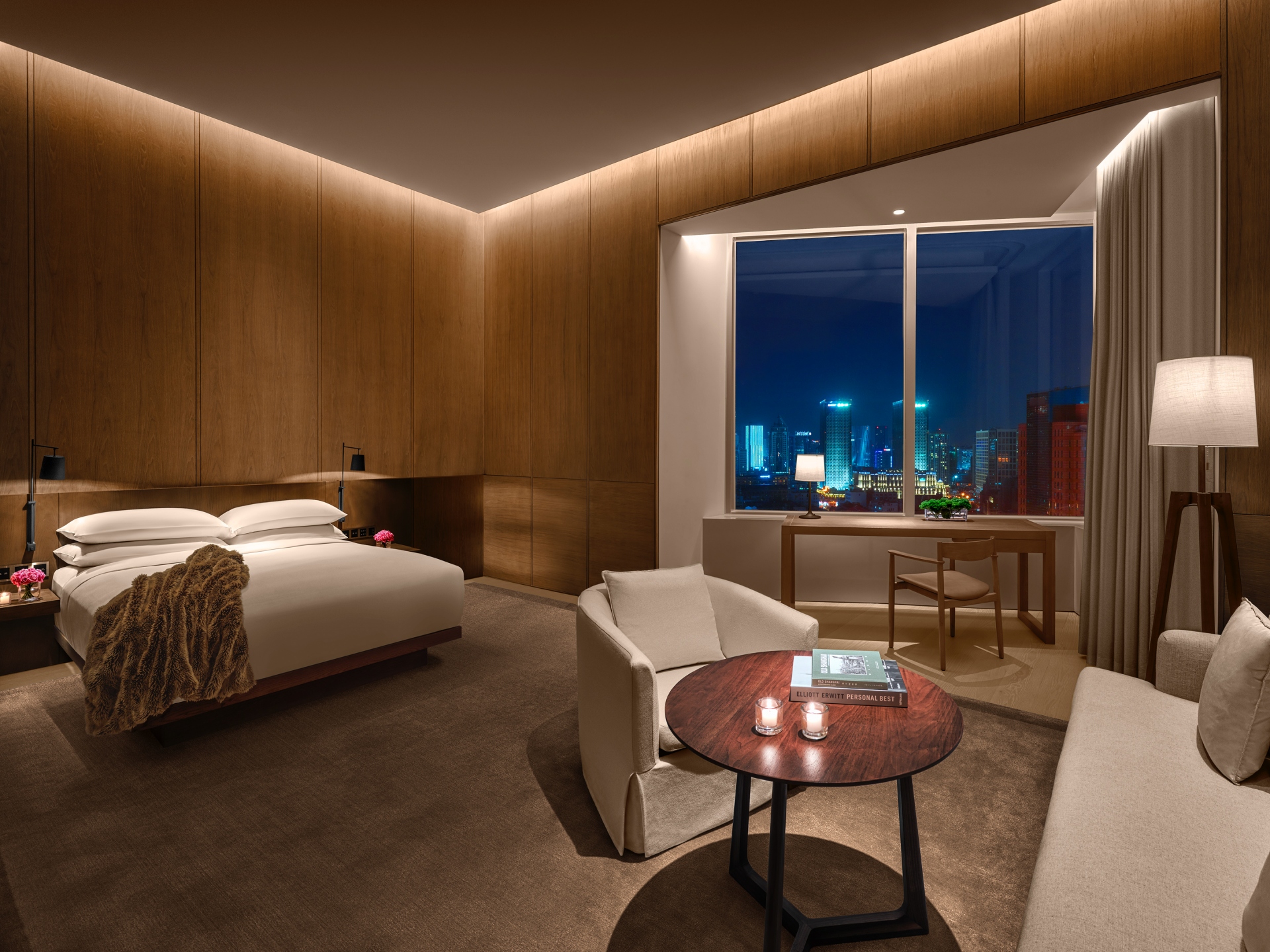
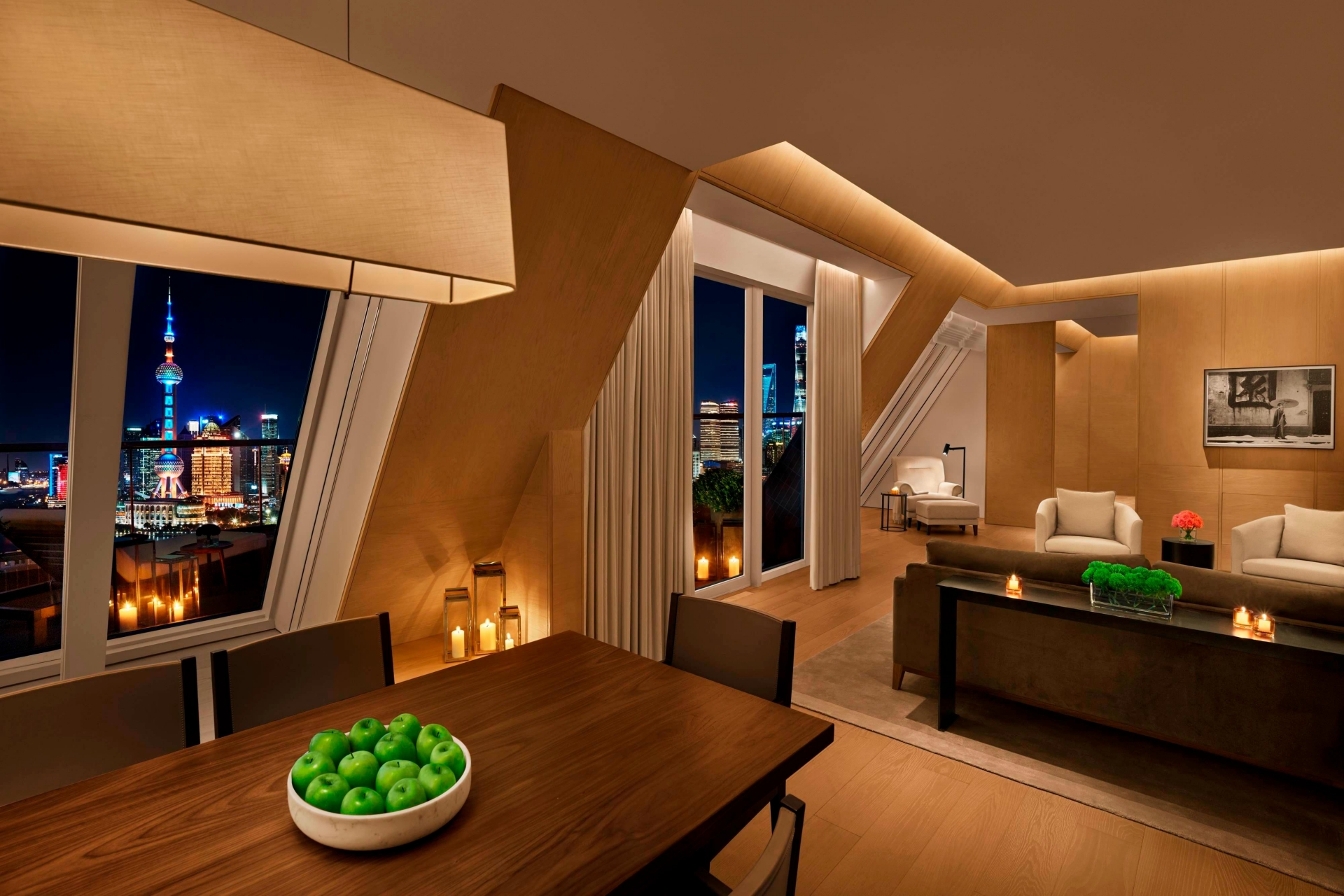
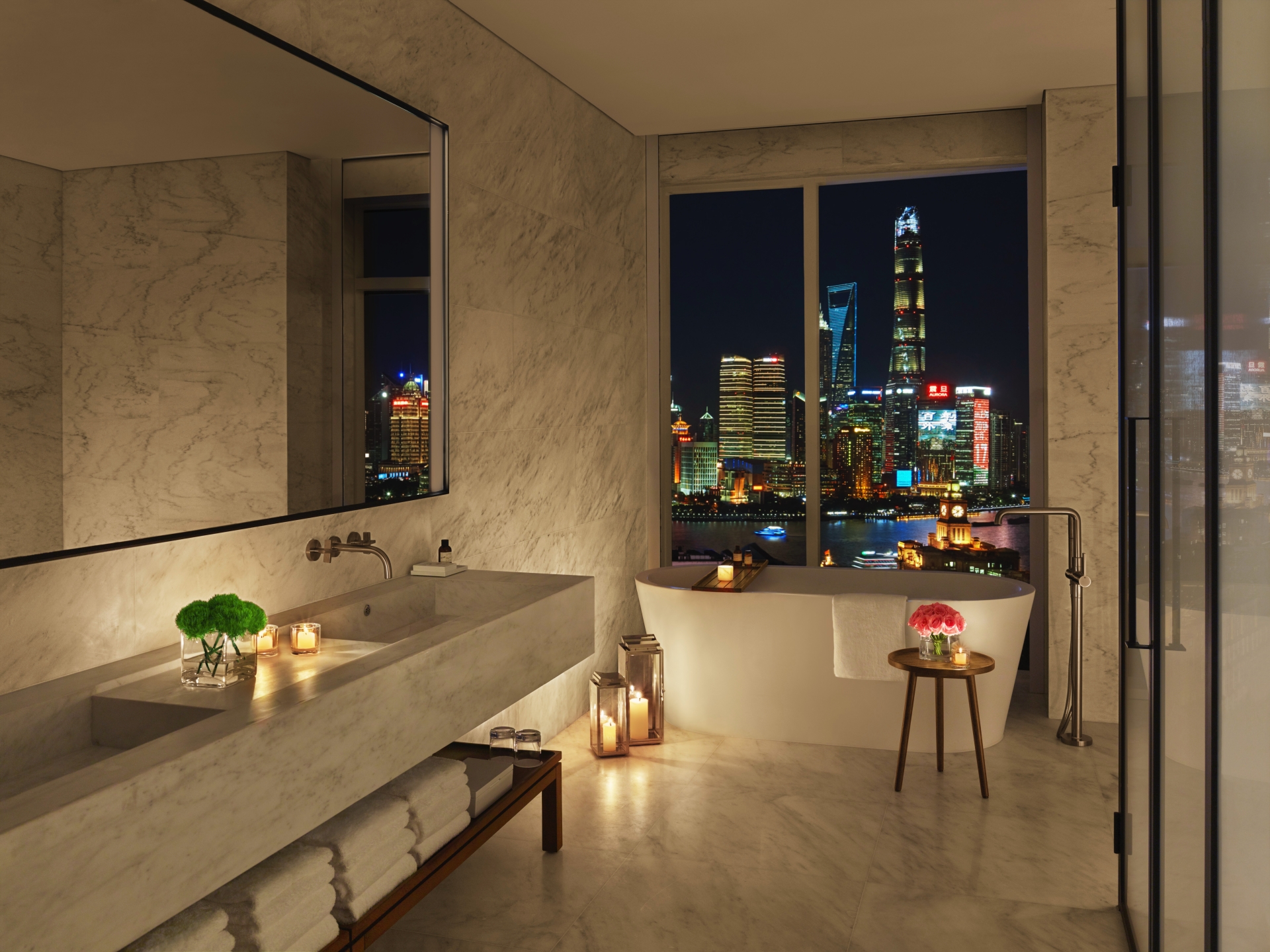
Step outside at night and Nanjing Road becomes dense visual chaos: neon, giant screens, illuminated signs, crowds and sightseers flowing towards the Bund. After the controlled interiors above, it is almost startling to be swallowed straight back into Shanghai. The guest rooms and suites provide a serene retreat from the energy of Nanjing Road below. Rendered in a signature palette of light natural oak, plush neutral textiles, and tactile faux-fur throws, the interiors evoke subtle luxury. The spacious marble bathrooms feature sleek black-framed glass and freestanding soaking tubs positioned to capture sweeping views over the historic Bund. Nothing inside needs to compete with what is happening beyond the glass, and that is precisely the point.
Then, at midnight, it is suddenly over. The lights disappear, the colour drains from Pudong, the golden Bund goes dark and the spectacle simply vanishes. After all that movement, brilliance and colour, the blackness feels almost physical.