
PODCAST
WHAT MAKES A GOOD CONVERSATION? LOOK NO FURTHER THAN OUR ART OF THE CONVERSATION, FEATURING UNCONVENTIONAL STORIES AND PEOPLE WHO MOVE AND INSPIRE
LISTEN NOW


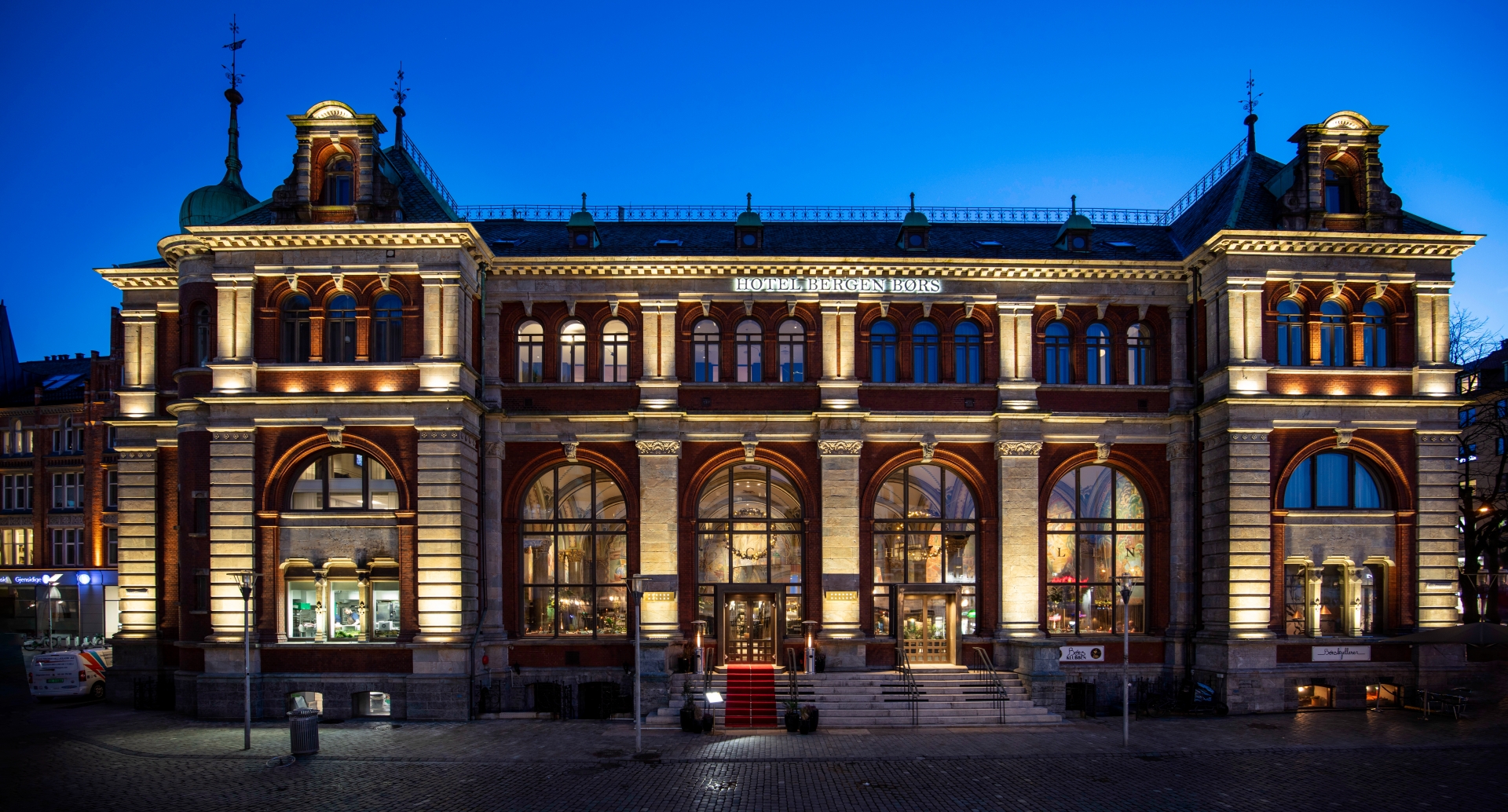
Occupying a commanding position opposite Bergen’s historic Fish Market and overlooking the dark waters of Vågen harbour, the former Stock Exchange stands as a masterpiece of Renaissance Revival civic architecture. Completed in 1862, the building was born of a city defined by maritime trade and global exchange. Today, three seamlessly interconnected heritage structures house 127 guestrooms and suites. The task of recontextualizing this historic fabric for the contemporary connoisseur was entrusted to the acclaimed Swedish architecture and design studio Claesson Koivisto Rune.
Eero Koivisto characterizes the studio’s overarching ethos as one of “neutral modernity”. Rather than engaging in pastiche or imposing a discordant modern aesthetic, the architects inserted precise, contemporary forms that act as optical and spatial interlocutors to the original structure, allowing history to remain actively present rather than passively exhibited.
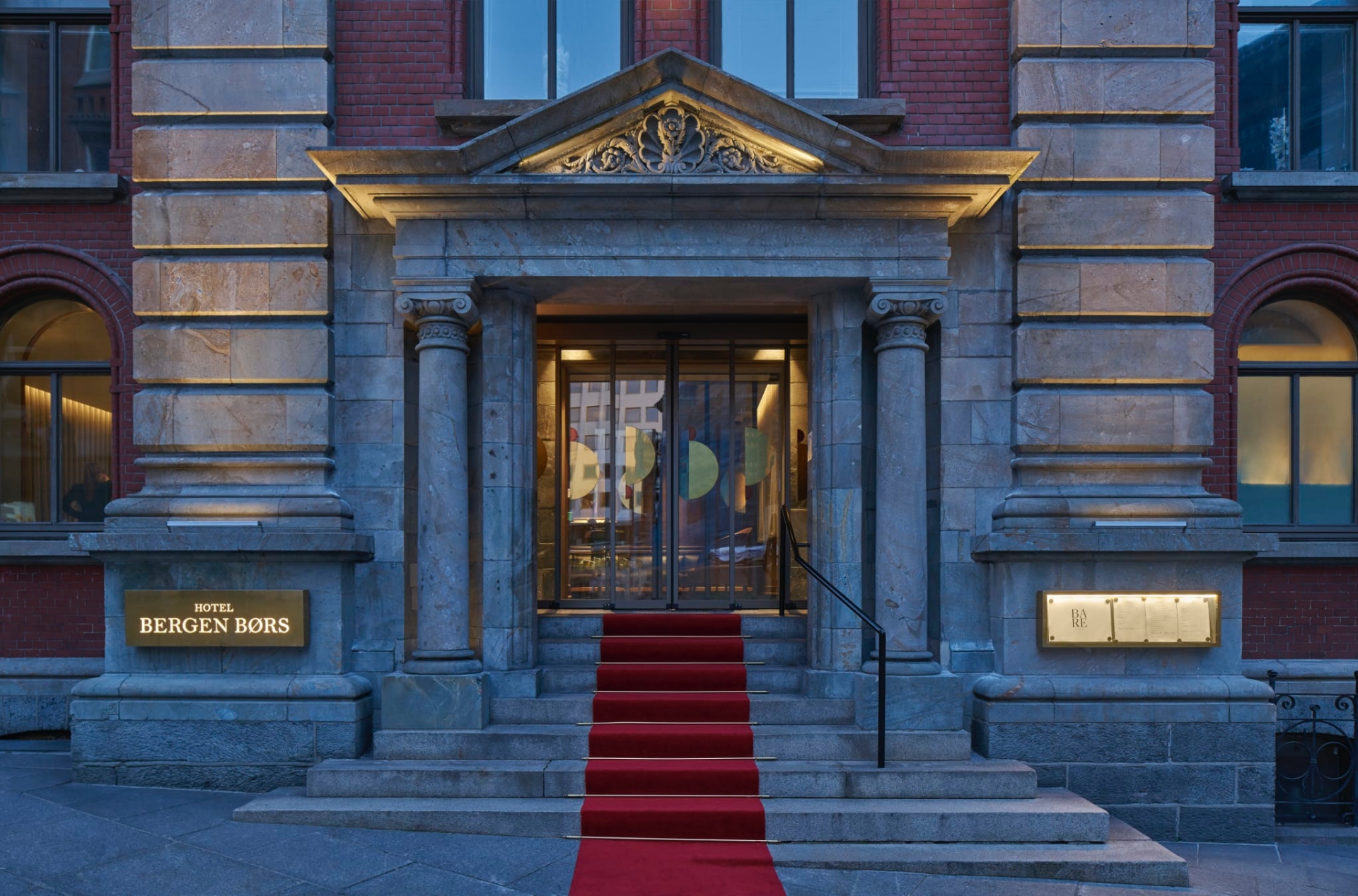
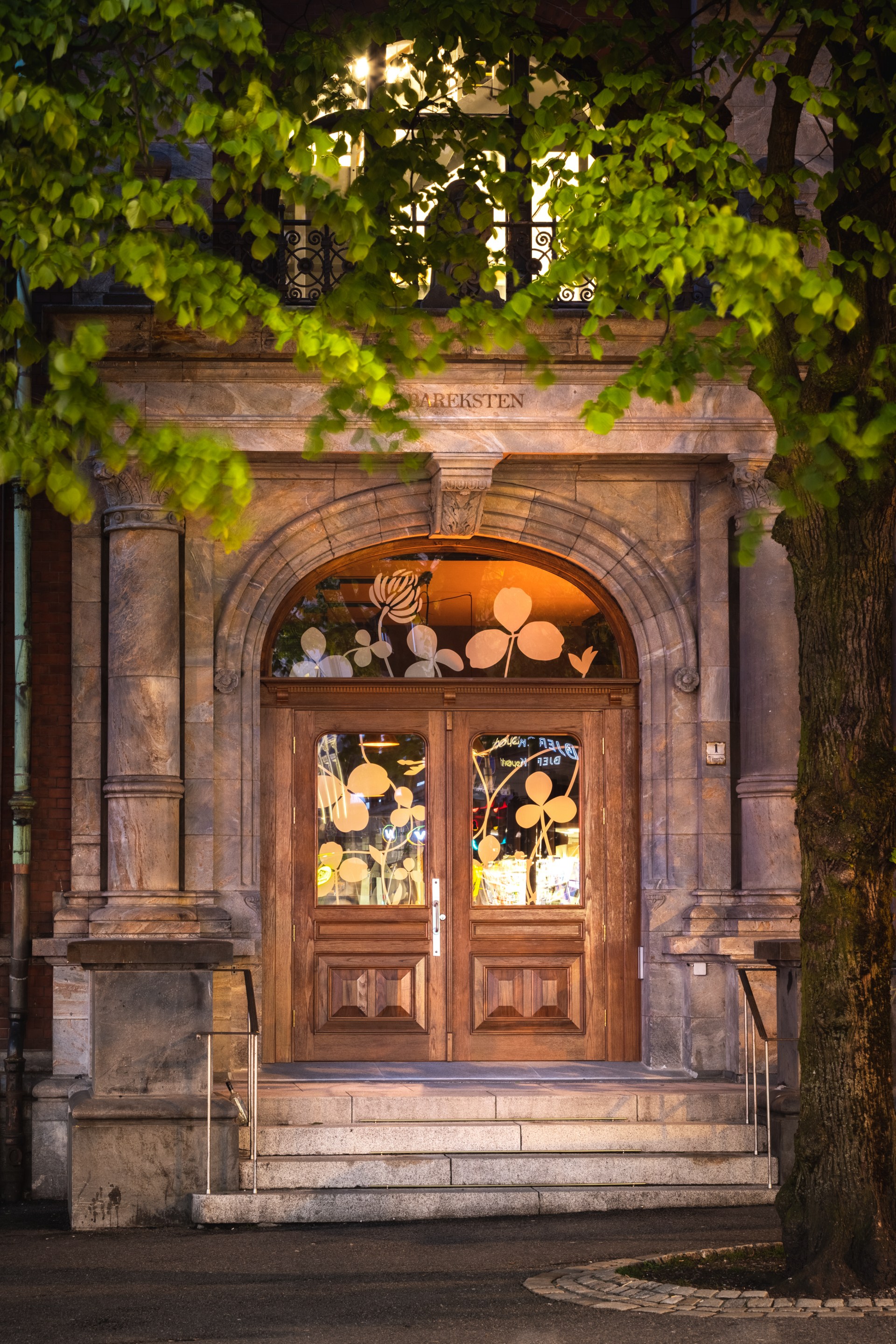
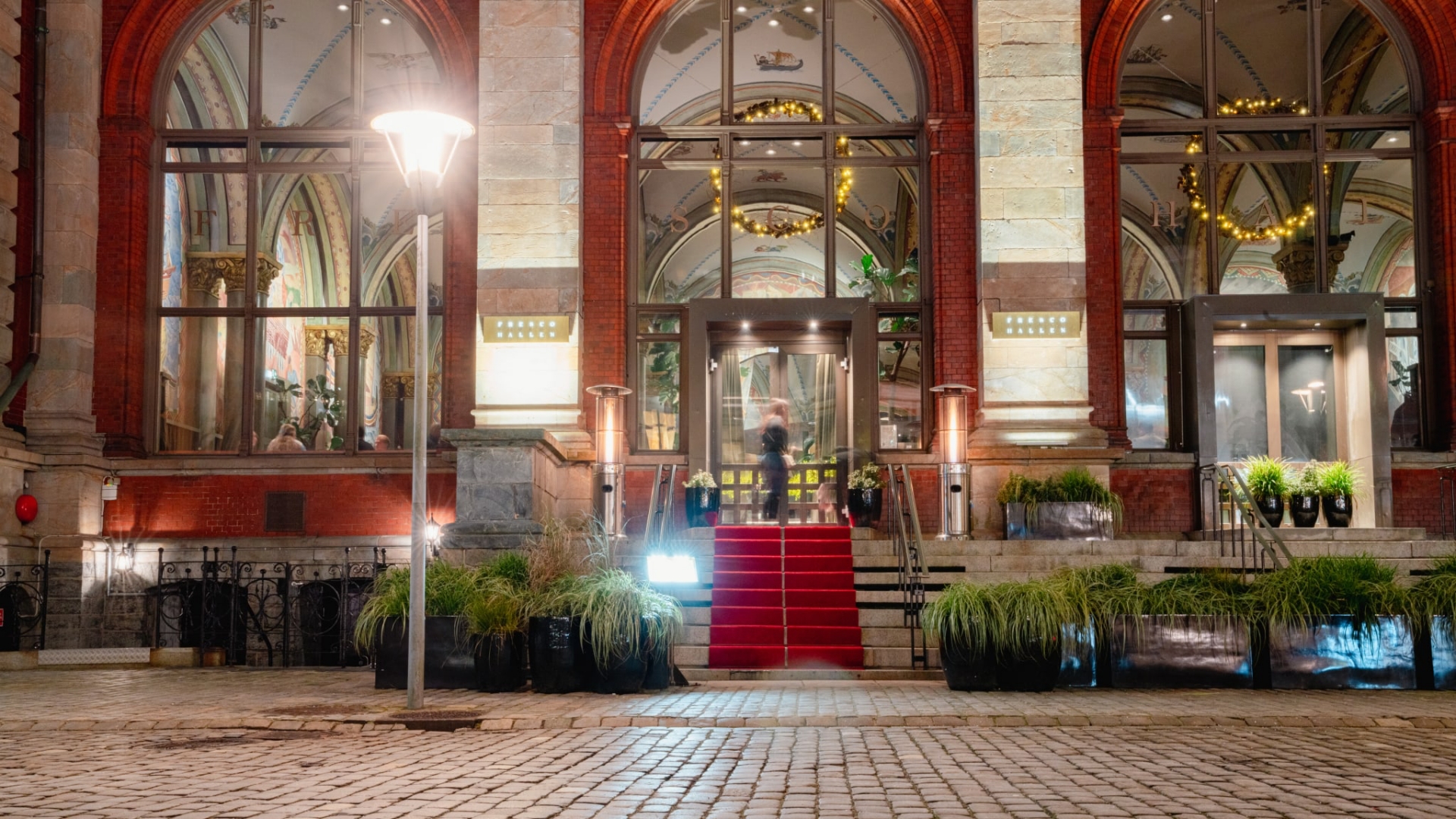
This thematic threshold is crossed well before entering the main portal. A vibrant crimson carpet sweeps up the grand stone staircase, leading to sliding glass doors ornamented with bold, jewel-toned circular motifs in amber and gold. Set against the stern dignity of the nineteenth-century façade, these playful geometric interventions signal a dynamic juxtaposition of eras within.
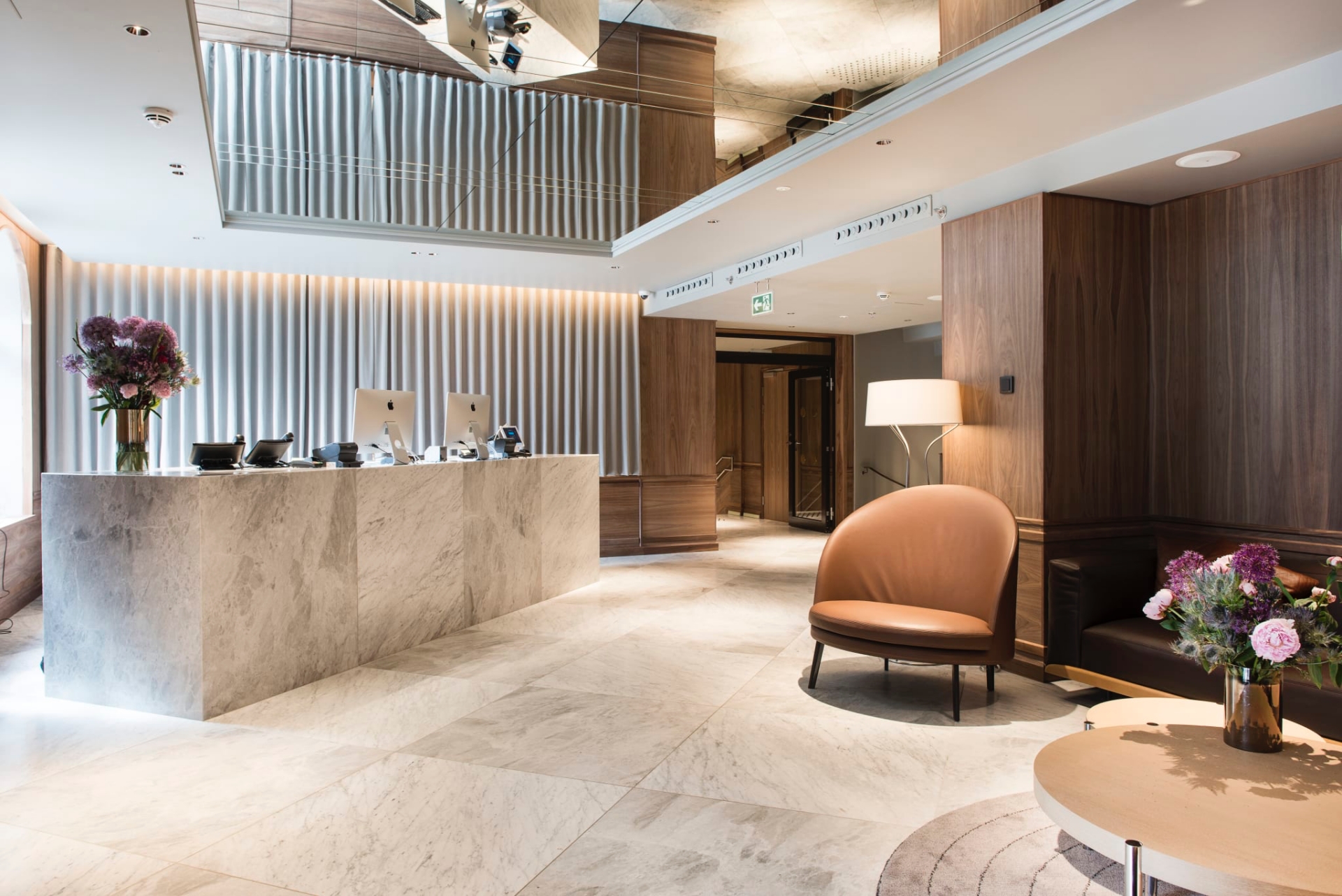
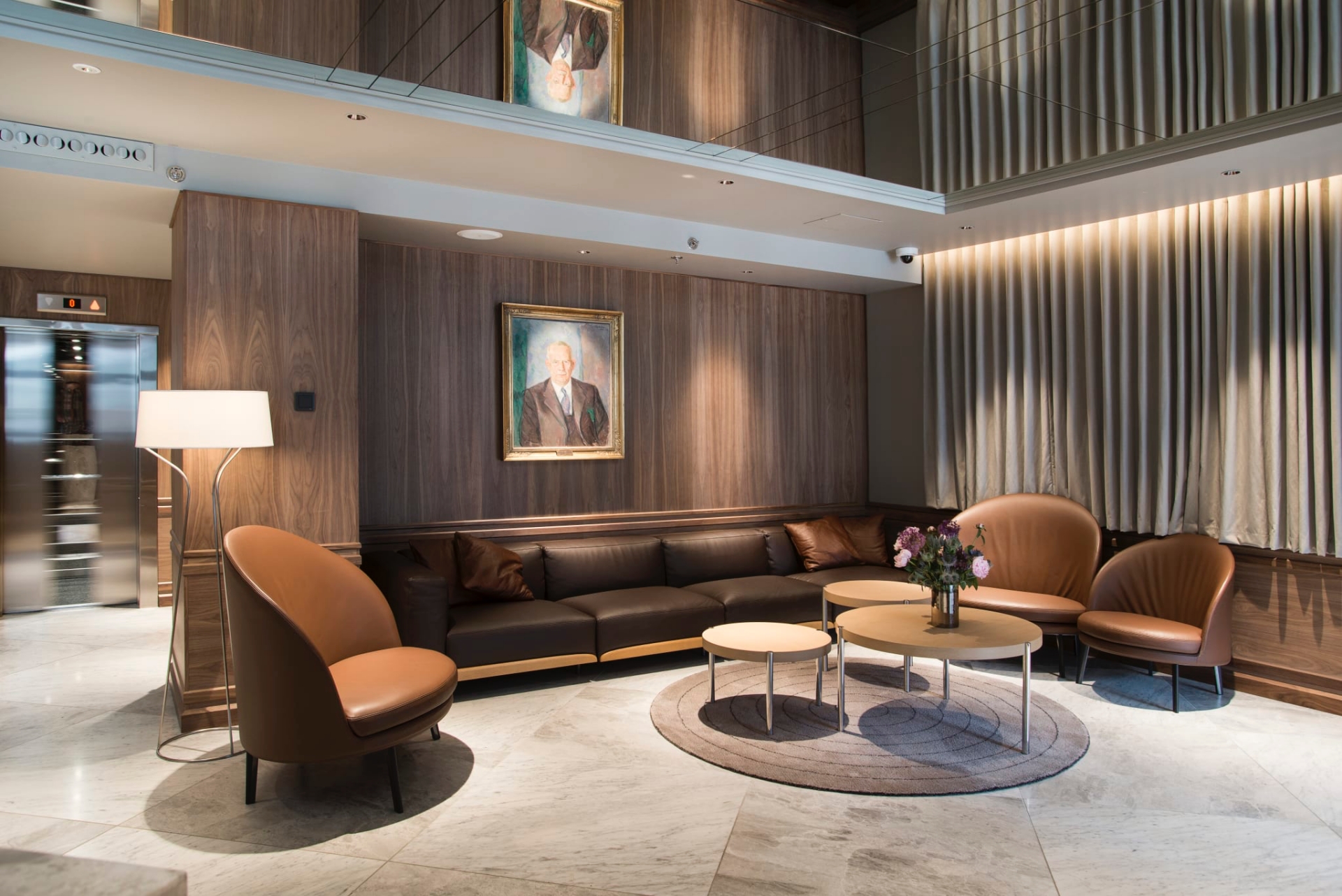
The reception lobby offers an immediate study in compression and intimacy. Sheathed in polished pale marble, deep walnut, cognac leather, and mirrored ceiling panels, the space radiates a muted, jewel-box luxury. Unusually compact for a building of such monumental heritage, its intentional restraint prepares the visitor for the dramatic spatial release of the hall beyond. As Hotel Director Yngve Hansen notes, this atmospheric moderation is strategic: by keeping the entrance understated, the monumental scale and artistic weight of Frescohallen are allowed to unfold with maximum impact.
And the impact is undeniable.
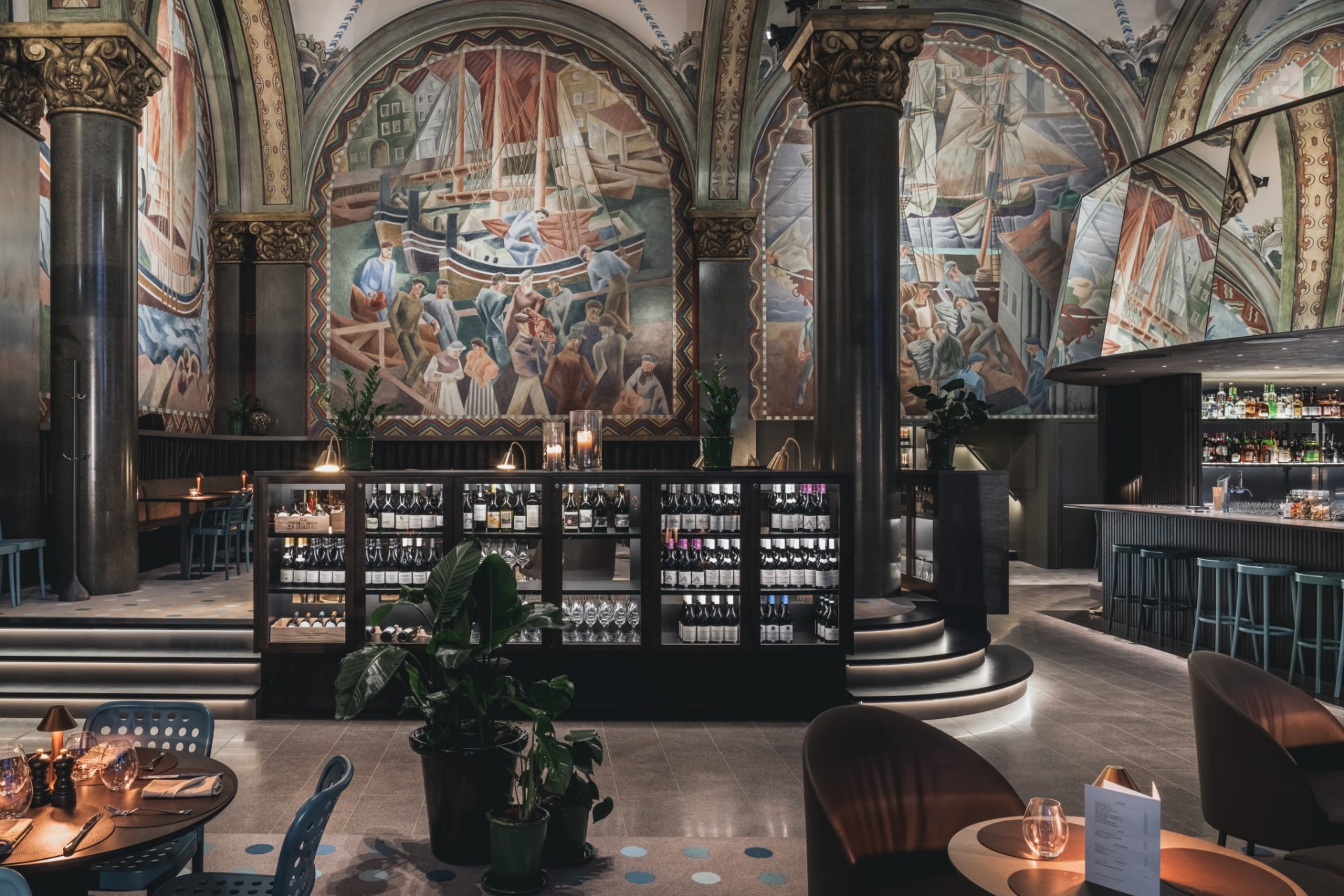
Confronted with an interior of such art-historical significance, Claesson Koivisto Rune chose a gesture of sophisticated deference. Rather than competing with Revold’s painterly drama, they treated the hall as an active canvas for living culture.
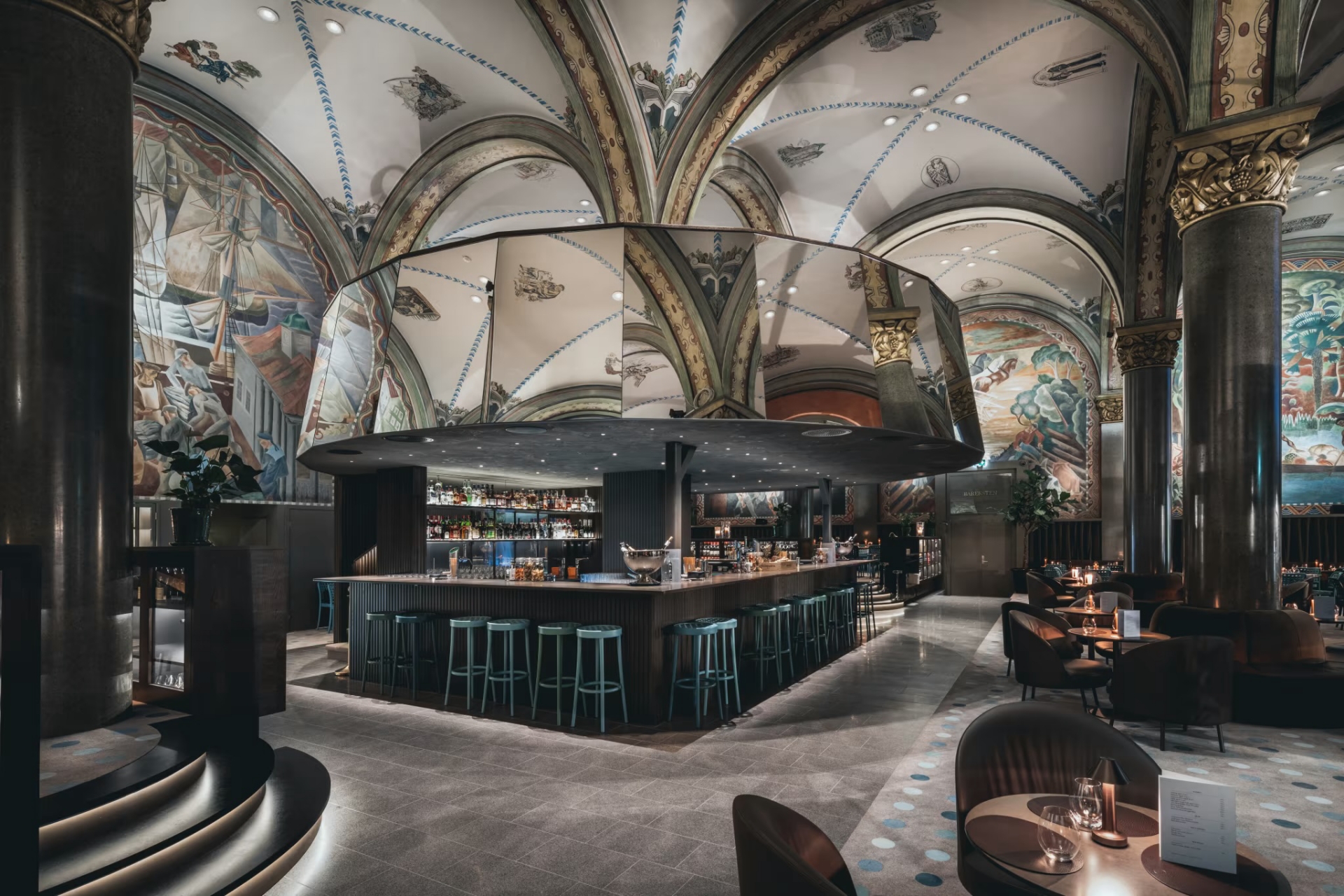
Reinvented as the hotel’s central dining space, Frescohallen avoids the static solemnity of a museum gallery. Morning light filters through the high windows, illuminating breakfast tables set beneath the historic murals; by evening, warm candlelight transforms the room as social conversation reverberates through the historic volume. There is an extraordinary vitality in this reinvention: the historic place of exchange has been seamlessly repurposed into a locus of contemporary cultural gathering.
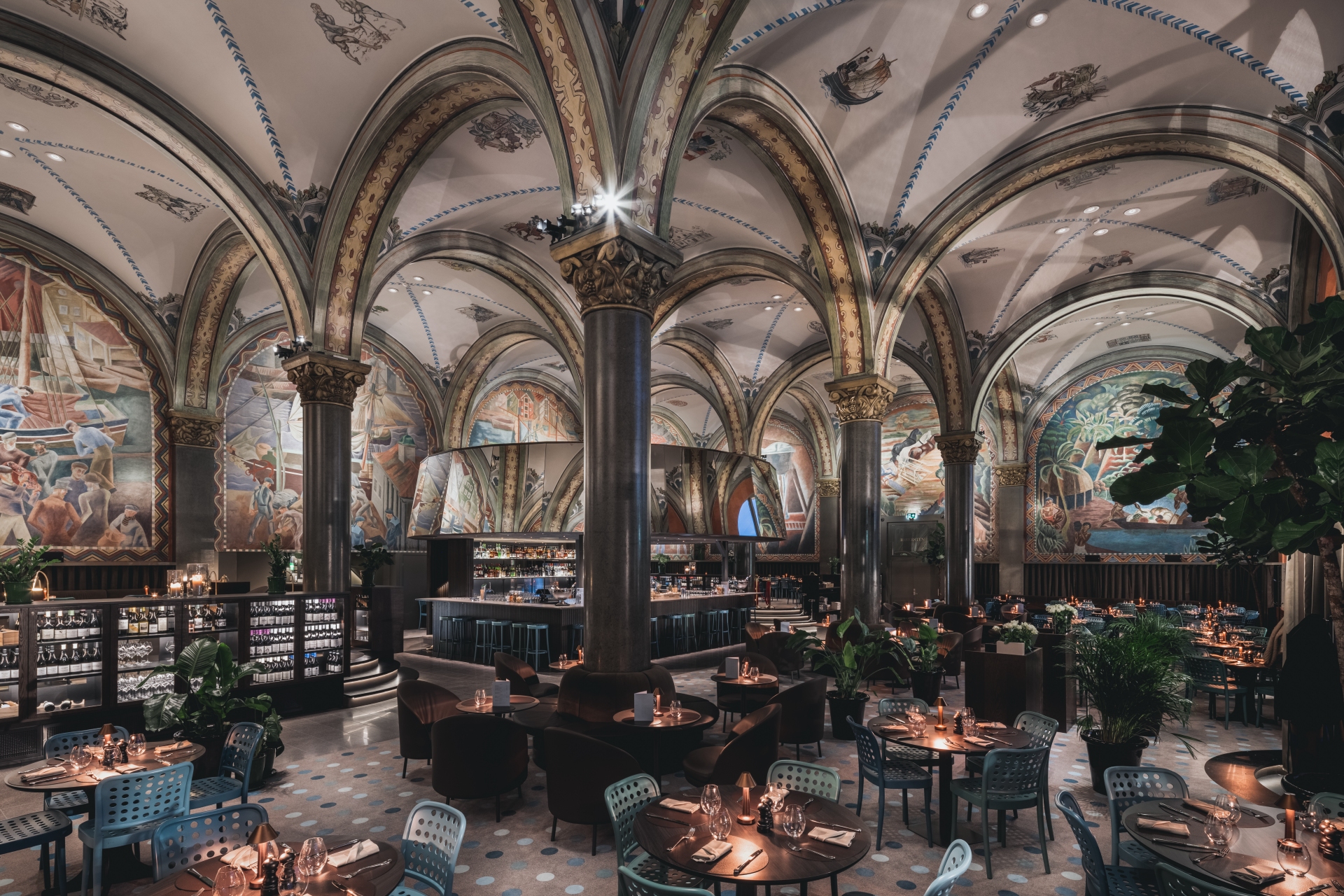
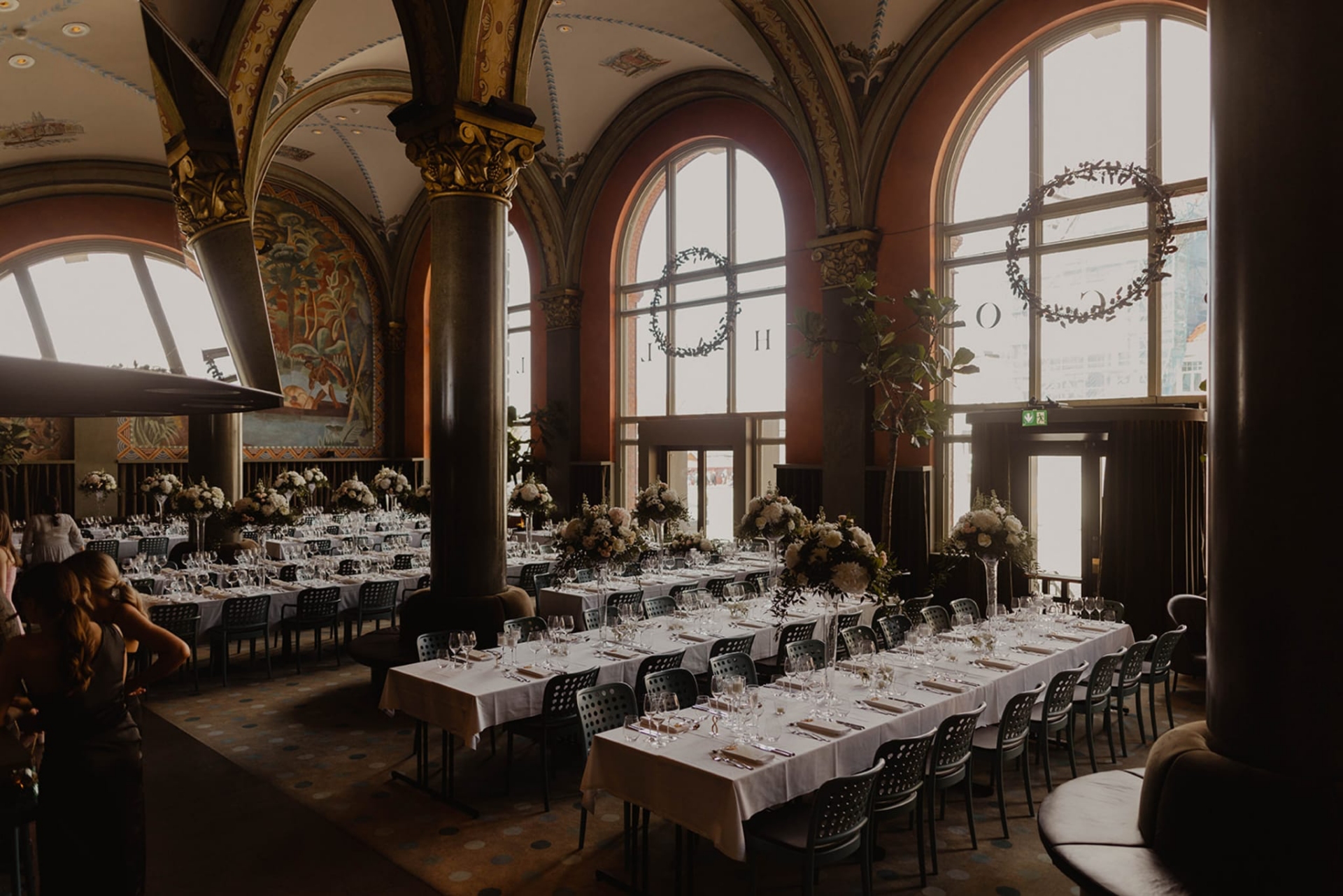
Anchoring the center of the hall is the architects' most striking contemporary sculpture: a cocktail bar clad in faceted, angled mirrors. Rather than obscuring Revold’s murals, its reflective surfaces catch fragments of painted narrative, vaulted arches, and shifting light, shattering and reassembling the room’s historic detail into an ever-changing kinetic montage. This clever use of specular reflection becomes a recurring motif throughout the property. Mirrored planes line the reception ceilings and elevator cabs, manifest as oversized convex sculptures in the guest quarters, and achieve their most theatrical expression in Speilbaren (“The Mirror Bar”), situated in the former Chamber of Commerce.
Speilbaren is a tour de force of immersive spatial art.
While retaining the regal proportions, high coffered ceilings, and grand windows of the original chamber, its fully mirrored walls infinitely multiply the glow of crystal chandeliers, gilded trim, and spirits. Outside, the nightscape of Vågen harbour reflects back across the glass, merging the city’s aquatic lights with the internal luxury of the space.
Far from mere surface decoration, these reflective interventions serve an intellectual purpose: they continuously reframe the 19th-century architecture, presenting history back to the viewer through fresh, fragmented lenses. This nuanced dialogue between eras is further heightened by the property's curated art collection.
The presence of the late Bergen-born sculptor Bård Breivik is felt strongly on the upper floors. Monochrome archival photographs line the corridors alongside Breivik’s polished, intricately faceted metallic sculptures. Most dramatically, his monumental work Brutt flate provides a powerful, tactile modern counterpoint to the classical architectural bones of the building.
For owner and art patron Kjetil Smørås, the art was never conceived as mere ornamentation. Breivik’s sculptural interventions introduce another crucial era of Bergen’s avant-garde history into the space, grounding the modern renovation in authentic local provenance.
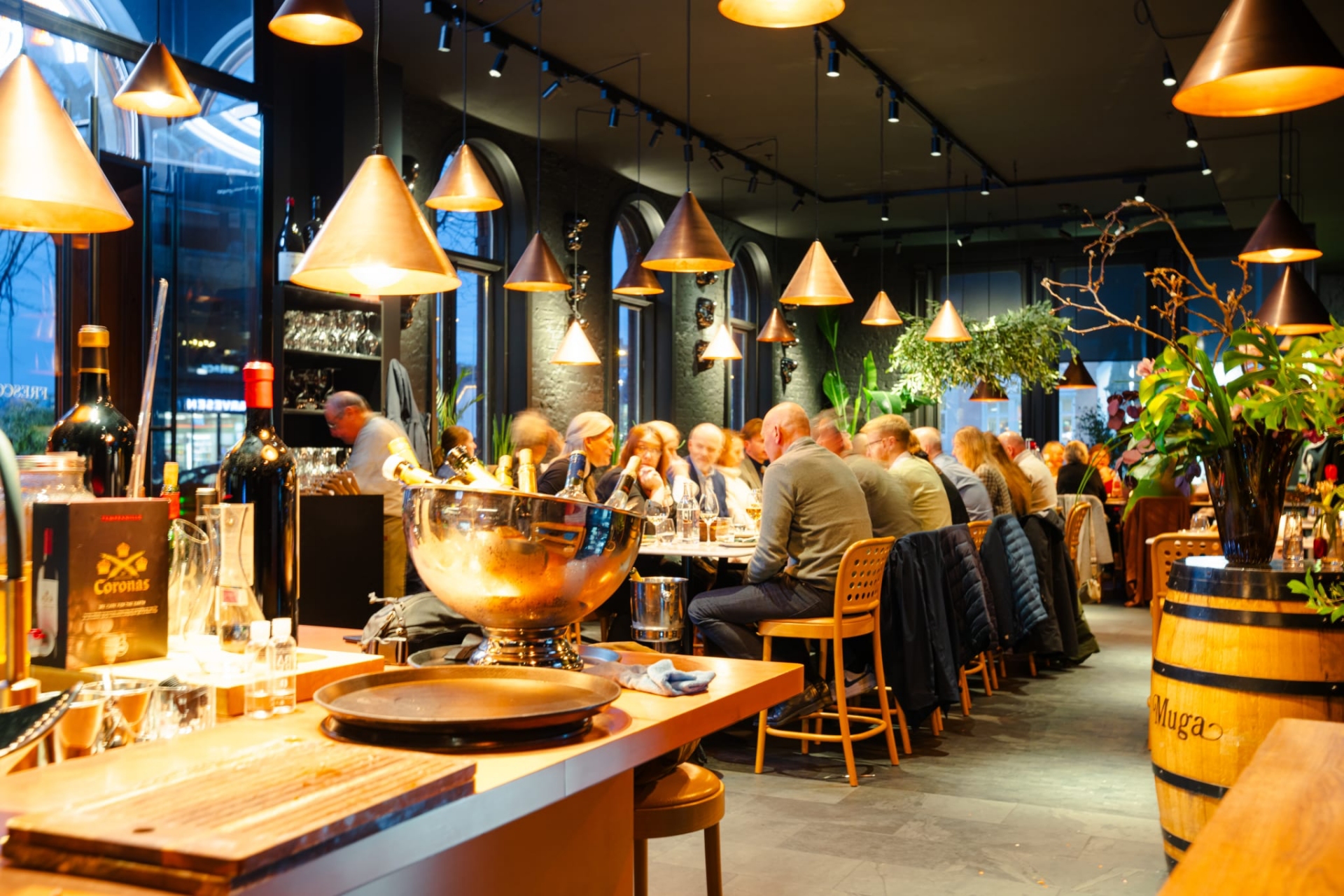
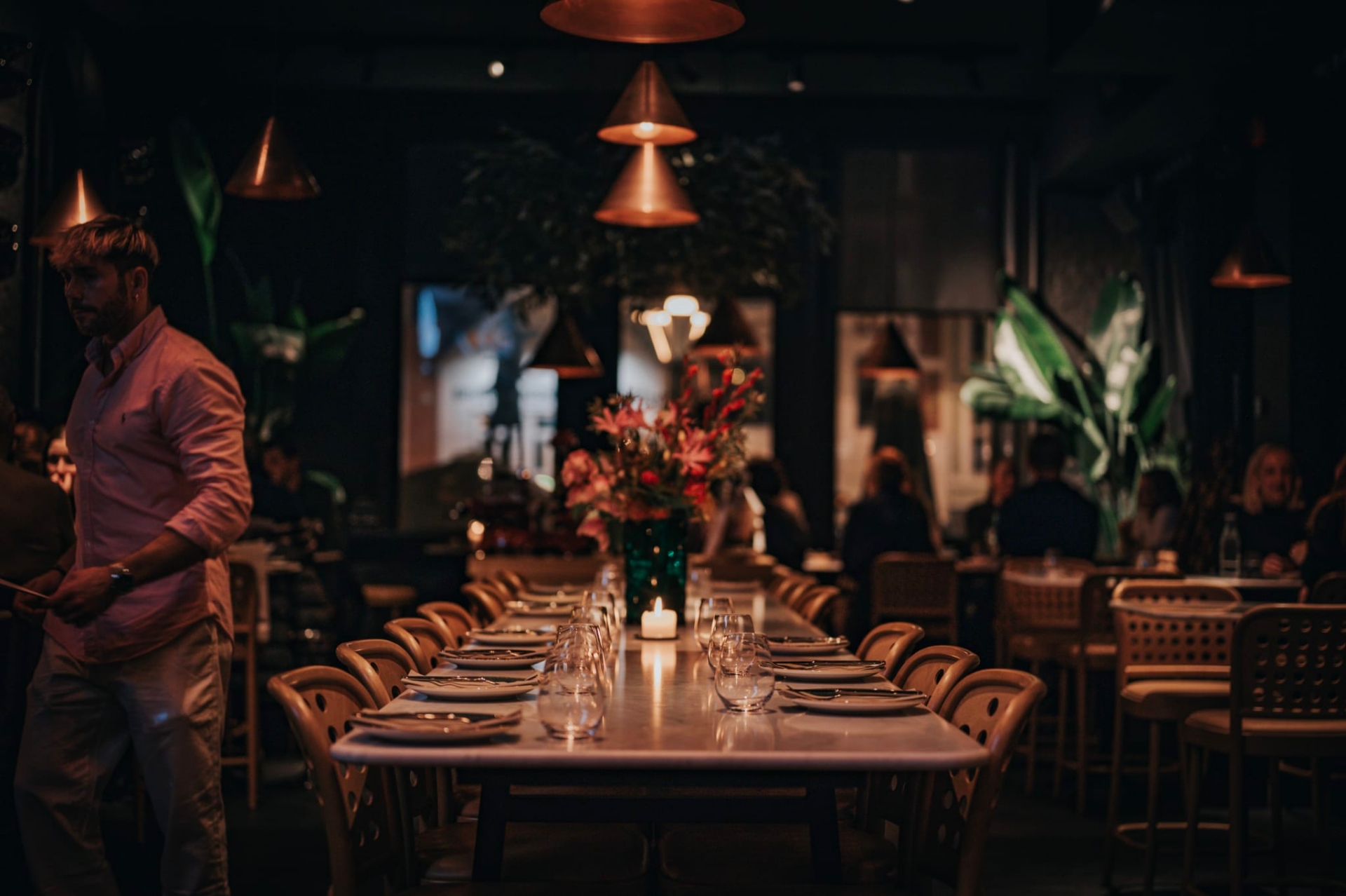
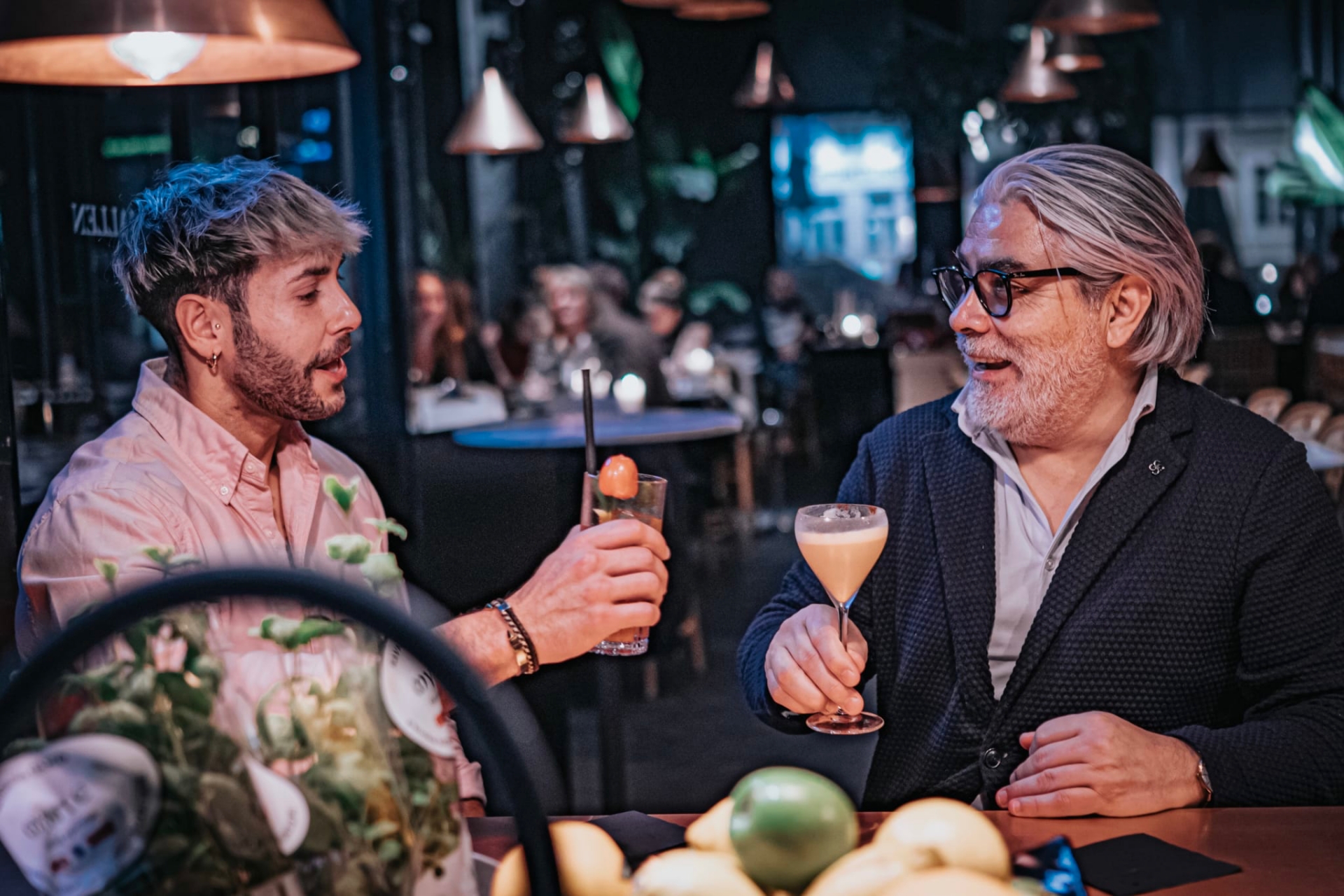
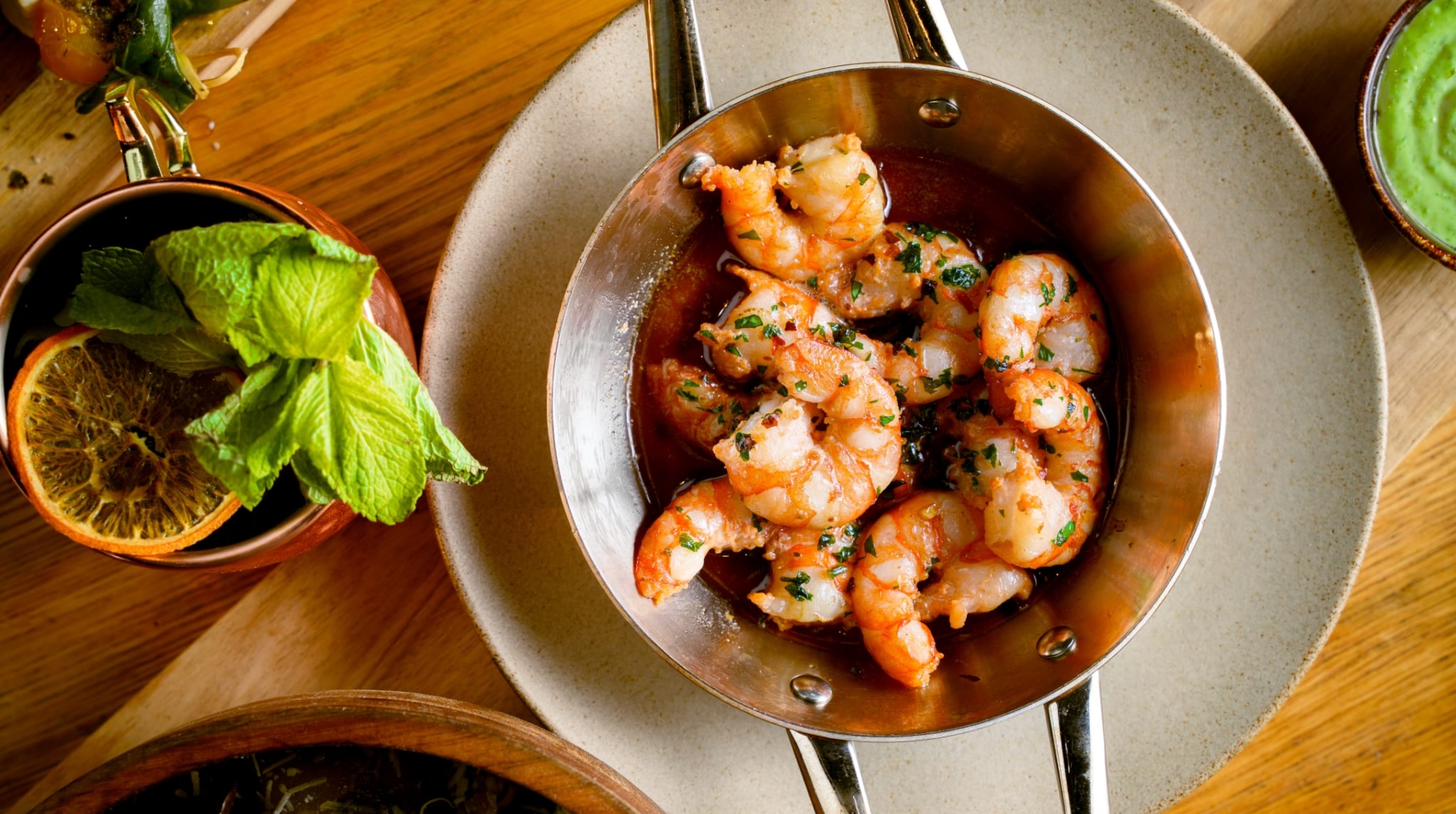
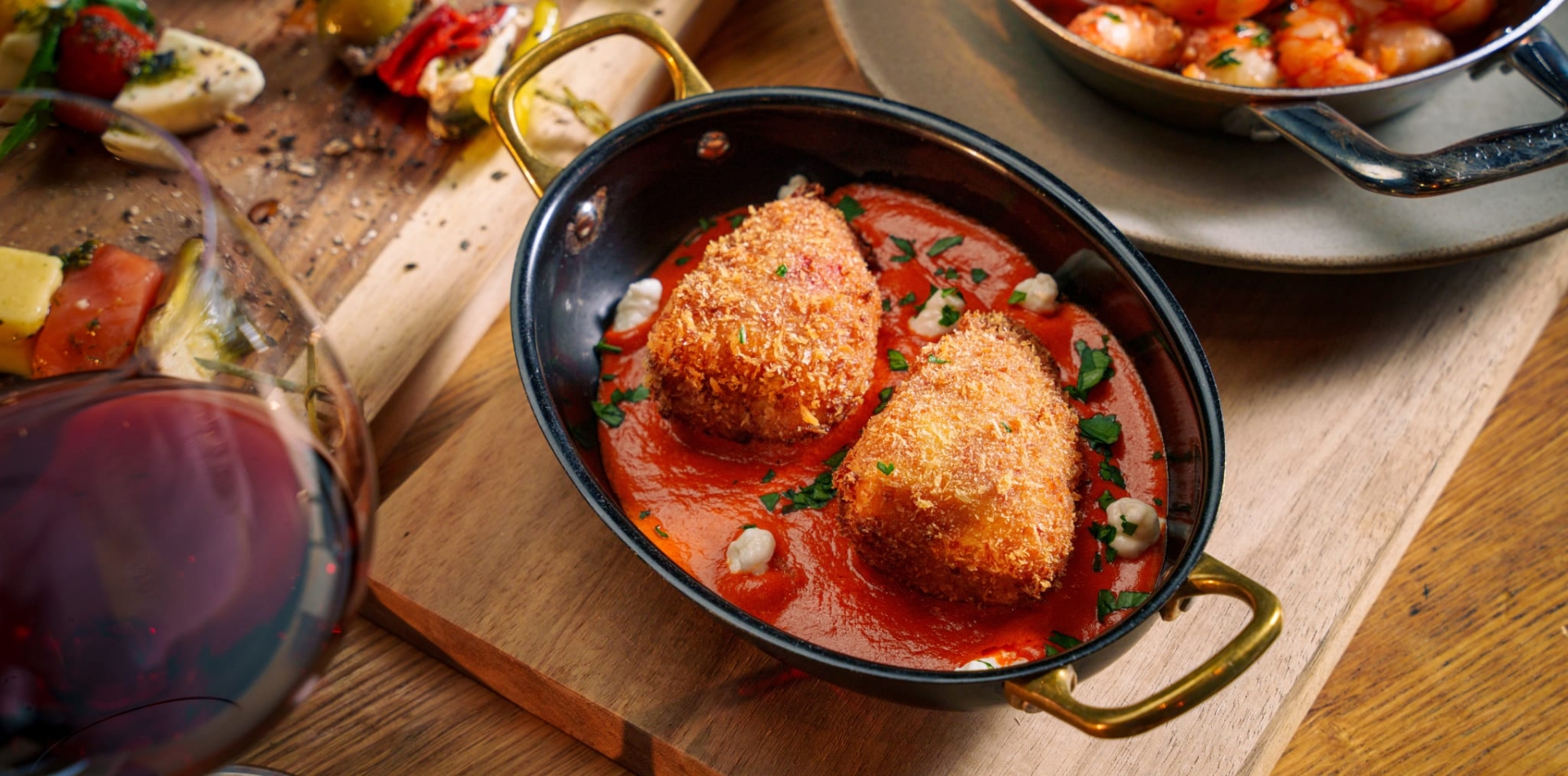
Equally remarkable is how fluidly the atmosphere shifts across the hotel's distinct hospitality environments. Adjacent to Frescohallen, Fresquito offers a dramatically different spatial expression. Here, grand civic grandeur yields to intimate, moody textures: dark walls, marble-topped tables, supple leather banquettes, oversized bronze pendant lamps, and vibrant floral displays. The mood is warm, tactile, and subtly Mediterranean, yet anchored within the historic structural shell.
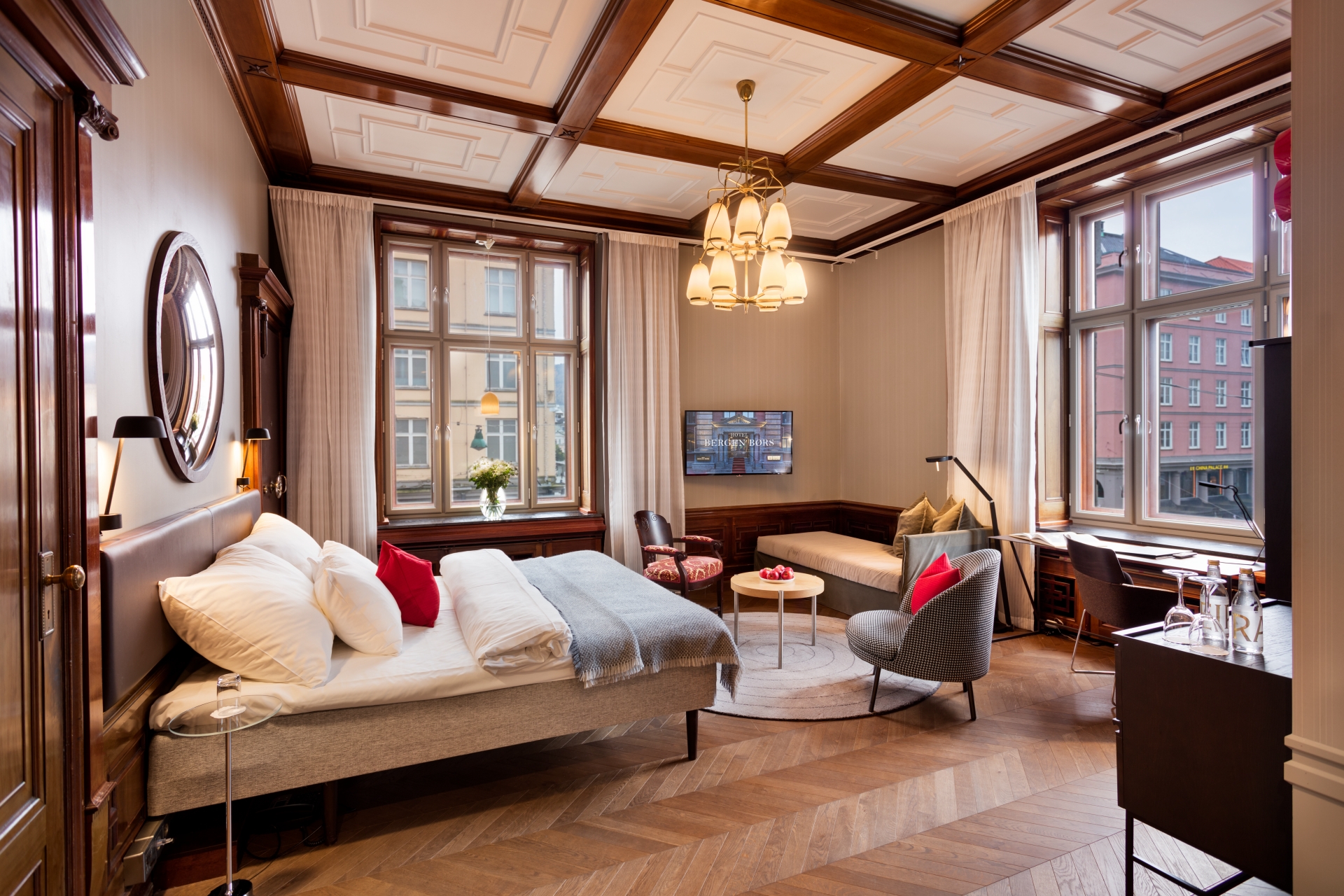
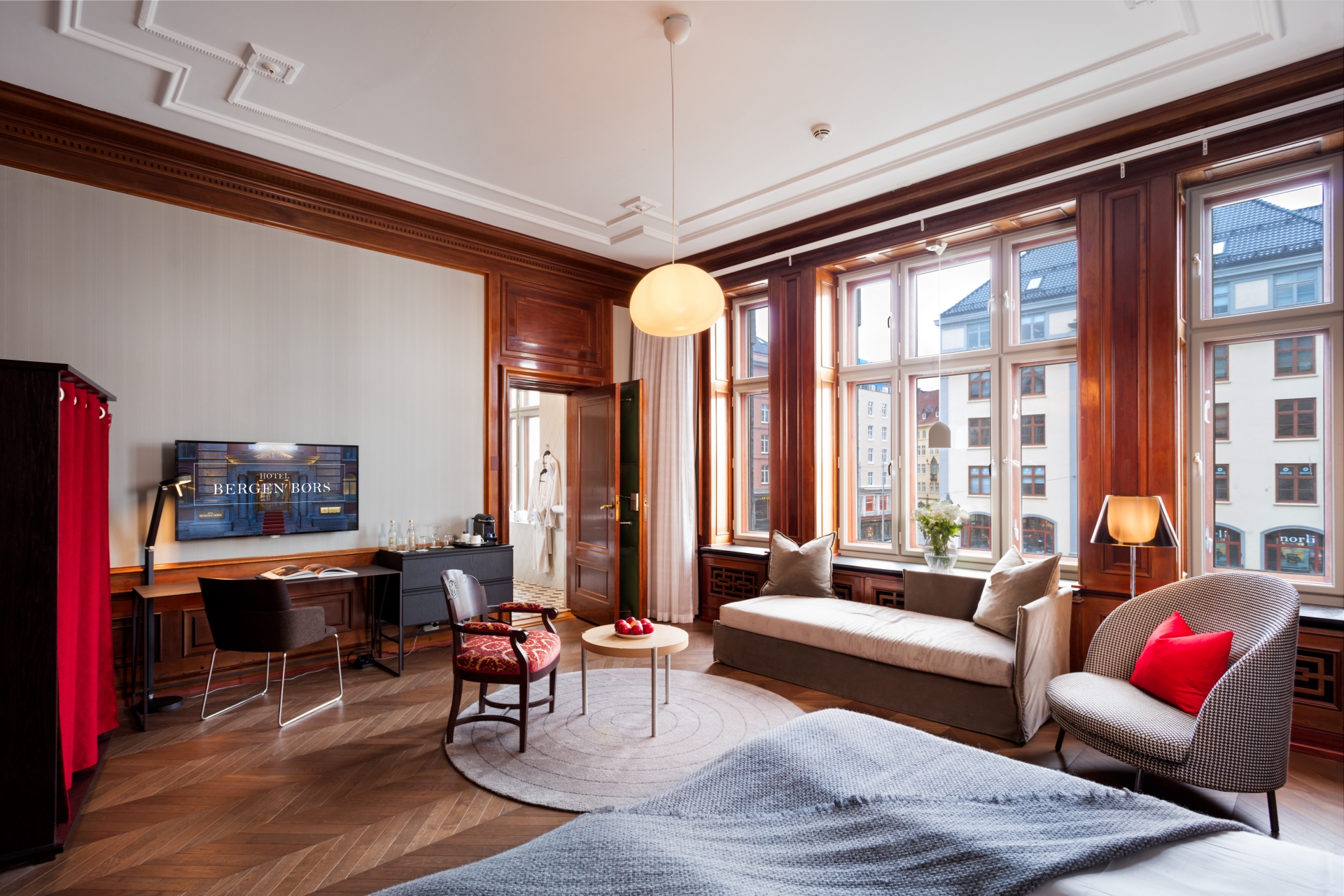
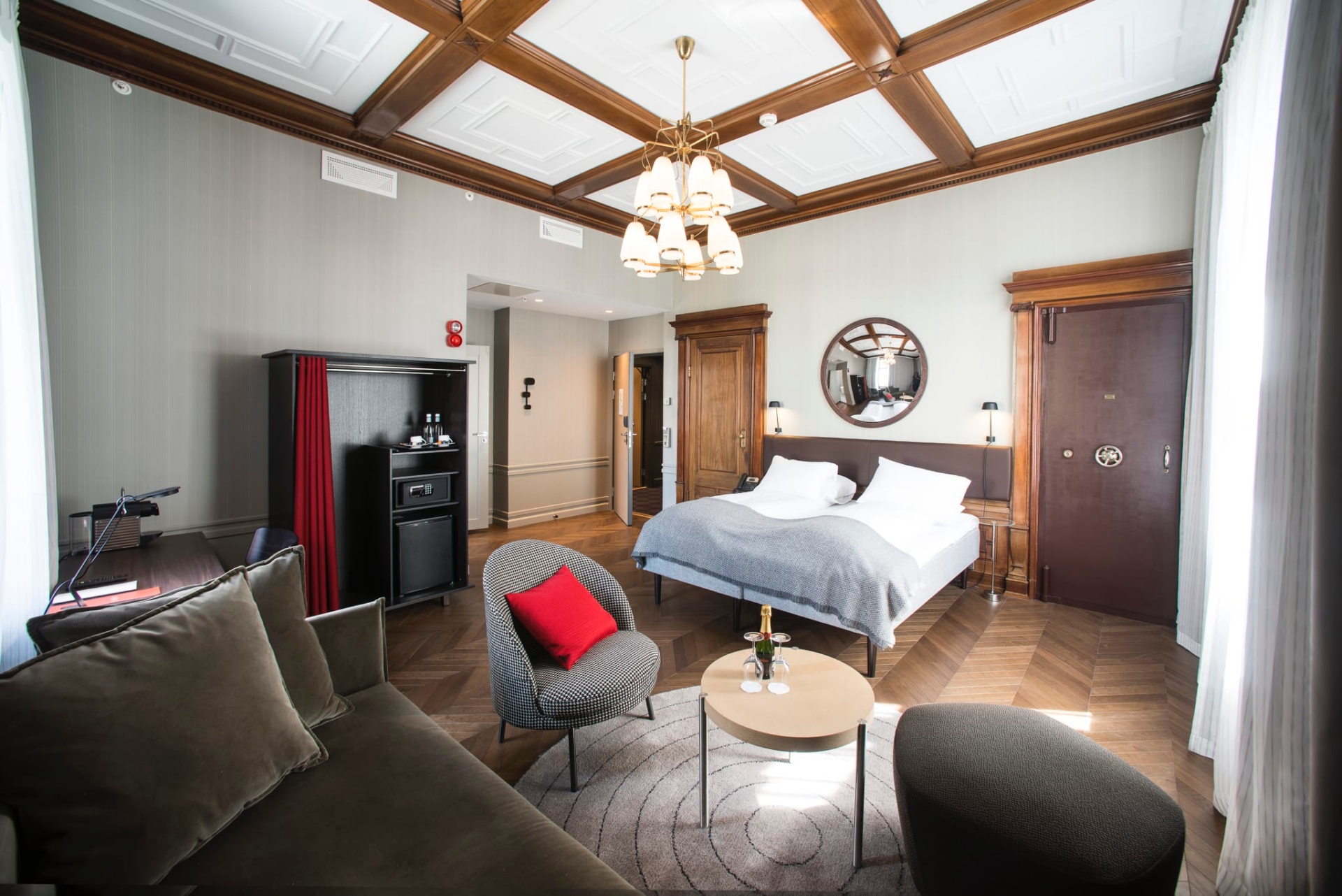
Ascending to the upper levels, the design language softens into refined residential quietude. In the third-floor salon spaces, soaring ceilings and tall proportions are paired with muted indigo palettes, heavy velvet drapery, rich timber, and warm marble. Generous floral compositions and soft lighting maintain a sense of monumental dignity tempered by domestic warmth. Within the private guest quarters, the design achieves an understated minimalist elegance. Dark herringbone oak floors provide a grounding foundation for masterfully crafted walnut cabinetry, muted grey textiles, and gently curved custom furniture. Accents of rich scarlet - seen in throw cushions and a dramatic textile veil concealing the wardrobe - introduce an expressive pop of color, while an oversized convex wall mirror echoes the overarching theme of optical reflection.
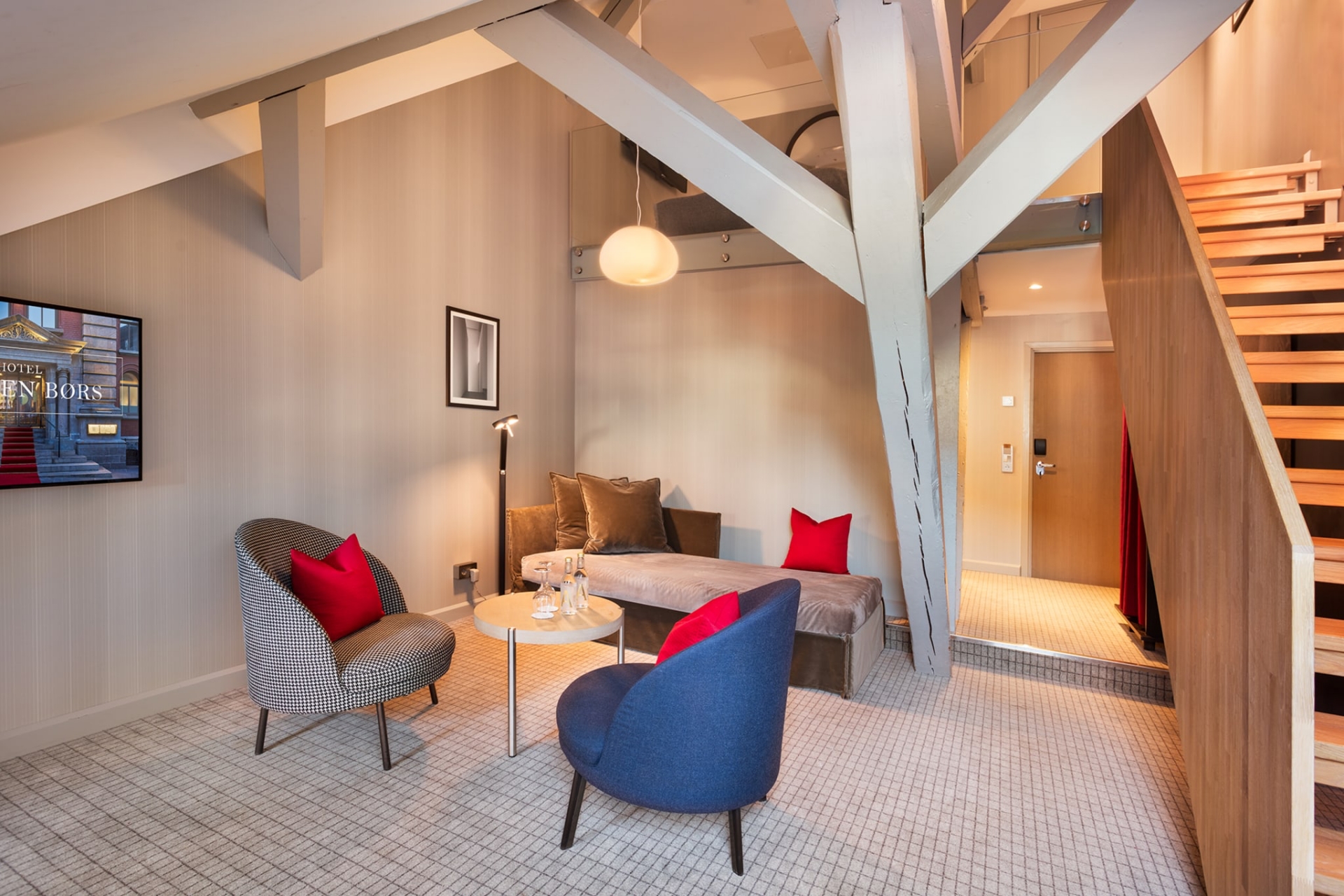
Rather than fabricating an artificial historical aesthetic, Claesson Koivisto Rune allowed the modern furnishings to speak in a clear, contemporary voice. The resulting aesthetic balance feels organic and unforced.
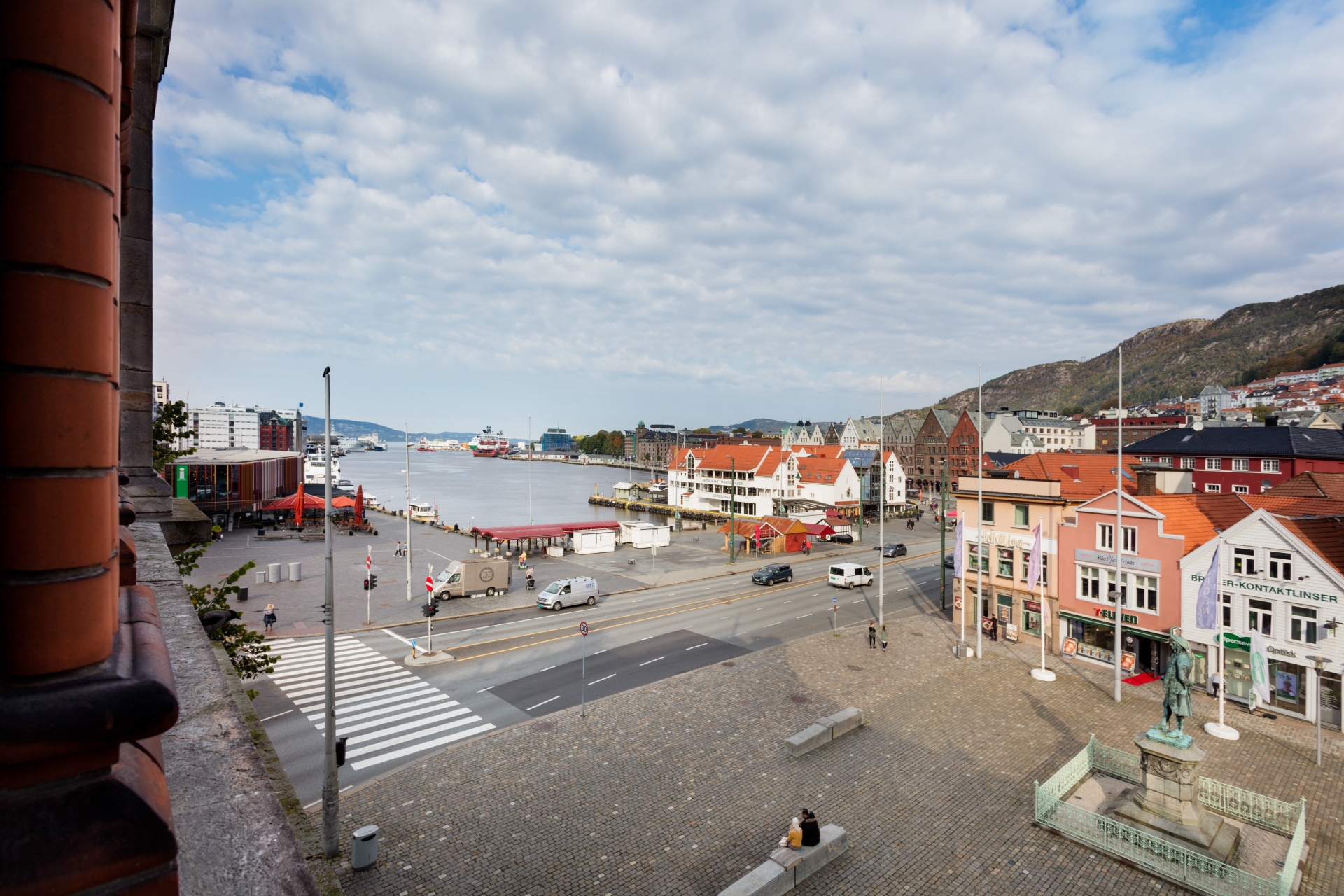
Framed by tall window apertures, the living cityscape becomes the ultimate artwork. From the guest suites, views over Vågen harbour unfold like a painterly panorama: ferries carving trails across the fjord, working fishing vessels, the bustle of the market below, and the iconic wooden facades of Bryggen reflecting the shifting Nordic light.
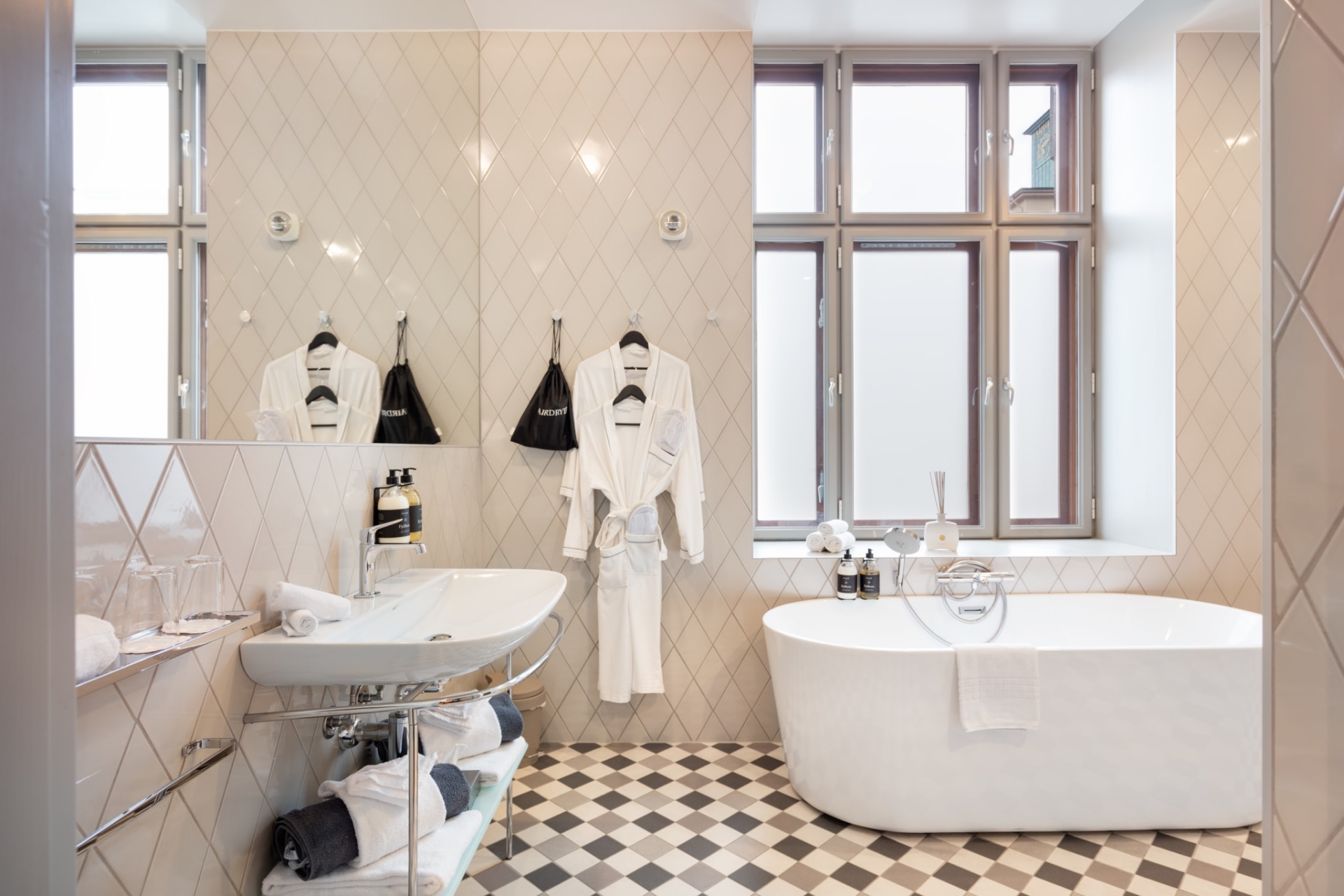
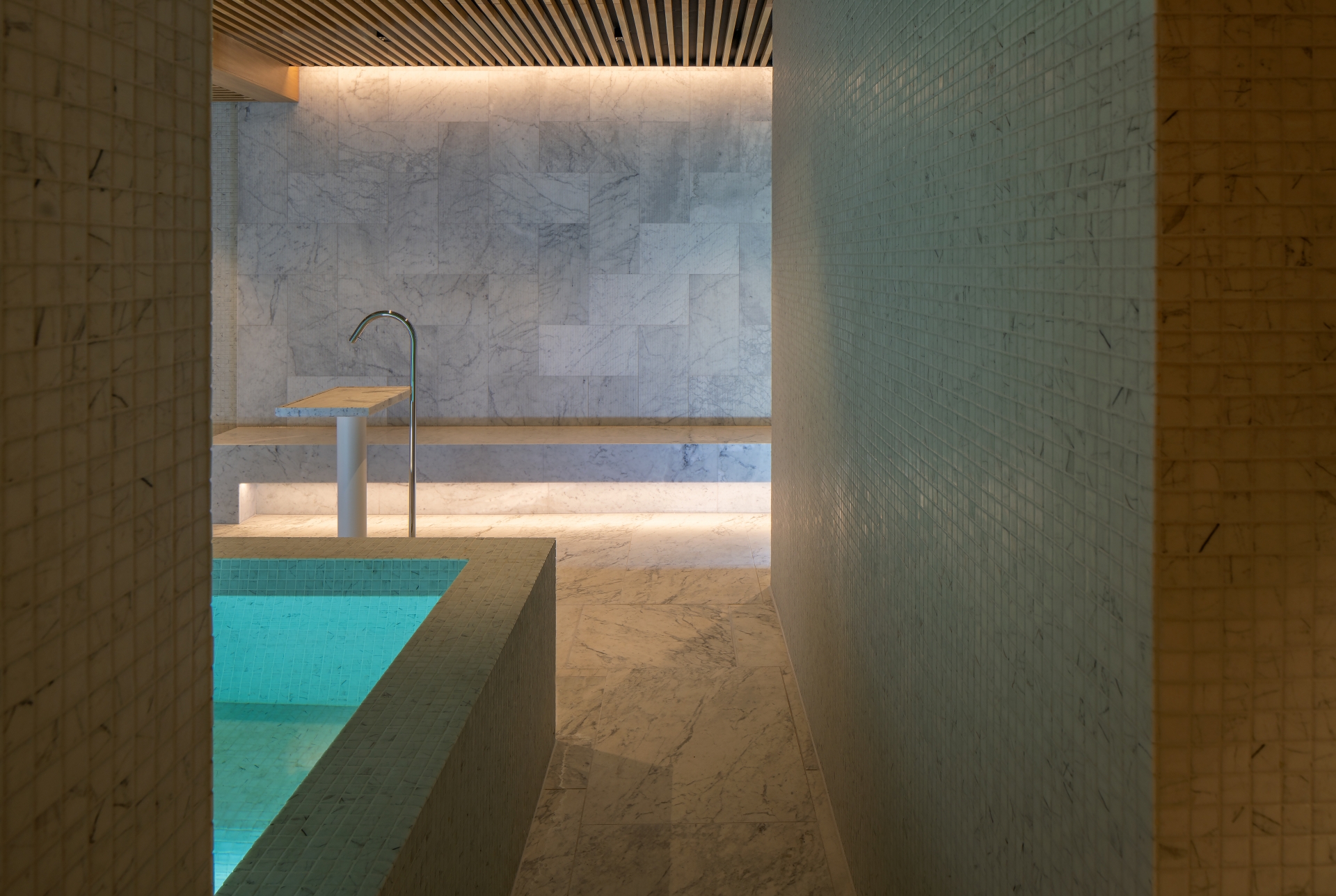
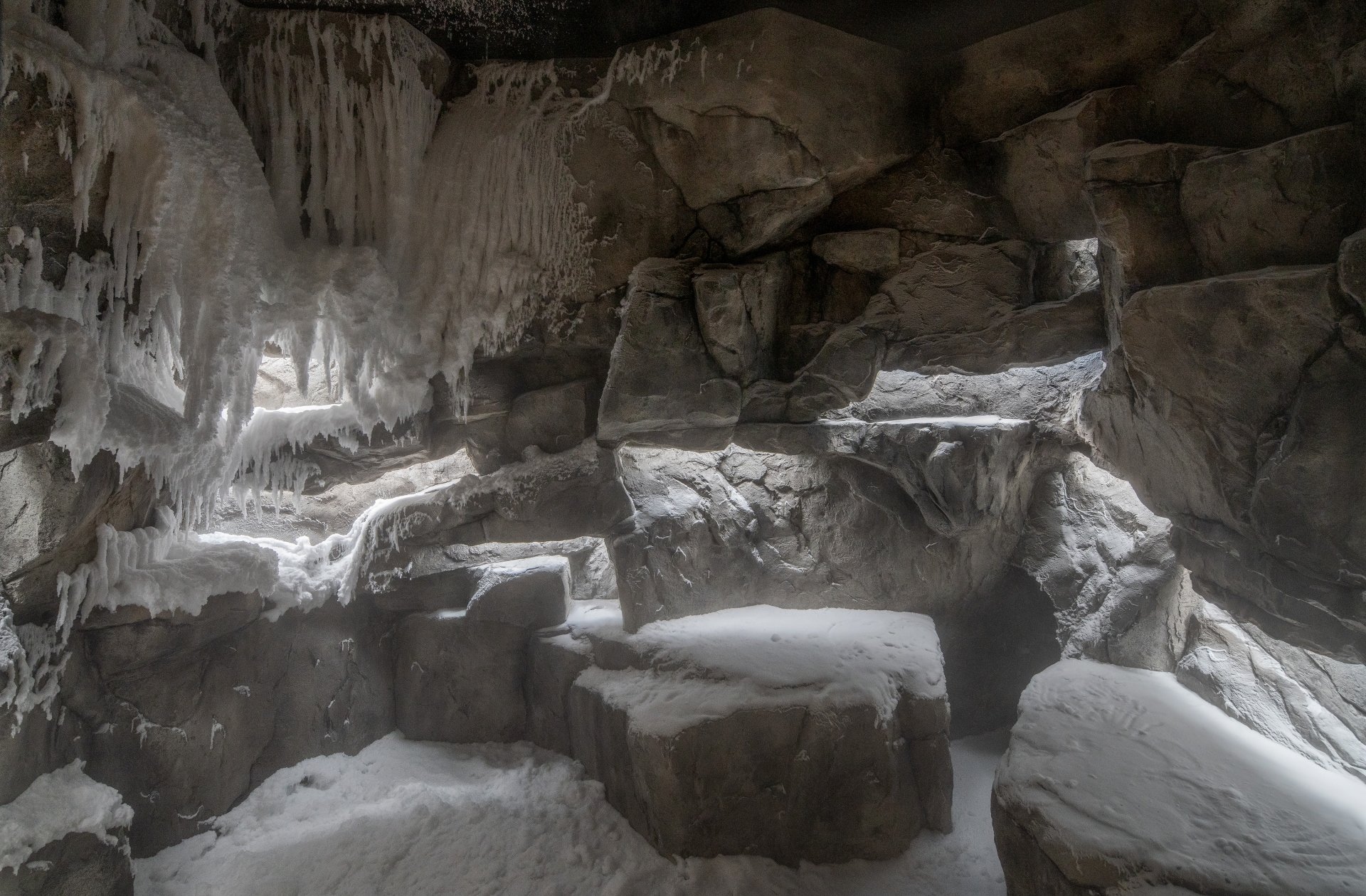
This intimate connection to the harbor underlines the site's historical significance. The stock exchange was constructed precisely because of this water; today, the hotel offers a contemplative frame through which to observe the ongoing life of the port. While Bergen Børs features its own private fitness studio, wellness experiences extend to the nearby Skostredet Hotel - a sister property within the De Bergenske portfolio, also transformed by Claesson Koivisto Rune. There, pale marble and warm Scandinavian oak enclose serene pools, Nordic saunas, steam rooms, and an extraordinary ice room replenished daily with fresh snow, offering a deeply sensory architectural ritual.
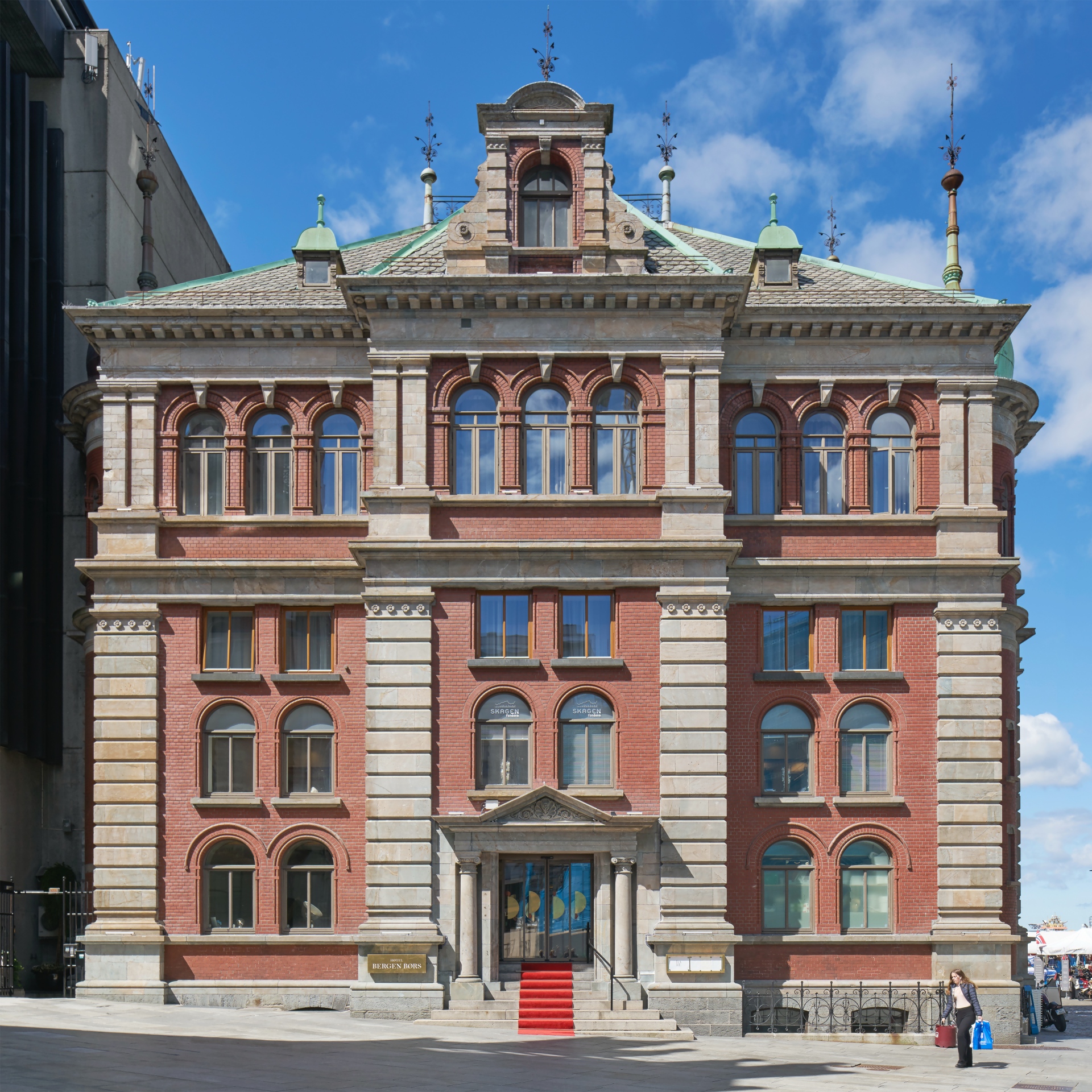
Ultimately, the triumph of Bergen Børs lies in the restraint of its design intervention. Contemporary design forms converse naturally with nineteenth-century stonework. Axel Revold’s historic frescoes remain dominant masterworks while acquiring a new cultural context. Bård Breivik’s sculptures bridge the gap to modern Norwegian visual art, and the sophisticated mirror motifs continually reflect and synthesize these disparate elements. Bold contemporary gestures are deployed with surgical precision, honoring rather than overshadowing the architectural past.
In this masterful transformation, Bergen Børs stands as a definitive model for architectural heritage adaptation - a space where history is not merely preserved behind glass, but dynamically re-imagined through the artful lens of contemporary design. Perhaps that is the cleverest part of the transformation. Bergen Børs feels unmistakably like a contemporary hotel, yet you never forget that you are inside Bergen’s former Stock Exchange. More than 160 years after it opened, the building is still full of people eating, meeting, talking and watching the harbour beyond its windows. The transactions may have changed, but Bergen Børs remains very much part of the life of the city.